Uber and Waymo Are Fighting Over Who Gets to Write the Robotaxi Rulebook
A D.C. bill on driverless cars has turned two robotaxi partners into rivals, with Uber pushing for laws that would force autonomous vehicles to share the road — and the app — with human drivers.
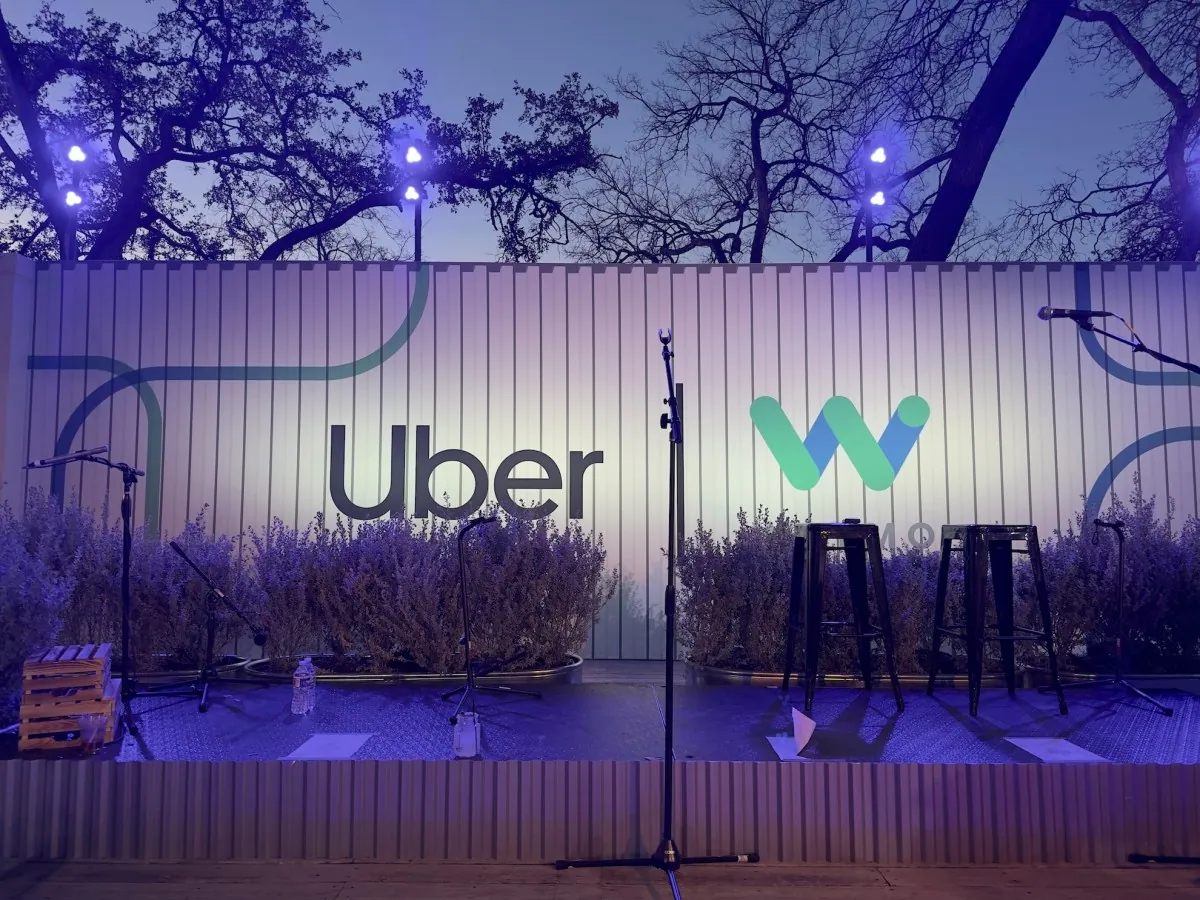
Uber and Waymo have shared rides, margaritas, and even a courtroom in the past decade. Now they're headed for a legislative brawl in Washington, D.C., and the outcome could shape how driverless cars get regulated across the country.
At issue is a bill introduced by D.C. Councilmember Charles Allen that would let autonomous vehicles operate commercially in the district without a human safety driver behind the wheel — something that isn't currently allowed. Companies like Waymo and Zoox can test self-driving cars in D.C. today, but only with a person ready to take over. The new bill would hand the District Department of Transportation authority to issue permits for fully driverless testing and deployment, provided companies carry at least $5 million in liability insurance and report crash data within tight windows.
Waymo backs the bill. Uber, notably, does not.
That's the twist here. Uber has spent years investing in and partnering with autonomous vehicle developers — more than 30 of them worldwide — and even stood next to Waymo at a launch party in Austin last year, toasting the expansion of their ride-hailing tie-up. But in Washington, Uber is fighting to reshape the rules in a way that Waymo says would box it out.
What Uber actually wants
Uber's objection isn't just about one bill. It's about a broader regulatory model the company has been pitching to lawmakers since May, when it published a white paper laying out what it calls a "hybrid network" approach. The idea: autonomous vehicles and human drivers should operate on the same ride-hailing platform, with riders unable to choose which one shows up.
"Hybrid model means that consumers should have the ability to access both. If a consumer is on the app, they should be able to choose," Javi Correoso, who leads U.S. policy and federal affairs for Uber, said during a May D.C. Council roundtable. He went further, arguing regulation should actually require that riders be able to get a human-driven car, not just an AV.
Uber's argument rests on a few pillars: robotaxis add congestion by idling or driving empty between rides, they can't offer the kind of physical help a human driver can give elderly or disabled riders, and — citing its own data — one autonomous vehicle displaces roughly four human drivers. Left unchecked, Uber says, a "first-party only" regulatory model handed Waymo something close to a monopoly in for-hire driving.
Waymo, unsurprisingly, sees it differently. The company argues the D.C. bill enables safe deployment of autonomous vehicles while still supporting transit access and drivers' livelihoods, without shutting out companies like Uber. In a statement, Waymo spokesperson Ethan Teicher said the company doesn't support restricting AVs to particular kinds of networks and would welcome language clarifying that different networks can coexist in the district.
Uber spokesperson Noah Edwardsen framed the company's position as a response to a bill that would effectively wipe out hybrid networks altogether, and took a swipe at what he called AV-industry proposals that "cynically" try to "lock out competitors and create monopolies."
The money and the fight ahead
The bill isn't just about permits. It would also impose a $0.15-per-mile tax on robotaxi operators — split between public transit funding and workforce support for ride-share and taxi drivers at risk of losing work to driverless cars. Robotaxi advocates have already flagged that tax, along with a proposed cap on the number of robotaxis allowed, as points of contention separate from the Uber-Waymo fight.
Both companies will make their case Monday during a day-long D.C. Council hearing that's drawing a long list of interested parties: Tesla, Lyft, the Teamsters, the Service Employees International Union, disability rights groups, business associations, safety advocates, and policy think tanks. The bill also spurred an opposition campaign from a group called the Coalition for Accountability and Road Safety, a New York-based organization canvassing voters and posting on social media against it. Its funding is unclear, though it's registered to an employee of a lobbying firm that has represented labor unions and a black-car drivers' fund in New York.
Not everyone buys Uber's framing as a reasonable compromise. Greg Rogers, founder of the mobility think tank The Innovation Majority, is testifying Monday and called Uber's push an attempt at "regulatory capture." As he put it: "Any argument that you can improve consumer welfare by forcing certain business models and canceling out others does not improve people's mobility choices. It does not improve road safety."
Passage isn't imminent — sources told TechCrunch they hope for a vote before the end of the year, ahead of Mayor Muriel Bowser leaving office in January. But the fight is bigger than D.C. alone; Uber has said it plans to push the hybrid-network idea in other cities and states as new AV laws get written, and similar lobbying efforts have already surfaced in New Jersey.
From courtroom rivals to uneasy partners to rivals again
This isn't the first time Uber and Waymo have clashed. Back in 2017, Waymo sued Uber over trade secret theft, alleging a former Google engineer had taken proprietary self-driving technology to Uber. The trial produced colorful testimony before Uber settled after just five days.
Years later, after Uber sold its own self-driving unit to Aurora, the two became partners instead of adversaries. Waymo vehicles started appearing on Uber's app in Phoenix in 2023, then expanded to Austin and Atlanta, where riders can only summon a Waymo through Uber's app rather than Waymo's own. The Phoenix arrangement, described as a limited pilot, quietly ended in May.
Lately, the goodwill has cracked in public. Uber's chief technology officer criticized a Waymo robotaxi's behavior on social media earlier this year, calling it "scary." And on an earnings call in May, Uber CEO Dara Khosrowshahi seemed to needle Waymo without naming it, praising regulators for asking hard questions about how autonomous vehicles handle power outages, school zones, and interactions with firefighters — a clear nod to recent incidents involving Waymo vehicles.
The rivalry isn't confined to the U.S. either; the two companies are also bracing for a regulatory clash in London.
Uber's own executives have framed the company's newer, more conciliatory tone as a lesson learned from its combative early years, when it clashed with regulators and labor groups over gig-worker classification fights like California's AB 5. Chief operating officer Andrew MacDonald wrote in a LinkedIn post that the company's old grow-at-all-costs approach led to "regulatory battles and a corporate crisis that damaged trust for years," adding: "That experience changed us. Today, we partner with cities instead of confronting them."
Whether that framing holds up is now a live question. Uber's head of AV policy, Harry Hartfield, put the company's bet plainly in testimony submitted ahead of Monday's hearing: "We think the future of our transportation system will be hybrid. Public policy should be designed around that reality, not around an AV-only future that does not exist."
Waymo, for its part, is betting on the opposite: that fully driverless operation, unconstrained by mandates to share a platform with human drivers, is the model regulators should embrace. How D.C. resolves that question could set the template — for better or worse — for the rest of the country.


