TSMC Pours Another $100 Billion Into Arizona, Betting Big on AI's Staying Power
The chipmaker's total U.S. investment now stands at $265 billion, with CFO Wendell Huang telling CNBC the company won't cede ground to competitors as AI demand shows no sign of slowing.
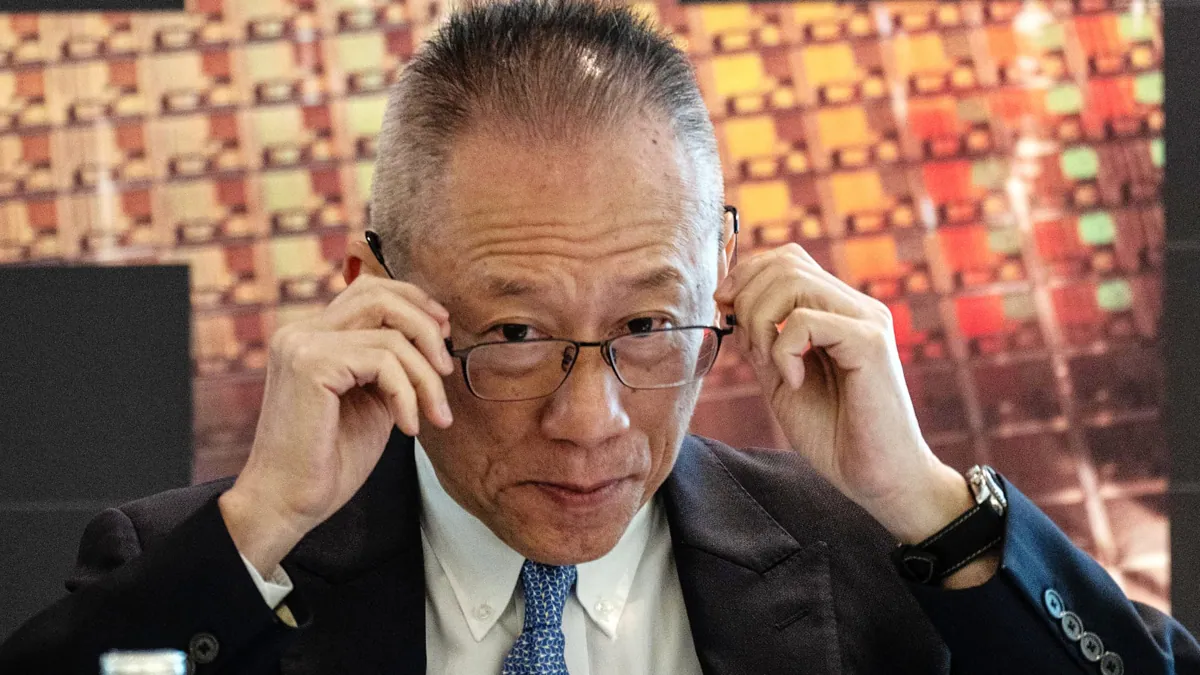
TSMC just made its biggest bet yet on the idea that the AI boom isn't a bubble. The world's largest contract chipmaker is adding another $100 billion to its Arizona expansion, pushing its total investment commitment in the state to $265 billion, according to CFO Wendell Huang, who spoke exclusively with CNBC's Emily Tan.
The move comes with a companion announcement: TSMC has raised its full-year capital expenditure guidance to a range of $60 billion to $64 billion, a jump driven by what Huang described as a "multi-year demand mega trend" among its customers. In plain terms, TSMC isn't treating the current AI chip rush as a temporary spike. The company is building as if the demand curve keeps climbing for years.
"We're seeing this strong-structure, multi-year demand, and we do not plan to leave any food on the table for anybody else," Huang told CNBC. He added that as long as the underlying trend holds, TSMC expects to keep delivering profitable growth for shareholders.
Racing up the node ladder
Behind the investment numbers is a manufacturing story worth unpacking. TSMC makes chips at different transistor sizes, measured in nanometers, and the general rule is that smaller transistors mean more of them can be packed onto a chip, which typically translates into more processing power and better efficiency. TSMC is now fast-tracking a conversion of its 5-nanometer production lines to the more advanced 3-nanometer node to keep pace with customer orders, Huang said.
Arizona's build-out is happening in stages. Phase one, running on 4-nanometer technology, is already operational. The next leap, TSMC's 2-nanometer process, generated its first revenue in the second quarter and is expected to scale up meaningfully from here. Huang called it the company's newest growth engine heading into the third quarter, telling CNBC it's "going to be bigger and bigger in the next few quarters."
That matters because leading-edge nodes carry the highest margins and go into the chips powering the most advanced AI systems. Getting Arizona onto 2-nanometer production, rather than leaving that work concentrated in Taiwan, is a significant shift in where TSMC's most valuable manufacturing actually happens.
The cost of building in America
None of this comes cheap. Huang acknowledged that constructing fabs in the U.S. costs four to five times more than building the same facility in Taiwan. That gap means the dilution to TSMC's margins from its overseas expansion will keep widening as the U.S. operation scales up. Huang framed that tradeoff as a worthwhile one, arguing the investment will help build out a broader domestic semiconductor ecosystem in the U.S. over time.
The $100 billion isn't just about chip fabrication either. Huang said the money will go toward both front-end wafer fabs, where the actual semiconductors are manufactured, and back-end advanced packaging facilities, where finished chips get assembled and prepared for shipment. That's a signal TSMC wants a fuller slice of the production process on U.S. soil, not just the wafer-etching stage.
Markets, tariffs, and China
The announcement landed alongside a mixed stretch for TSMC's stock. Shares closed up more than 1% the day earnings came out, then slumped 7% the following Friday. Even with that drop, the stock remains up roughly 48% for the year. Asked about the swings, Huang said TSMC has no control over financial markets and that management's job is to stay focused on business fundamentals. He also noted that while the broader semiconductor sector is contending with steep cost increases on components, TSMC sees limited impact on its own business because of its concentration in high-end, premium chip segments.
On the geopolitical front, Huang addressed China directly, saying TSMC continues to comply fully with export control rules while still serving Chinese customers, who account for roughly 8% of the company's total revenue. That's a relatively modest slice of the business, and one TSMC appears intent on maintaining carefully within regulatory bounds rather than expanding aggressively.
Looking past AI chips
TSMC is also positioning itself for demand beyond the current wave of AI data center buildouts. Huang pointed to the company's recent joint venture with Sony focused on image sensors as evidence of its push into what he called physical AI, the application of AI systems in real-world devices and environments rather than purely in the cloud. He described the partnership as part of a broader strategy to support specialty technology customers over the long haul, not just the GPU and accelerator makers driving today's headlines.
Taken together, the Arizona expansion, the accelerated node transitions, and the specialty-tech ventures paint a picture of a company convinced that AI-driven chip demand has years of runway left, and one willing to absorb higher U.S. construction costs and near-term margin dilution to make sure it controls as much of that future supply chain as possible. The next few quarters, particularly how quickly 2-nanometer output ramps in Arizona, will show whether that bet is paying off as fast as TSMC expects.


