TSMC's Factory Lines Are the Hottest Real Estate in Tech Right Now
Record profits and 58% projected revenue growth show just how badly Nvidia, Apple, and everyone else building AI chips need Taiwan's chipmaking giant to move faster.
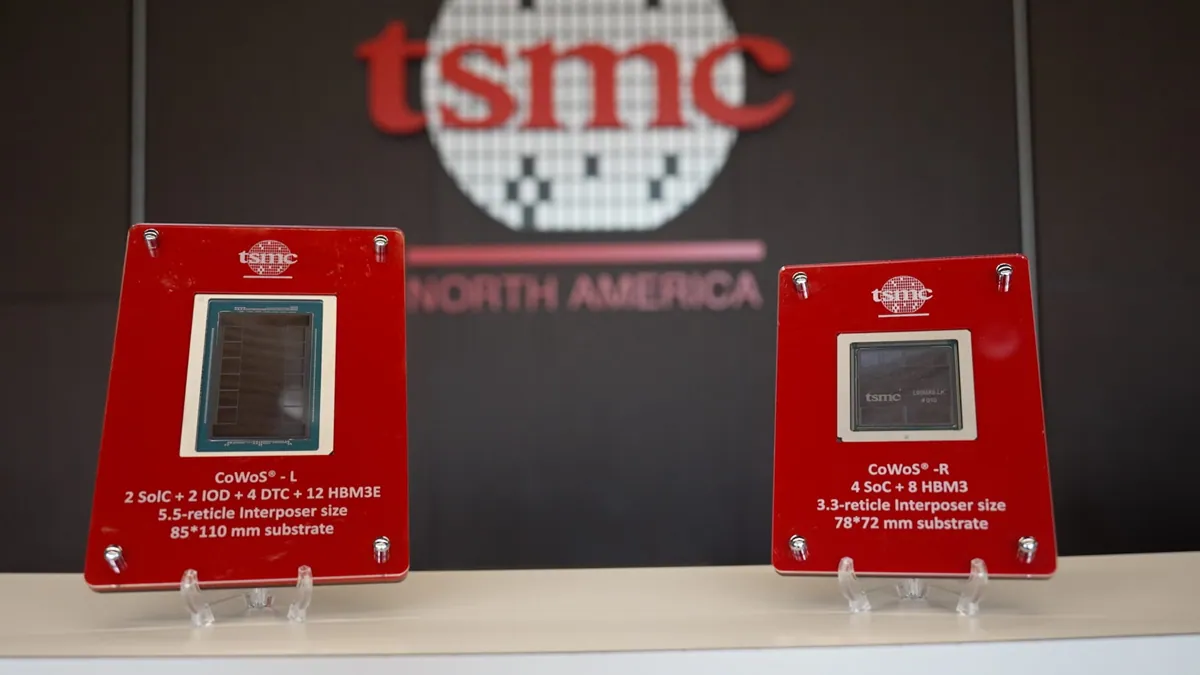
TSMC just posted its sixth consecutive quarter of record profit, and it still can't keep up with demand. The company told investors Thursday it expects fourth-quarter revenue to jump 58% year-over-year, driven almost entirely by one thing: an AI industry that needs more advanced chips than the world's dominant chipmaker can currently produce.
That's not a supply chain hiccup. It's becoming a structural bottleneck for the entire AI buildout.
TSMC manufactures the vast majority of the planet's most advanced semiconductors, including the GPUs and CPUs from Nvidia, AMD, and Broadcom that power AI workloads. Increasingly, it's also the manufacturer of choice for Apple, Google, Amazon, Microsoft, Meta, and OpenAI, all of whom now design their own custom AI chips and need somewhere to actually build them. TSMC said it had capacity for more than 17 million 12-inch equivalent wafers last year. Customers want more than that, and they want it now.
"The competition is extremely fierce," Jordan Klein, an analyst at Mizuho Securities, told CNBC. "It's a game of who can get the most leverage and supply."
Sajiv Dalal, TSMC's North American CEO, put it in blunter terms: he gets at least 10 calls a day about wafer capacity.
Relationships years in the making
Because TSMC's logic chips are so complex and expensive to produce, the biggest players don't just place orders. They negotiate years-long, bespoke contracts behind closed doors. Nvidia CEO Jensen Huang and AMD CEO Lisa Su have each made multiple trips to Taiwan this year, and much of the real decision-making reportedly runs through Kevin Zhang, a TSMC senior vice president who determines which chipmakers get access to its factory lines.
Sid Sheth, CEO of AI chip startup D-Matrix, described Zhang as "currently probably the most popular person on the planet." Sheth's company has cultivated its TSMC relationship for more than two decades, partly through Jerry Qubain, D-Matrix's vice president of manufacturing, who has been visiting TSMC since 1992 and still makes the trip to Taiwan three to four times a year. "This was even before Nvidia was founded," Sheth said. Qubain joined D-Matrix in 2024, bringing that institutional history with him. TSMC declined to comment for CNBC's reporting.
That history matters because capacity at TSMC isn't allocated evenly. The company had 534 customers in 2025, but its top 10 accounted for 78% of net revenue, with the two largest customers alone bringing in 19% and 17%. For a startup like D-Matrix, that means competing for factory space against companies placing orders at a vastly larger scale.
Still, Sheth argues TSMC has reasons to make room for promising newcomers. "They were very supportive of Nvidia and Broadcom when they were very young companies, and now these are their biggest customers today," he said. "They want to see a repeat of that."
Building as fast as it can
TSMC's answer to the squeeze is to build. The company is expanding fabs in Taiwan, Japan, and Arizona, where it's now producing advanced chips in the U.S. for the first time. In July, TSMC tacked on another $100 billion and "several more" fabs to its original six-fab Arizona plan, pushing its total U.S. commitment to $265 billion. It's also reportedly weighing a new fab site in Texas.
None of that solves the near-term problem, since new fabs take years to come online. In the meantime, analysts say TSMC is upgrading existing factories with tools like ASML's extreme ultraviolet lithography machines to squeeze out more capacity. ASML, for its part, beat profit expectations in its own earnings report Wednesday and said customers are already lining up orders through 2030.
The stakes go well beyond TSMC's balance sheet. Klein warned that if compute demand keeps growing at its current pace over the next 12 to 18 months, capacity constraints could jeopardize the massive infrastructure spending and "aggressive revenue growth targets" that AI companies have staked their futures on. U.S. hyperscalers are projecting more than $700 billion in capital expenditures this year alone, with analysts expecting that number to climb further in 2027. A memory chip shortage is compounding the pressure, adding another supply constraint on top of TSMC's logic chip crunch.
The hunt for a backup plan
All of this is pushing some of TSMC's biggest customers to look elsewhere, not necessarily out of dissatisfaction, but as leverage. "People want a second source to be able to twist TSMC's arm and keep them honest on pricing," Dan Hutcheson, an analyst at TechInsights, told CNBC.
Samsung and Intel are the two other companies capable of manufacturing advanced chips at scale, and Intel in particular stands out as the only U.S.-based option. Its foundry business has struggled for years with delays and setbacks, but Hutcheson said every major chipmaker is now testing Intel's production lines, a sign that diversification has become a priority even for companies deeply committed to TSMC.
The broader manufacturing map is shifting too. Trade group SEMI projects 102 new chip fabs will open worldwide by 2029, including 78 in Asia and 15 in the U.S. China is expected to be the biggest driver of that growth, nearly tripling its chipmaking capacity by 2030. The U.S. is racing to keep pace, with fab investment projected to more than double by 2029.
For now, though, TSMC remains the center of gravity. Between its expanding Arizona footprint and what Klein called "extremely fierce" competition for its wafer capacity, he described TSMC as "one of the best strategically positioned companies on the face of the planet." Whether that position holds depends on how quickly the company can turn billions in new fab investment into actual chips, before AI companies' spending commitments outrun their ability to get hardware built.


