Trump Denies Ordering Starlink Cutoff for Ukraine, Contradicting Musk's Account
The president says he's unaware of any new restrictions on Starshield service, even as Ukrainian officials report missions failing without warning.
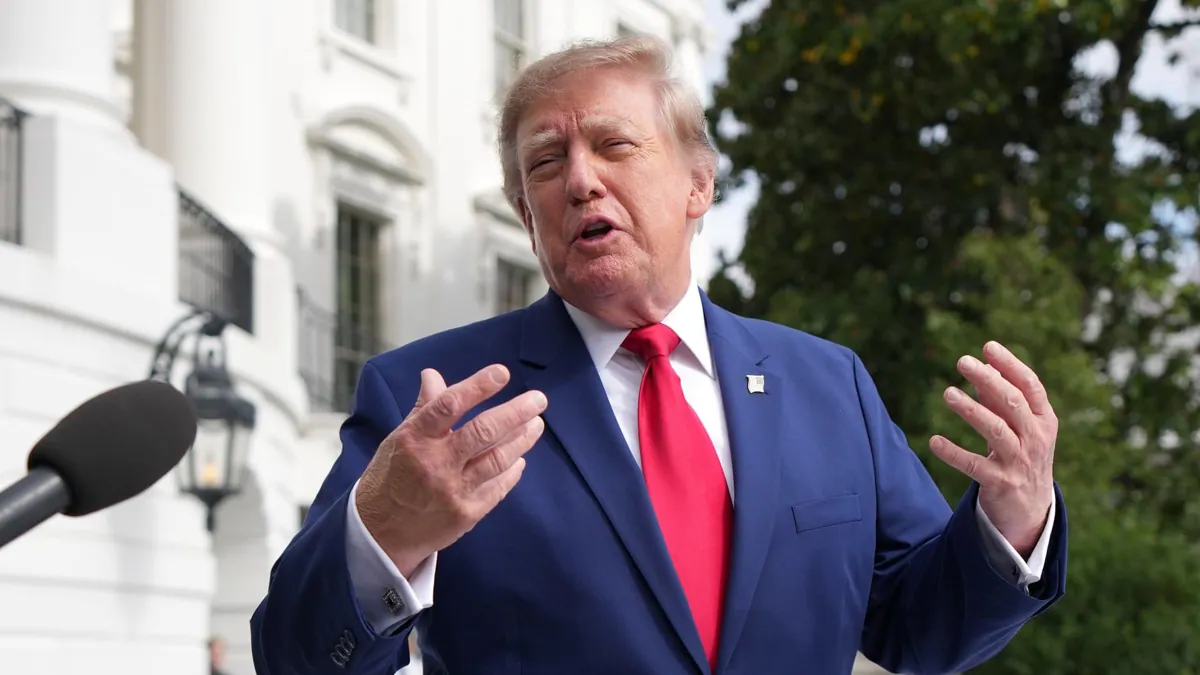
President Donald Trump said Friday that the White House had nothing to do with restrictions placed on Starlink satellite service to Ukraine's military this week, pushing back directly on Elon Musk's suggestion that the U.S. government was behind the move.
Asked by reporters in Washington who was responsible for cutting off access for Ukrainian forces, Trump said he didn't believe anyone had actually ordered it.
"Well, I don't know if it was anybody because it wasn't me, and I don't think it was Elon," Trump said. "And from what I understand, it's the same as it's always been."
That answer puts him at odds with Musk, who on X placed the blame squarely on the U.S. government, writing that "Starshield systems are owned and controlled by the US government." Starshield is the military-grade version of Starlink, SpaceX's satellite internet network, and it's become a backbone of Ukraine's battlefield communications and drone operations since Russia's invasion.
What changed on the ground
Ukrainian officials said this week that SpaceX restricted Starshield access without any advance notice, and that the change disrupted military operations and hampered efforts to protect civilians from escalating Russian strikes. According to the reporting, the restrictions specifically cut connectivity for drones and other vehicles moving faster than 160 kilometers per hour, which matters because Ukraine's forces lean heavily on autonomous drones for reconnaissance and strikes, and those drones need a live data link to do their job.
Serhii Beskrestnov, an advisor to Ukrainian President Volodymyr Zelenskyy, said the lack of warning had real consequences. "Our armed forces did not receive a warning about these restrictions, and this led to the failure of a number of missions," he wrote on Telegram.
The fallout wasn't limited to Kyiv. Poland's deputy prime minister, Radoslaw Sikorski, called out Musk directly on X. Poland has been purchasing Starlink service for Ukraine through SpaceX, which makes the country a paying customer with its own stake in the outcome. "Hey, @elonmusk, big man, are you playing politics with your products again?" Sikorski wrote. "As your European customers, we are watching you."
Why the finger-pointing matters
The dispute lands at an awkward moment for Musk's relationship with the Pentagon. He currently serves as an advisor on technology matters through Project Meridian, a recently announced initiative, which makes his insistence that the government — not SpaceX — controls Starshield's access settings more than a passing deflection. If true, it would mean the restrictions originated somewhere inside the defense bureaucracy rather than at SpaceX headquarters. Trump's response Friday, essentially saying he's not aware of any such order, leaves the actual chain of command unresolved.
Neither Musk nor SpaceX had responded to requests for comment as of Friday, according to the reporting, so there's no account yet from the company itself about why the restrictions appeared or who signed off on them.
The timing also lines up with turbulence for SpaceX's business. The company's shares are down about 11% this week, and SpaceX is set to report quarterly results on Tuesday, meaning the Starshield controversy is playing out right before the company faces investors and analysts directly.
For Ukraine, the practical stakes are immediate: a communications network that moves faster than almost any adversary can match is only useful if it stays on. Whether this was a technical adjustment, a policy decision, or something else entirely remains an open question — and one that Tuesday's earnings call, or further comment from SpaceX, may start to answer.


