TSMC's Record Profits Come With a Catch: Trump's Made-in-America Push Is Eating Into Margins
The chipmaking giant posted a 77% profit jump, but executives warn its U.S. manufacturing buildout will keep pressuring margins for years.
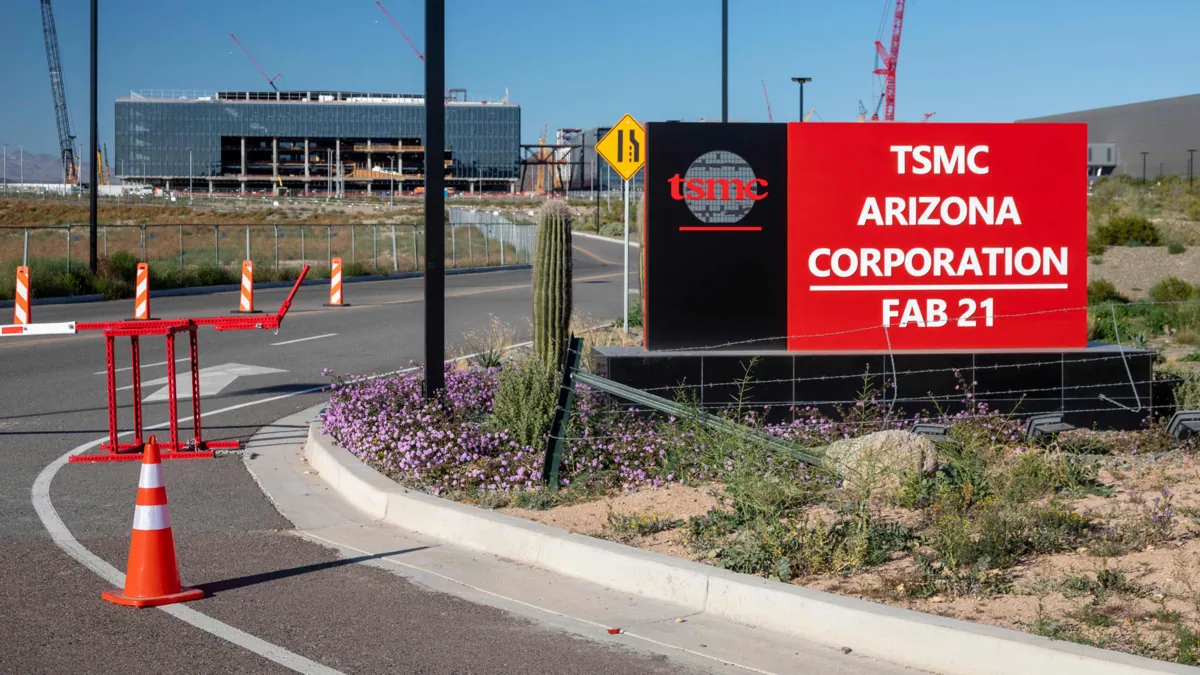
TSMC just had one of the best quarters in its history, and it's still bracing for the bill to come.
The Taiwanese chipmaker, which manufactures processors for Nvidia, Apple, and much of the rest of the tech industry, reported second-quarter profit up 77.4% year over year, blowing past Wall Street's expectations. That's the kind of number you'd expect from a company riding the AI boom about as well as anyone can. TSMC's market cap has more than doubled over the past 12 months.
But buried in the earnings call was a warning that matters just as much as the headline number: the company's aggressive expansion into the U.S., driven in large part by pressure from President Donald Trump, is going to keep squeezing its margins for years to come.
Since Trump returned to office in 2025 and began threatening tariffs on companies that don't manufacture in America, TSMC has piled up commitments to build here. The running total now sits at $200 billion, including a $100 billion investment announced just last week for advanced chip manufacturing and packaging facilities on U.S. soil. Commerce Secretary Howard Lutnick credited the administration directly, calling the latest investment a result of Trump's leadership and saying it would create "tens of thousands of American jobs."
The problem is that building chips in America costs a lot more than building them in Taiwan.
The price of building at home
TSMC CFO Wendell Huang told analysts on the earnings call that gross margin actually came in ahead of guidance this quarter, but that strength was offset by dilution from the company's overseas fabs. He said that dilution will deepen over the next several years as those U.S. projects ramp up, estimating a hit of 2% to 3% to gross margin in the early stages, widening to 3% to 4% later on.
Morningstar senior equity analyst Phelix Lee put a rough number on the gap: TSMC's U.S.-made chips likely cost 20% to 50% more than the same chips produced in Taiwan, depending on subsidy timing, tax credits, and other variables. Lee expects TSMC's customers to absorb a growing share of that extra cost rather than TSMC eating it alone.
There's already evidence that's happening. Nikkei reported this week that TSMC plans to raise prices on both advanced and mature chip production by as much as 10% in 2027. TSMC declined to comment on pricing specifics to CNBC.
Why can TSMC get away with passing costs along? Because nobody else can really compete with it at the cutting edge. Gaurav Gupta, a VP analyst at Gartner, said TSMC's dominance in leading-edge chip manufacturing means much of the added expense will land on customers, many of whom are either trying to diversify their supply chains anyway or are under direct pressure from Washington to buy chips made on U.S. soil.
Why TSMC can absorb it
None of this is close to threatening TSMC's business. Its gross margin actually ticked up to 67.7% this quarter, from 66.2% in the first quarter, a level most manufacturers would envy regardless of geography. Gil Luria, head of technology research at D.A. Davidson, said the margin gap created by U.S. expansion is one TSMC can comfortably afford given how profitable it already is.
TSMC isn't alone in getting pulled toward American soil, either. SK Hynix and other Asian chipmakers are pursuing their own U.S. facilities, though TSMC's commitment dwarfs everyone else's. A White House spokesperson framed the wave of investment as a direct product of Trump's trade agenda, pointing to a trade deal with Taiwan and renegotiated CHIPS Act funding as the mechanisms behind it.
Huang, for his part, framed the U.S. expansion less as a political concession and more as a response to what he called a "multi-year demand mega trend" among TSMC's customers, alongside the political pressure.
A trend bigger than one president
Lee's read is that the shift toward domestic manufacturing has momentum that predates and will likely outlast the current administration. Companies spooked by Covid-era supply chain chaos have been looking to diversify where their chips get made for years, he said, and that instinct toward geographic hedging isn't going away regardless of who occupies the White House.
"We expect made-in-US pressure to persist beyond Trump, although it is less clear how carrot-and-stick will be distributed," Lee said.
That's the real story underneath the earnings beat. TSMC is proving it can absorb the cost of reshoring while still posting record profits, largely because it doesn't have serious competition and its customers have nowhere else to go. The open question is how much of that cost eventually shows up in the price of every phone, laptop, and AI server that depends on a TSMC-made chip, and how long companies keep quietly paying the premium for a supply chain built on political insurance rather than pure economics.


