Trump Declares Factory Robot Imports a National Security Risk
A new proclamation sets up 180 days of trade talks over imported industrial robots, with tariffs on the table if no deals emerge.
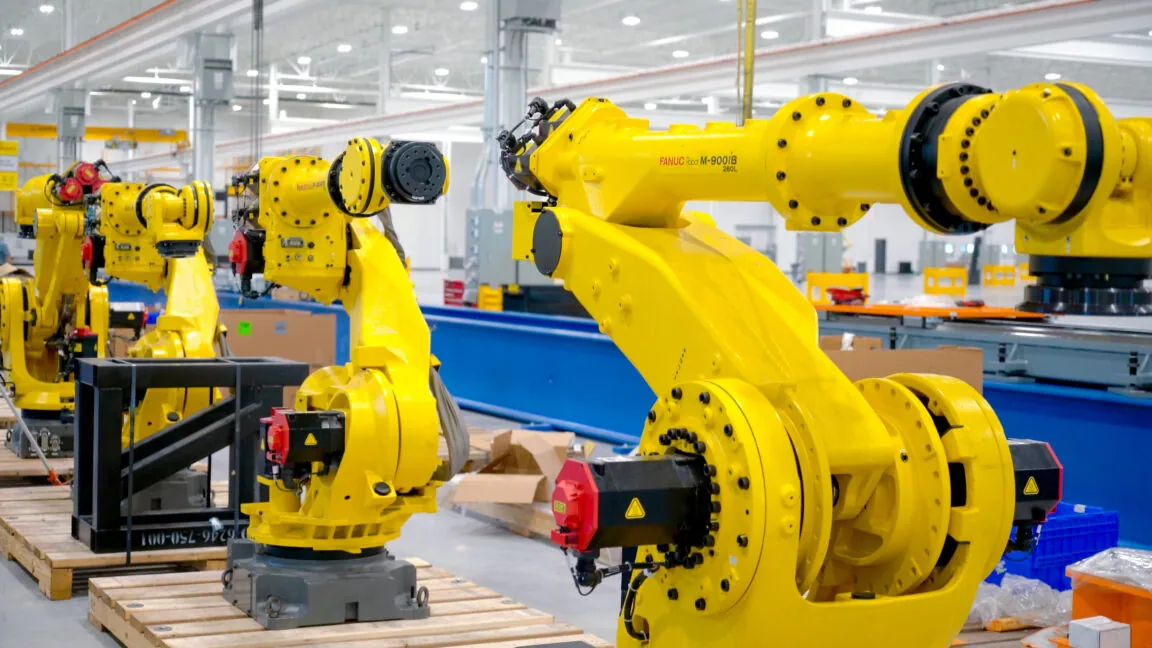
President Donald Trump has officially labeled imported factory robots a national security threat, setting the stage for a new round of trade negotiations and the possibility of tariffs on robotics and machinery coming into the United States.
The presidential proclamation, issued October 28, directs the US to open talks with trading partners over "adjusting imports" of robotics, industrial machinery, and related components. It gives those negotiations 180 days to produce agreements. If that deadline passes without a deal, the proclamation says Trump could impose tariffs, duties, quotas, or fees on the robots and machinery in question.
The move puts a cloud of uncertainty over companies that depend heavily on foreign-built industrial robots to run their factories. That list includes some of the largest manufacturers in the country: General Motors and Ford, Tesla, and defense contractors Boeing and Lockheed Martin. Industrial robots, the kind that weld car frames and move parts on assembly lines, are a backbone of modern manufacturing, and many of the machines used in US plants are built overseas.
The proclamation leans on an investigation led by Commerce Secretary Howard Lutnick, which reportedly concluded that robot imports "pose[] risks to the United States industrial base and threatens the long-term competitiveness of the United States" in a sector the administration views as increasingly tied to national security. Trump's proclamation frames industrial machinery as essential not just for everyday manufacturing but for building US military weapons systems, calling it a "driving force" behind the country's critical infrastructure.
The Commerce investigation also flagged what it called "unique security and safety risks" in these imported systems, warning of potential cybersecurity vulnerabilities that could lead to serious consequences for the country.
A familiar playbook, with a key exception
The cybersecurity language here tracks closely with arguments the Trump administration's Federal Communications Commission used back in July 2026, when it banned new models of foreign-made consumer and service robots, including robotic vacuums, four-legged robot dogs, and humanoid robots.
But that earlier FCC ban carved out an important exception: it didn't touch industrial robot arms or other fixed, stationary robots, the kind of equipment that dominates automotive factories and logistics warehouses. Those machines were specifically exempted at the time.
This new proclamation effectively closes that gap. It brings the exact category of robots the FCC left alone, factory-floor machinery, into the national security conversation for the first time. That's a meaningful shift. The earlier action targeted gadgets and mobile robots that consumers or businesses might buy individually. This one targets the industrial equipment that entire supply chains and production lines are built around.
Why this matters for manufacturers
For now, nothing changes immediately. No tariffs have been imposed, and the proclamation sets up a negotiating window rather than an instant penalty. But the 180-day clock creates real pressure. Automakers and defense manufacturers that plan factory investments years in advance now have to factor in the possibility that the robots and machinery they rely on could get more expensive or harder to source, depending on how talks with trading partners play out.
It also signals where the administration's trade and industrial policy is heading. By tying robotics imports to national security and defense production, Trump's proclamation gives the government broader justification to intervene in a sector that, until now, had largely avoided the kind of scrutiny applied to semiconductors, steel, or telecom equipment.
What happens next depends on those negotiations. If the US and its trading partners reach agreements within the six-month window, the immediate threat of tariffs may fade. If they don't, companies running on imported industrial robots could be looking at new costs or supply disruptions by spring.


