The FCC Just Banned a Huge Chunk of China's Robot Industry From the US
The new rule covers far more than humanoid robots — it could sweep in future robot vacuums and the power inverters that run solar systems, too.
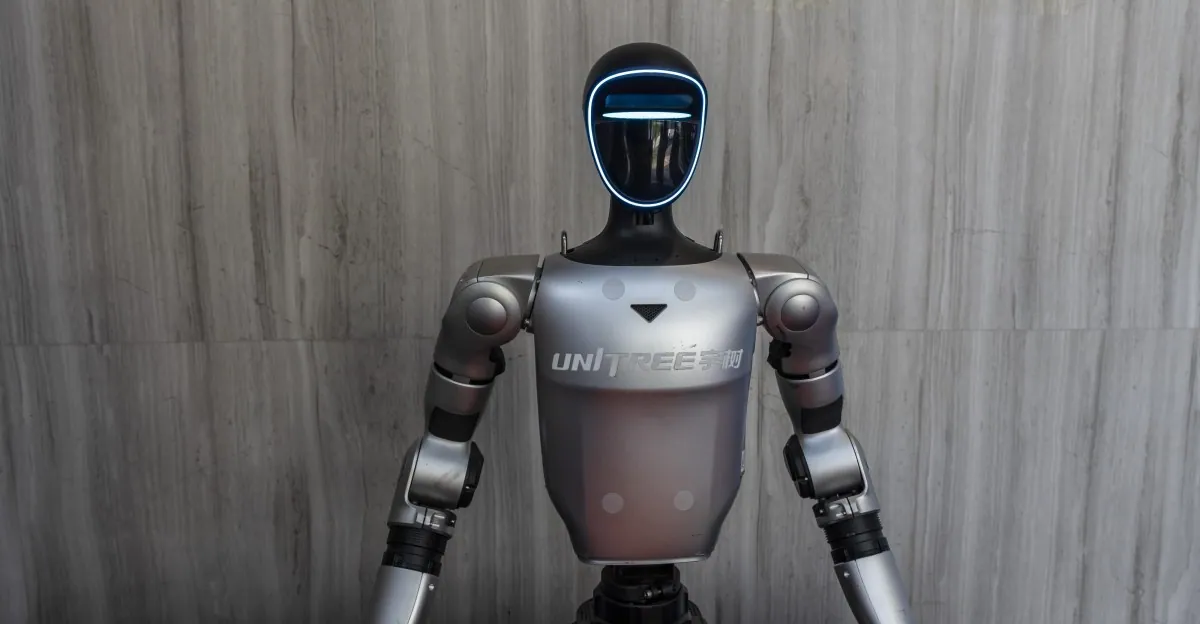
The Federal Communications Commission announced Tuesday that it will ban imports of "advanced robotic devices" and power inverters manufactured in foreign countries, a move that lands squarely on China's booming robotics industry even though the agency insists the rule isn't aimed at any one country. Reuters first reported the news.
The timing isn't subtle. China has spent the last couple of years turning out humanoid and quadruped robots at a clip that's produced no shortage of viral clips — robots dancing to Michael Jackson, robots fighting in MMA-style matches, robots showing up on America's Got Talent. It's become something of a national showcase. At the same time, the US has its own humanoid ambitions: Tesla recently discontinued the Model S and Model X specifically to free up manufacturing space for its Optimus robot.
But the FCC's ban isn't just about robots that walk. The agency's own FAQ defines an "advanced robotic device" broadly enough to catch almost anything with wheels, sensors, and a network chip. Under the FCC's language, a qualifying device is one capable of "locomotion, obstacle avoidance, navigation, or movement on the ground," equipped with a sensor to read its environment, built with a chip for network connectivity, and weighing more than 4.4 pounds including its dock. That last detail matters: it means a future robot vacuum could technically fall under the ban unless its maker secures a waiver. Legs are not a requirement.
The ban also extends to power inverters, the hardware that converts electricity for use in solar panel systems and other renewable energy setups. That's a pointed inclusion, since China is home to two of the world's dominant inverter makers, Sungrow and Huawei — the latter already on the US government's blacklist. The FCC's stated justification is broad: it cites "unacceptable risks to the national security of the United States or the safety and security of United States persons."
How the waiver process actually works
This isn't a total lockout. Companies can apply for waivers to keep importing new robots or inverters, similar to the process the US already uses for its ban on foreign-made routers. But there's a catch that's easy to miss: the waiver application doesn't require companies to do anything to actually improve the security of their products. What it does require is a detailed plan to shift manufacturing to the United States. In other words, the government's primary lever here isn't security hardening — it's reshoring production.
Devices already in American homes and businesses are unaffected. Existing robots and inverters can keep running, and the FCC says it will allow security and compatibility updates to continue flowing to them through an additional waiver, with a cutoff date of January 1st, 2029.
That update provision comes with a wrinkle, though. Companies aren't currently required to notify the FCC when they push a security update to a device. So while the agency frames this as a safeguard that lets existing products stay protected, there's no real mechanism forcing transparency about what those updates contain or when they happen. It's a pattern the FCC has repeated with its router restrictions: promising continuity of security support without building in the oversight needed to verify it.
What it means going forward
The practical effect is that any company building mobile robots or power inverters overseas — China in particular — now faces a choice: build a US manufacturing plan and apply for a waiver, or stay out of the American market entirely. For an industry moving as fast as humanoid robotics, that's a real fork in the road, especially for Chinese manufacturers who've been racing to commercialize designs that are still mostly demo reels and viral stunts.
For American companies like Tesla, the rule effectively clears more room at home, reinforcing the push toward domestic production of robots at exactly the moment Optimus is supposed to be scaling up. Whether the ban meaningfully improves security, or simply shifts where these machines get built, is the open question the FCC's own paperwork doesn't answer.


