Sony's All-Digital PlayStation Plan Could Wipe Out the $7.2 Billion Used Game Market
Analysts say the shift to disc-free PS5 releases in 2028 will accelerate the decline of physical game retail, and there's little anyone can do to stop it.
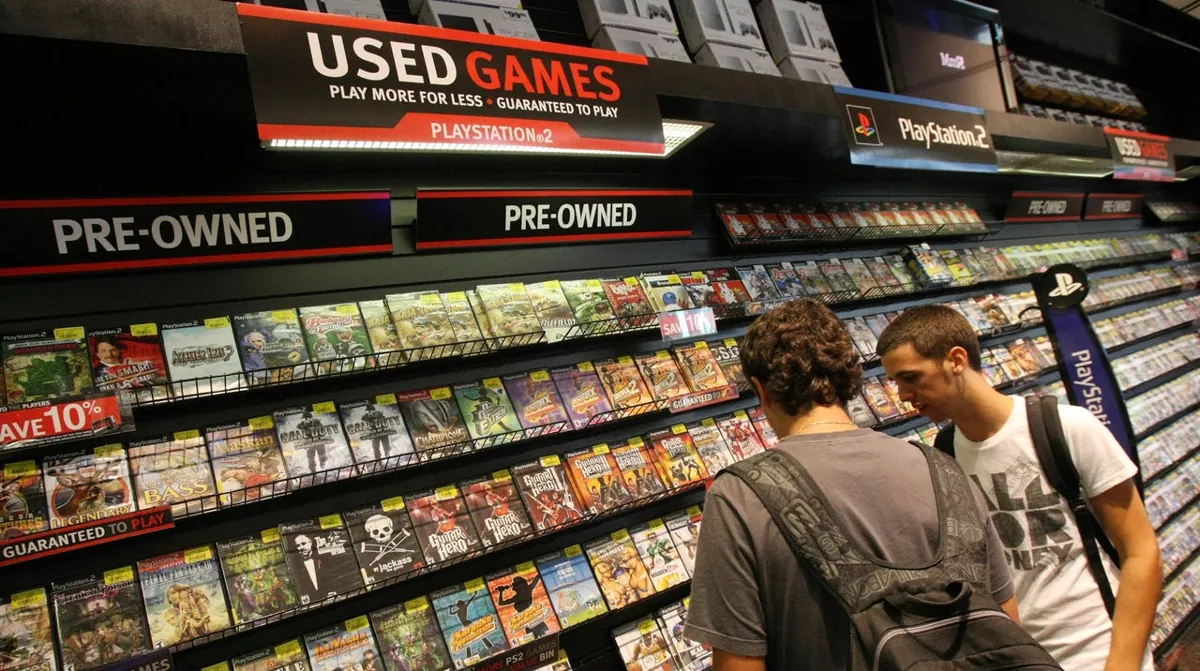
Sony's plan to stop making PlayStation discs for new games starting in 2028 isn't just a format change. Analysts say it could gut a global second-hand video game market currently worth $7.2 billion, and one that was actually projected to keep growing.
That figure comes from market research firm Dataintelo, cited by CNBC, which pegged last year's used game market at $7.2 billion and forecast growth to $13.8 billion by 2034. Consoles account for 42.3% of that revenue, with North America the largest regional market and retailers like GameStop and CEX dominating the space in 2025. Dataintelo attributed the market's staying power to affordability concerns, a resurgent retro gaming culture, and what it called "digital-to-physical gaming transitions."
That growth story now looks shaky. Sony announced it will stop producing discs for new PlayStation games beginning in January 2028, after which new titles will only be available digitally through the PlayStation Store and at retailers. Games that released, or are set to release, before that date in disc format aren't affected. Sid Shuman, Senior Director of Content Communications at Sony Interactive Entertainment, framed the move as simply following the data. "In response to shifting trends in consumer preference, new games will be released on PlayStation Store and at retailers in digital formats only," he wrote on the PlayStation Blog, describing it as a "natural direction" that aligns the company with "how most of our community prefers to access and play games today."
The used market's foundation is cracking already
The numbers back up Sony's framing, even if the decision is unpopular. Games industry advisor Mat Piscatella of Circana told CNBC that only seven PlayStation games have sold more than 100,000 physical units in the U.S. so far this year. During the week ending July 11, just two PlayStation titles crossed 10,000 physical units sold domestically. Games industry analyst Piers Harding-Rolls of Ampere noted that digital made up just 13% of full-game unit sales on Sony consoles when the PS4 launched in 2013. By 2025, that number had climbed to nearly 80%.
That shift is exactly why analysts think the used market is now in real trouble. Kazunori Ito, director of equity research at Morningstar, told CNBC the second-hand market for games will "keep shrinking and eventually disappear." Michael Pachter, managing director of strategic planning at Wedbush Securities, went further, telling CNBC that "brick and mortar game retail is doomed." He pointed out that historically, roughly a third of all games sold have been used copies, a business built almost entirely on the existence of a physical disc to resell or trade in.
Why Sony wins either way
The financial logic is straightforward. When Sony sells a physical copy of one of its own games, like The Last of Us, it keeps only around 65% of the revenue. Retailers take roughly 30%, and manufacturing eats up about 5% more. For third-party physical games, such as Activision's Call of Duty, Sony collects a licensing fee of around 15%.
Digital changes that math dramatically. A first-party game sold through the PlayStation Store hands Sony 100% of the revenue. Even third-party digital sales net Sony a 30% cut, meaning roughly $21 on a $70 copy of Call of Duty. At a moment when console hardware sales are expected to decline as prices rise, higher-margin digital sales become even more valuable to Sony's bottom line.
Backlash hasn't moved the needle
The reaction from players has been loud. Petitions have circulated online, and PlayStation's social media posts have been flooded with complaints about ownership and game preservation, at times overshadowing the launch of unrelated new titles. The UK's Digital Entertainment and Retail Association didn't hold back either. ERA CEO Kim Bayley called the decision "a triumph of corporate convenience over consumer choice," citing the organization's data showing 25% of gamers under 25 still use discs. "Every year, millions of gamers still choose to buy physical copies because they value true ownership," Bayley said. "A disc can be shared with family, traded in, collected, preserved and, crucially, still played years from now. A download licence often offers none of those freedoms."
None of it appears likely to change Sony's course. Dr. Serkan Toto, CEO of Japanese consultancy Kantan Games, told IGN that Sony anticipated the backlash and is simply waiting it out. "Sony will not reverse this decision," Toto said. "They of course knew what the online reaction would look like, and they now wait for this storm to pass." He noted Sony has more than 120 million active PlayStation users and around 50 million PlayStation Plus subscribers. Even a mass protest cancellation of 500,000 subscriptions, he said, would amount to just 1% of that subscriber base, "of course not enough for Sony to start rethinking. Digital is just too lucrative."
Some analysts place the blame for this outcome on consumers themselves. Robin Zhu, a games analyst at Bernstein, told the Financial Times that physical media advocates had years to make their case with their wallets and didn't. "If gamers and preservationists had bought more physical games, Sony wouldn't have seen the digital sales ratios that justify this decision," Zhu said.
Regulators don't seem inclined to intervene either. According to reports over the weekend, the EU indicated it has no power to stop Sony, or any company, from discontinuing physical discs.
Harding-Rolls, writing on Ampere's website, acknowledged the concerns swirling around the announcement, from collecting and preservation to simply being able to play older physical games on future hardware. But he framed it as the end of a long, one-directional trend rather than a sudden break. "Console gaming is the last hold-out for physical media in the gaming sector, but physical product has been declining in importance," he wrote.
The used game market has survived the rise of digital storefronts for over a decade by leaning on console gaming's stubborn attachment to discs. Sony's 2028 deadline removes that last anchor point for its platform. Whether the secondhand economy that grew up around trading in and reselling PlayStation games can survive without new physical stock to feed it is, according to the analysts CNBC and IGN spoke to, no longer really in question.


