ASML Raises Its Outlook Again, and the Reason Is the Same One Everywhere: AI
The sole maker of the West's most advanced chipmaking machines says demand from both memory and AI processor manufacturers is outrunning even its own forecasts.
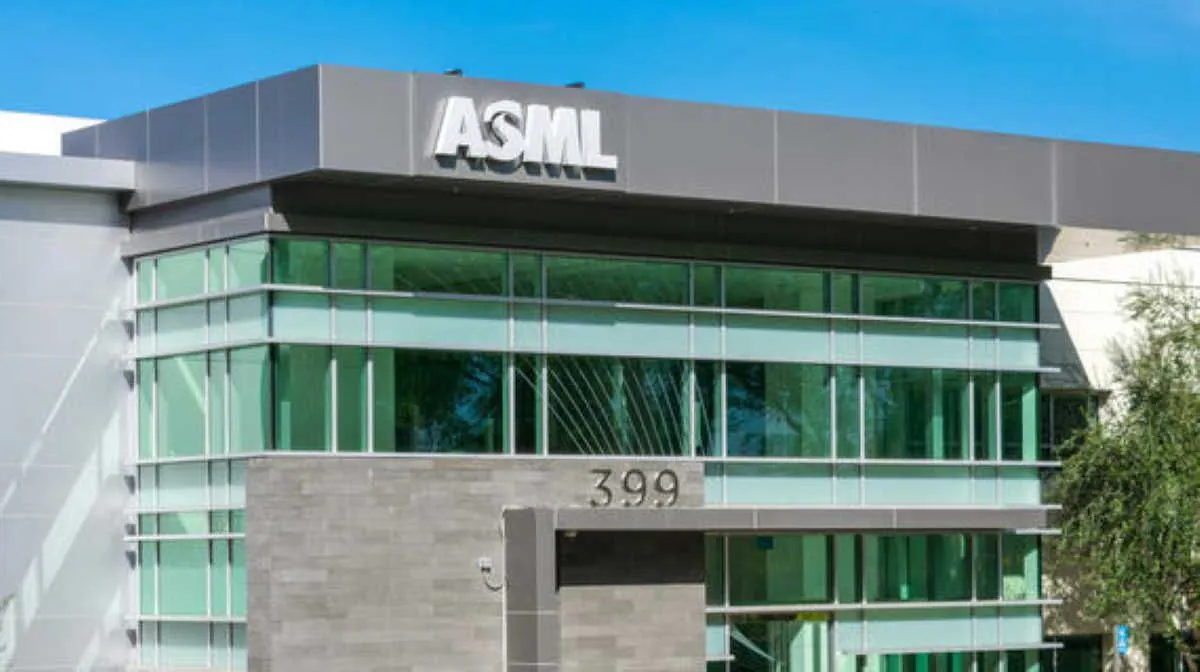
ASML sells the machines that make advanced chips possible, and right now it can barely keep up with what its customers want to buy. The Dutch company has raised its guidance for the year, telling investors it expects stronger sales than previously projected, and the reason boils down to one word: AI.
ASML holds a singular position in the semiconductor world. It's the only company that makes the extreme ultraviolet (EUV) lithography systems needed to print the tiniest, most advanced chip features, the kind used in everything from Nvidia's AI accelerators to the processors in your laptop. Every major Western chipmaker, from TSMC to Samsung to Intel, depends on ASML's machines. So when ASML says demand is surging, it's a direct read on how much the entire chip industry is scrambling to build capacity.
According to ASML's CEO, the surge is happening on two fronts at once: advanced logic chips (the processors and AI accelerators that power everything from PCs to data centers) and DRAM, the memory chips currently in desperately short supply worldwide. "The dynamics are very similar in both advanced logic and DRAM, and the plans to build up capacity are equally aggressive," he said, adding that customers in both categories are locking in long-term supply agreements that give them the confidence to expand aggressively.
The numbers behind that confidence are striking. ASML now expects net system sales tied to advanced logic foundries to grow more than 25% this year. On the memory side, the company points to the ongoing price spikes in both standard DDR memory and HBM (high-bandwidth memory, the specialized stuff used to feed AI chips) as the trigger for a wave of new fab investment. Customers aren't just adding capacity now, ASML says, they're also planning further expansion through multiple new "mega fabs."
The EUV machines themselves tell the same story. ASML's CFO said the company now expects to ship around 65 Low-NA EUV systems this year, which would push EUV net system sales up more than 45% year-over-year. As the CFO put it, that demand is being "fueled by very strong momentum in both DRAM and advanced logic."
Why this is happening now
None of this is a mystery. It's the AI buildout, playing out in physical form. Chip demand from AI companies has been so relentless that it's dragging the memory market down with it, creating what ASML's CEO calls "supply challenges" for DRAM. That's corporate-speak for the memory shortage that's been pushing up prices across the board, not just for AI-specific chips but for the everyday DDR memory found in ordinary PCs.
The timing lines up with other news breaking the same day. TSMC, the world's largest chipmaker and ASML's single biggest customer, separately announced plans to invest another $100 billion in US-based manufacturing. Given what ASML is describing, "significant investments in fab expansion" seems like an accurate summary of where the entire industry is headed right now.
ASML also offered a glimpse into which chip technologies are driving the spending. Some of the new demand is aimed at 3-nanometer manufacturing capacity for AI accelerators, the kind of process node likely used for Nvidia's Blackwell and upcoming Rubin chips, both built on TSMC lines. There's also investment flowing into 4nm and 5nm production, which ASML says is needed to cover the wide range of chip types AI products actually require, not everything needs the bleeding edge. And customers are already committing money toward 1.4nm development, the node that will eventually become TSMC's A14 process and Intel's 14A process. TSMC's version is reportedly nearing production readiness, while Intel's appears to be ramping up without major hiccups.
A shortage that might not go away
All this new capacity sounds like good news for anyone hoping memory and chip prices come back down to earth, especially with Chinese manufacturers also ramping up production of their own. But the relief may be limited. Recent research cited alongside ASML's announcement suggests that even with all this expansion, DRAM supply is still projected to fall short of demand by 2030.
That leaves a somewhat uncomfortable possibility on the table: the fastest route to cheaper memory and chips might not be more factories, but a slowdown in AI demand itself, whether through market correction or the AI investment cycle simply cooling off. Neither scenario is exactly reassuring, since a pullback of that scale would carry its own economic fallout. For now, though, the machines keep shipping, the fabs keep multiplying, and ASML's order book keeps growing faster than even ASML expected.


