Tesla Enlists Turo to Get More Drivers Into the FSD Seat
The rental marketplace will flag which Teslas have Full Self-Driving (Supervised) and give hosts a free month of the software, as Tesla leans harder into FSD as its real sales pitch.
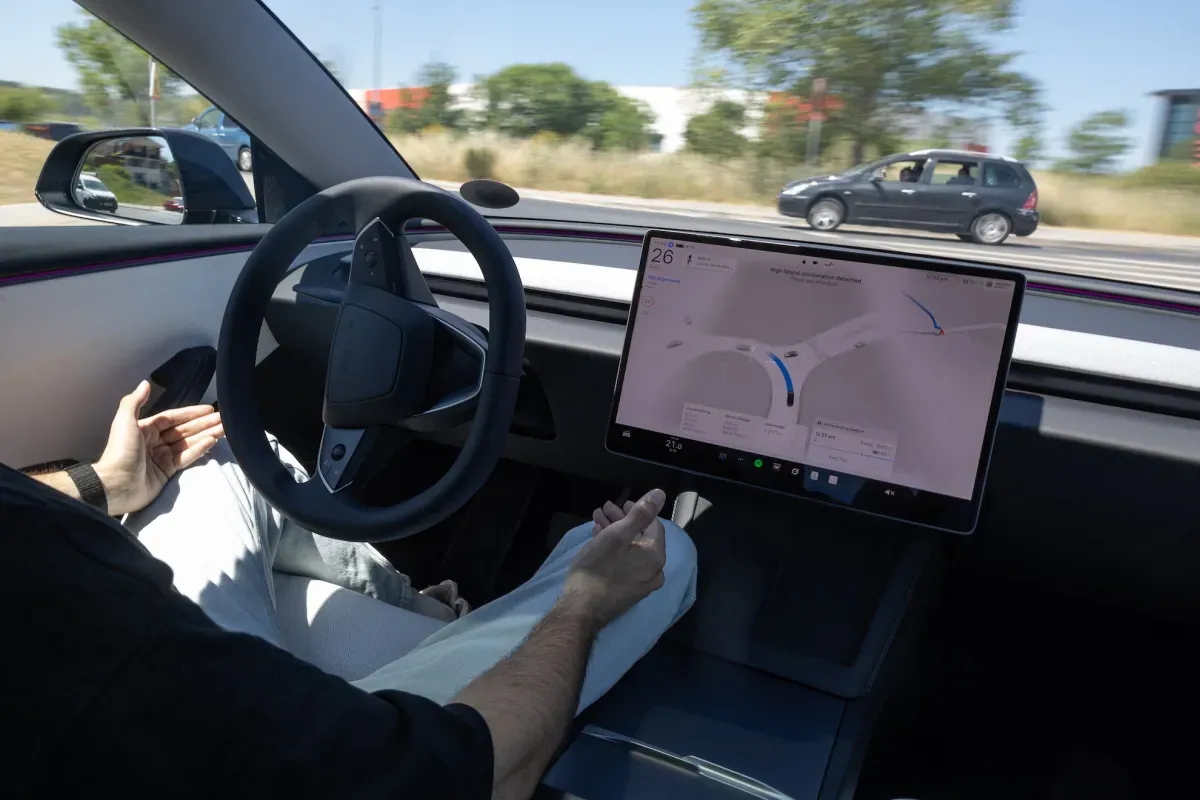
Tesla's biggest challenge with Full Self-Driving has never really been the technology. It's getting people to try it. Now the company is turning to an unlikely partner to solve that problem: Turo, the peer-to-peer car rental marketplace, which will start labeling which Teslas on its platform come equipped with FSD and letting renters experience it firsthand.
Under the new arrangement, Turo "hosts" — the owners who list their cars for rent — will be able to tap into Tesla's API to verify and advertise that their vehicle has FSD enabled. Eligible hosts also get a free one-month trial of the software, giving them an incentive to activate it even if they haven't paid for it before. Listings will be able to carry a "Self-Driving" tag, and renters who book one of these cars will see in-app language warning them to stay alert and ready to take control at any moment, along with the option to watch a Tesla-made tutorial before they drive off.
It's a fairly elegant workaround to a problem Tesla has struggled with: most people who've never owned a Tesla have also never sat through a drive with FSD running. Turo gives the company a distribution channel it doesn't otherwise have, reaching renters — tourists, business travelers, curious tire-kickers — who might never set foot in a Tesla showroom.
The timing isn't a coincidence
This deal lands just days after Tesla disclosed new numbers suggesting its FSD push is finally gaining traction. According to the company, roughly 1.7 million customers have paid for the software out of more than 10 million Teslas built and sold worldwide. More notably, Tesla said over 75% of customers who took delivery of a car in North America during the third quarter opted into an FSD subscription — up about 20% from the prior quarter.
That growth is happening even as Tesla's U.S. sales have been sliding, which tells you something about where the company is placing its bets. CEO Elon Musk put it bluntly in a post last week: "People are buying FSD with a car attached, not the other way around." Tesla's finance chief, Vaibhav Taneja, echoed that framing on the company's earnings call, saying customers are increasingly walking into showrooms asking for "an FSD drive" rather than a specific model like the 3, Y, or Cybertruck.
That shift in how Tesla sells its cars has been building for a while. Over the past year, the company has reworked parts of its retail experience to foreground FSD rather than treat it as an add-on, betting that the software, not the hardware, is what actually closes the sale. The Turo partnership extends that same logic outside Tesla's own stores and into a marketplace the company doesn't control, letting the software sell itself to people who are already renting cars for entirely different reasons.
Why Turo wants in
For Turo, the calculus is just as straightforward. Tesla's Model 3 and Model Y are already the third and fourth most-rented vehicles on the platform this year, according to the company, so adding an FSD angle gives hosts a new way to differentiate listings that are already popular — and potentially charge more for them. Turo described the move as a way to boost "host earning opportunities as interest in self-driving technology grows."
Turo CEO Andre Haddad framed the deal as proof of consumer appetite that's been going untapped. "Most travelers have had limited opportunity to experience driver's assistance technology, but the demand is clear," Haddad said in a statement, citing Turo's own research showing 55% of Americans are interested in driverless technology for travel — a figure that climbs to 71% among Gen Z. "Turo's marketplace model is uniquely positioned to close the gap between consumer curiosity and hands-on access," he said.
That gap is real. FSD, despite the name, is not autonomous driving — Tesla brands it "Full Self-Driving (Supervised)" for a reason, and the system still requires a human behind the wheel ready to intervene. That's exactly why Turo's rollout comes wrapped in caution: the app will tell renters that "when enabled, your vehicle will drive you almost anywhere with your active supervision, requiring minimal intervention," language that's as much a liability shield as a feature description.
Still, the partnership is notable as what Turo calls an "industry-first integration," and it gives Tesla something it's been chasing for years: a low-stakes, low-commitment way for ordinary people to try FSD without buying a car or paying for the subscription themselves. If Tesla's own numbers are any indication, that first experience behind the wheel may be doing more to sell the company's cars than the cars themselves.


