Tesla's Optimus Robots Start Rolling Off the Line as Profits Sink 43%
The electric vehicle maker says its humanoid robot is finally ready for commercial-grade manufacturing, even as spending on that bet and others hammered its bottom line.
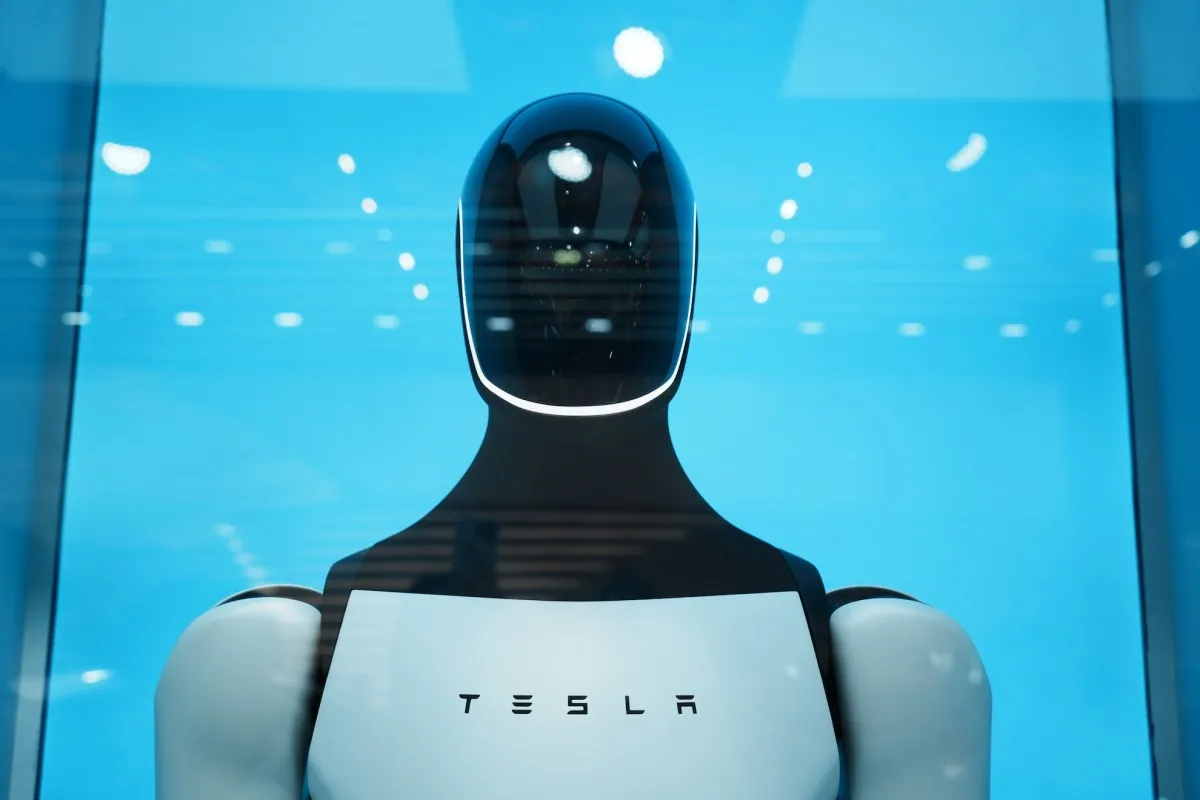
Tesla has begun manufacturing its Optimus humanoid robot at the Fremont, California plant that once built nothing but electric vehicles, the company said Wednesday. It's the clearest sign yet that Tesla is willing to let its robotics ambitions eat into the factory floor, and into its profits, as it tries to prove Optimus can be more than a demo.
In its third-quarter letter to shareholders, Tesla called the robots coming off that line its "first production-quality bots," adding: "While we will continue to iterate on the hardware and manufacturing process, we have proven that the current manufacturing process for Optimus is suitable for a commercial product."
That's a notable claim for a project that has spent years oscillating between genuine engineering progress and skepticism that it's mostly a showcase for Tesla's AI ambitions. Turning Optimus from a prototype into something manufactured at scale, on a line that used to spit out Model 3s and Model Ys, is a real milestone if Tesla can sustain it.
It's also an expensive one. The company's third-quarter results, released alongside the Optimus news, show a business where revenue barely moved while spending climbed hard, and profit paid the price.
The numbers behind the bet
Tesla's net income fell 43% year-over-year, dropping to $787 million from $1.37 billion in the same quarter last year. That decline tracks almost exactly with the pattern across the rest of the report: flat top-line growth, rising costs tied to Optimus, artificial intelligence, and autonomous driving, and a profit line that absorbed the difference.
Total third-quarter revenue came in at $28.04 billion, essentially flat compared to the $28.09 billion Tesla brought in during the third quarter of 2025. It was also down roughly $200 million from the prior quarter's $28.23 billion. For a company that has long been judged on growth, flat is not the story investors want to hear, especially when expenses are moving in the opposite direction.
The core EV business, still Tesla's main engine, held steady rather than grew. Vehicle sales generated $20 billion, flat year-over-year. Tesla delivered 486,532 vehicles in the quarter, about 6,000 more than the previous quarter but fewer than the same period a year earlier. That's a business that's stabilized, not one that's expanding.
Elsewhere, the picture was more mixed. Tesla's solar and energy storage segment dropped 16% year-over-year to $2.8 billion, which the company attributed to tariff-related customer refunds. On the other side, its services business, which includes subscriptions to Tesla's Full Self-Driving driver-assistance software, grew 33% year-over-year to $4.6 billion, one of the few genuine bright spots in the report.
That services and other segment did more than grow. It posted a record $734 million in gross profit for the quarter, and according to Tesla, that cushion is largely what kept the company profitable at all. Lower sales of regulatory credits, a revenue stream Tesla has historically leaned on, added further pressure to the bottom line.
A company mid-pivot
Put together, the quarter reads like a company in the middle of a deliberate trade-off. Tesla is pouring money into Optimus, AI infrastructure, and self-driving technology at a pace that's currently outrunning what its existing businesses bring in. The EV side isn't shrinking, but it isn't growing either, and that leaves less room to absorb the cost of the bets Tesla is making on what comes next.
The Optimus production milestone is the clearest evidence of where that money is going. Converting a factory space that used to build cars into one that builds robots is a significant operational shift, not just a messaging one. Tesla's own framing, that it has proven the manufacturing process works for a commercial product, suggests the company sees this as a turning point rather than another incremental prototype update.
Whether that bet pays off depends on questions the earnings report doesn't answer: how many Optimus units Tesla can actually produce, what they'll cost, who will buy them, and how quickly the robotics and AI spending shows up as revenue rather than just expense. For now, investors are left weighing a 43% profit decline against a robot that Tesla insists is finally ready to leave the lab.
What happens next quarter will say more about whether this is the start of Optimus becoming a real business line or just a costly, if symbolically important, step along the way.


