Tesla Plans to Sell Driverless Cybercabs by Year's End, Even as Regulators Scrutinize Their Safety
The automaker is shifting toward selling autonomous vehicles directly to fleet operators, a pivot that could put third-party buyers in control of robotaxis before Tesla owners get the self-driving upgrade they were promised.
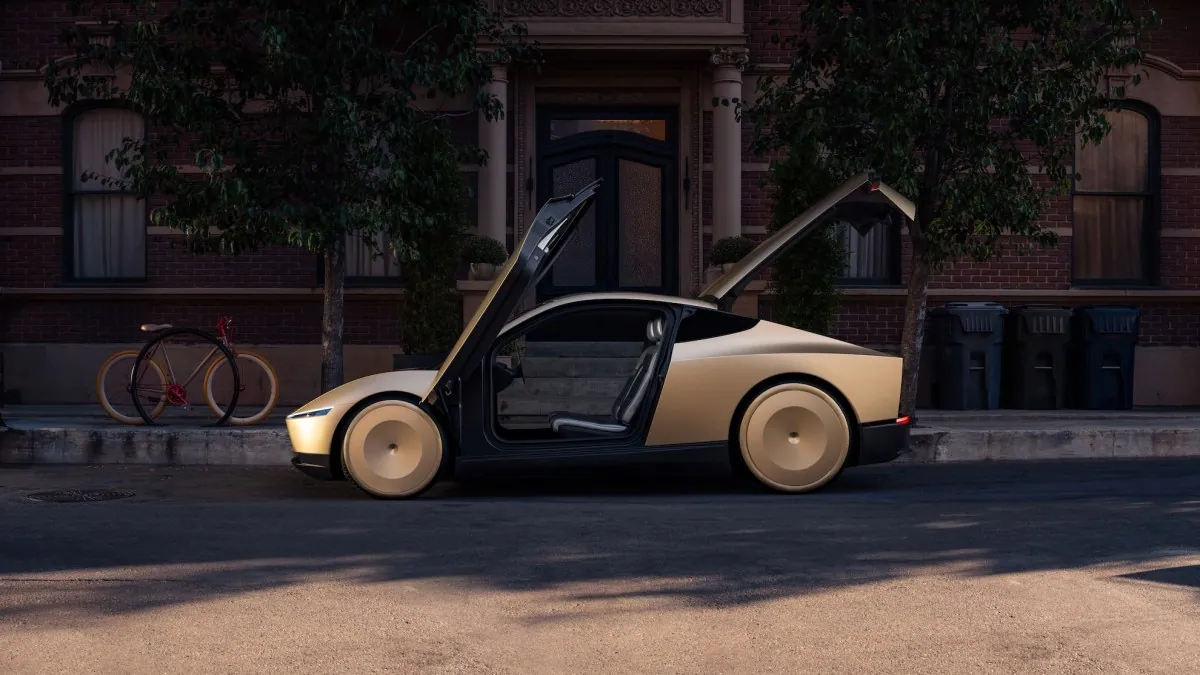
Tesla says customers will be able to buy its Cybercab, the steering-wheel-free, two-seat autonomous vehicle, before the end of the year. The catch: federal safety regulators are still trying to figure out whether the thing is legal to drive on public roads at all.
The announcement came during Tesla's third-quarter earnings call, when Lars Moravy, the company's vice president of engineering, said the Cybercabs rolling off the line right now are all going into Tesla's own robotaxi fleet. That will change. As the fleet expands, Moravy said, Tesla will "mainly deliver fully designed autonomous vehicles to our customers," starting small and scaling up as it learns the mechanics of delivering, owning, and managing a fleet of self-driving cars.
It's the clearest signal yet that Tesla intends to follow through on an idea it floated last month around a Cybercab event in Austin, where it also posted an interest form for people curious about running their own robotaxi business. Until now, it wasn't obvious whether that was a real plan or just a trial balloon.
A Reversal From the Original Robotaxi Pitch
For years, CEO Elon Musk's robotaxi vision looked different: regular Tesla owners would get a software update that turned their personal cars into self-driving taxis whenever they weren't using them. That plan never materialized. Musk's comments on Wednesday's call show just how far that thinking has drifted.
Today, Tesla owners can pay for Full Self-Driving (Supervised), a driver-assistance system that handles a lot of the driving but still legally requires a human behind the wheel, ready to take over. Tesla keeps pushing software updates to improve it, even as drivers have been filmed testing how far they can push the "supervised" part of that equation.
Musk said Wednesday that a truly unsupervised version of FSD, one that wouldn't need a human ready to intervene, is now targeted for the second quarter. That's another delay for owners who bought or subscribed to the software years ago expecting full autonomy sooner. If both timelines actually hold, it sets up an odd sequence: someone could buy a Cybercab and start running it as a driverless robotaxi before a Tesla owner gets that same hands-off capability in a Model 3 or Model Y they've already paid for.
Musk framed the split explicitly on the call. The Cybercab, he said, is built to be "offered as like transport as a service," while the rest of the lineup, the 3, the Y, the Roadster, remains for people who want to actually own a car. In his words, "the vast majority of the Cybercab stuff will be essentially Tesla-owned and transported as a service." Selling Cybercabs to outside fleet operators is a step beyond that, but the underlying message is the same: this vehicle is being designed around autonomous service, not personal ownership, from the ground up.
The Regulatory Wild Card
None of this matters much if the Cybercab can't legally operate, and that's an open question right now. The National Highway Traffic Safety Administration opened an investigation into the vehicle last month, just hours after Cybercabs started driving on public streets in Austin, according to the reporting.
The issue is that Federal Motor Vehicle Safety Standards currently require things the Cybercab doesn't have: manual controls like a brake pedal, plus features like rearview and side mirrors. Automakers normally self-certify that their vehicles meet those standards, and Tesla did the same for the Cybercab. NHTSA's investigation is specifically looking at the process and technical data Tesla used to make that certification.
The rules themselves are in flux. Existing FMVSS language simply doesn't account for a vehicle with no steering wheel or pedals, since it predates cars designed to drive themselves. The Department of Transportation has proposed stripping out those manual-control requirements for vehicles built to be autonomous, which would effectively clear a regulatory path for something like the Cybercab. But that proposal hasn't been finalized, and NHTSA's probe is still active.
Whatever NHTSA concludes could determine not just whether Tesla can keep operating Cybercabs, but whether anyone can sell or operate a similar vehicle without the controls regulators have long treated as mandatory.
Tesla is betting the regulatory and technical pieces fall into place roughly on schedule: robotaxi fleet first, third-party sales by year-end, unsupervised FSD for personal cars sometime next spring. Given how many times Musk's self-driving timelines have slipped, that's a lot of dominoes to line up at once. The NHTSA investigation is the one piece of this that Tesla doesn't control, and it's the one that decides whether any of the rest of the plan is allowed to happen.


