Tesla's Robotaxi Miles Fell 36% Last Quarter, Data Shows
A cumulative chart made the service look like it was growing steadily — the quarterly numbers tell a different story, and so does Elon Musk's explanation for the slowdown.
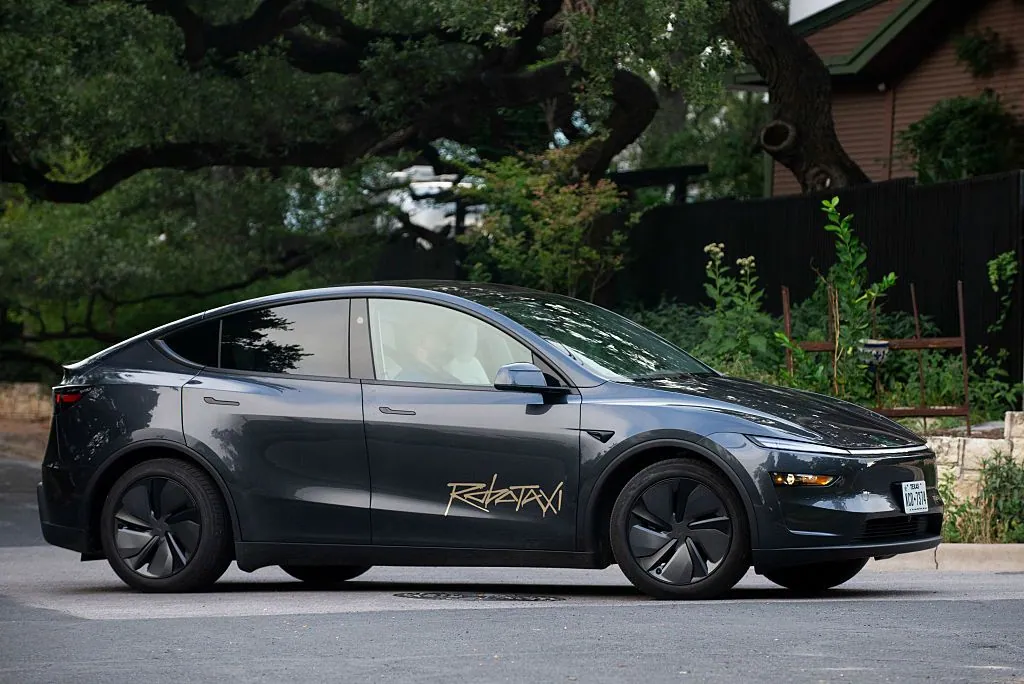
Tesla's Robotaxi fleet drove fewer paid miles in the second quarter than it did in the first, according to figures the company disclosed on Wednesday — a decline that cuts against nearly everything Tesla has said publicly about its self-driving ambitions over the past year.
The company's own chart initially suggests otherwise. It shows what looks like a steady climb in paid Robotaxi rides between August 2025 and June 2026. But that chart displays cumulative totals, which by design can never go down even if activity slows. Break the numbers out by quarter, and the picture flips: Tesla's Model Y Robotaxis, carrying paying passengers, covered roughly 1.1 million miles in the first quarter. In the second quarter, that dropped to about 700,000 miles — a decline of roughly 36%.
That drop happened even as Tesla expanded the service's footprint, adding cities and now running a mix of supervised and unsupervised vehicles across six locations in Texas and Florida. It's also likely the figures include paid miles from Tesla's Bay Area operation, which the company brands as part of its "Robotaxi coverage" despite the fact that those vehicles still have a human safety driver behind the wheel and lack the permits California requires for actual autonomous operation.
The timing is rough. Tesla's core automotive business also came in below Wall Street's expectations in the same earnings release, and the stock dropped more than 13% in early trading Thursday.
Musk points to the Cybercab
The most notable moment came on Tesla's earnings call, when Musk was asked directly why the Robotaxi rollout has been so slow. His answer marked a real shift in how the company has framed its autonomy strategy.
Tesla needs to "accumulate driving data that is specific to the Cybercab," Musk said, referring to the company's purpose-built, two-seat robotaxi vehicle, "before we can put a lot of them on the road."
He continued: "Unlike, say, Model 3, Model Y, and our other vehicles where we've got a lot of vehicles on the road, millions of vehicles on the road, we don't have that for Cybercab. So we actually have to accumulate miles with Cybercabs that are retrofitted with steering wheels and acceleration and braking pedals, that kind of thing, to calibrate to the Cybercab chassis." He added that once Tesla is confident in that data, "the number of Cybercabs in cities will increase dramatically."
That's a notable departure from years of Tesla messaging, which held that its roughly 10 million customer vehicles on the road were quietly gathering the driving data needed to eventually train a robotaxi fleet — the same data pipeline the company has also credited for improving its consumer-facing Full Self-Driving software. Musk's comments suggest that pipeline doesn't translate cleanly to the Cybercab, which needs its own driving history essentially built from scratch.
Safety, or fear of headlines
Tesla executives leaned heavily on caution as the reason for the slow scale-up. "Our goals are very ambitious for Robotaxi, but we do need to be cautious about causing any accidents or causing any harm to anyone," Musk said. He went further, framing the concern less around safety itself and more around public perception:
"Although there are, I think, 30 to 40,000 automotive deaths per year in the United States alone, most of those do not generate any press, you don't really read about almost any of those. But if we injure even one person, it will be worldwide headline news, and regulators will immediately clamp down on our activities."
Ashok Elluswamy, Tesla's VP of AI, said the company's Robotaxis have logged more than 380,000 miles without a safety operator onboard with "zero notable incidents." He didn't specify what counts as a "notable incident," but claimed any reported incidents involved "other actors impacting us when we were stationary."
That framing doesn't fully match Tesla's own reporting to regulators. The company has filed 22 crash reports with the National Highway Traffic Safety Administration in the year since it began piloting the Robotaxi service. Most involve other vehicles striking Tesla's cars, but the filings also include three crashes caused by Tesla's remote teleoperators while moving vehicles, along with several low-speed collisions with curbs, utility poles, and a tow truck's bed.
A shifting story on what's holding Robotaxis back
For years, Tesla pointed to regulation as the main obstacle standing between it and full-scale robotaxi deployment, without ever detailing which specific rules were the problem. Now the company's message has changed: safety validation, not red tape, is the bottleneck.
Even so, Tesla used the moment to defend its underlying technical bet — building autonomy around cameras alone, skipping the radar and lidar sensors that Waymo and other rivals rely on. "Historically, the so-called experts have always claimed that you need lidars, radars, HD maps, and the entire kitchen sink to drive safely," Elluswamy said. "Here, we show that such is not true. You can have safe, comfortable, and affordable autonomy with just cameras."
Both Musk and Elluswamy insisted growth is still coming, pointing to roughly 10% weekly growth in unsupervised miles since the service launched at the end of last year. "We'll continue to scale, I think, very, very rapidly," Musk said.
Whether that rapid scaling shows up in next quarter's numbers is the thing to watch. For now, the raw mileage data tells a more complicated story than Tesla's cumulative chart, or its confident rhetoric, would suggest.


