Daniel Ek's $700 Million Body-Scanning Startup Is Coming to America
Neko Health, backed by Mark Zuckerberg, will.i.am, and Maria Sharapova, plans to open its first US clinic in New York this year as part of a broader push into preventive healthcare.
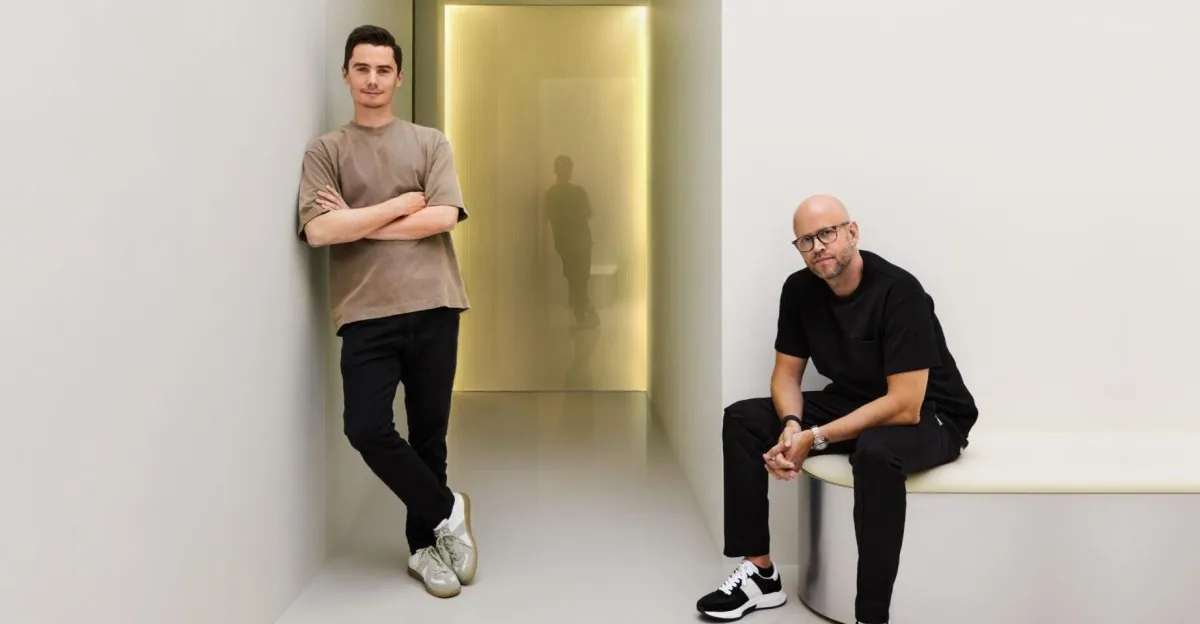
Daniel Ek made his fortune helping people stream music. Now he's betting on a different kind of subscription: scanning your entire body for signs of disease before you ever feel sick.
Neko Health, the body-scanning startup Ek co-founded, has raised $700 million and is using the cash to launch in the United States for the first time. The company plans to open its debut American clinic in New York before the end of the year, with more US locations to follow, though it hasn't said which cities or when.
Neko's pitch is straightforward: walk into one of its clinics, get scanned by AI-driven, custom-built medical equipment, and get a blood test on top of it. The goal is to flag early warning signs of things like skin cancer, heart disease, and diabetes before symptoms show up. It's a bet that catching problems earlier, at scale, can meaningfully extend how long people live and how well.
Cofounder and CEO Hjalmar Nilsonne framed the funding round as the start of exporting that mission stateside. In a press release, he said the money will help Neko bring "that mission to the US for the first time," beginning with New York and other cities this year. A waitlist for the New York clinic is already live on the company's website, even though Neko hasn't detailed a broader rollout plan or said what the scans will cost American customers. Some of the funding will also go toward further research and development that Nilsonne said could "make prevention possible at scale."
From quiet startup to celebrity-backed unicorn
Neko has actually been around since 2018, but it stayed under the radar for years before launching publicly in 2023. Today it runs eight clinics across the UK and Sweden, four in London and two in Stockholm, according to its website. A scan currently runs £299 in the UK and 2,750 Swedish kronor in Sweden, roughly $400 and $285 at current exchange rates.
The demand has been real. Neko says more than 350,000 people have joined waitlists or registered for scans, and 100,000 have actually been scanned so far. That kind of interest has also been a problem: the company has struggled to scale fast enough to keep up with it, which makes the US expansion a test of whether Neko can grow its infrastructure as quickly as its ambitions.
The new funding round attracted a notable roster of backers. Musician will.i.am, tennis player Maria Sharapova, former footballer Thierry Henry, and Meta CEO Mark Zuckerberg alongside his wife, Priscilla Chan, all joined as new investors. Existing backers Reddit cofounder Alexis Ohanian and actor Zoë Saldaña also returned. Neko hasn't disclosed its updated valuation, but unnamed sources cited by the Financial Times put it at around $7 billion. That's a steep jump from where things stood in early 2025, when Neko last raised $260 million.
Riding the longevity wave
Neko is entering a crowded and fast-growing space. Interest in longevity and biohacking has surged in recent years, and a wave of companies has emerged to offer private screening and preventive care aimed at people willing to pay out of pocket for a level of proactive monitoring that traditional healthcare systems typically don't provide. Conventional medicine, as the reporting notes, tends to be reactive by design, stepping in once symptoms already exist rather than hunting for problems in advance.
That gap is exactly what Neko and its peers are trying to fill, positioning full-body scans and blood panels as a kind of early-warning system for the wealthy and health-obsessed. Whether that model can work at true mass-market scale, rather than as a boutique service for people who can afford a few hundred dollars per scan, remains an open question, and one the US expansion will start to answer.
For Ek, it's a notable pivot from the platform he's best known for. Spotify built its business on algorithms recommending what to listen to next. Neko is betting that similar technology, pointed at the human body instead of a music library, can tell people something far more consequential: what might be wrong before they ever notice.
What happens next hinges on execution. Neko has the money, the star power, and a waitlist already filling up in New York. Whether it can actually build out clinics fast enough to match demand, in a country far larger and more fragmented than Sweden or the UK, is the real test ahead.


