SpaceX Is Reportedly Negotiating to Rent Space on 80,000 Cell Towers
Talks with tower giant Crown Castle would give Starlink Mobile a physical foothold on roughly half of America's cell infrastructure as it moves to challenge Verizon, AT&T, and T-Mobile.
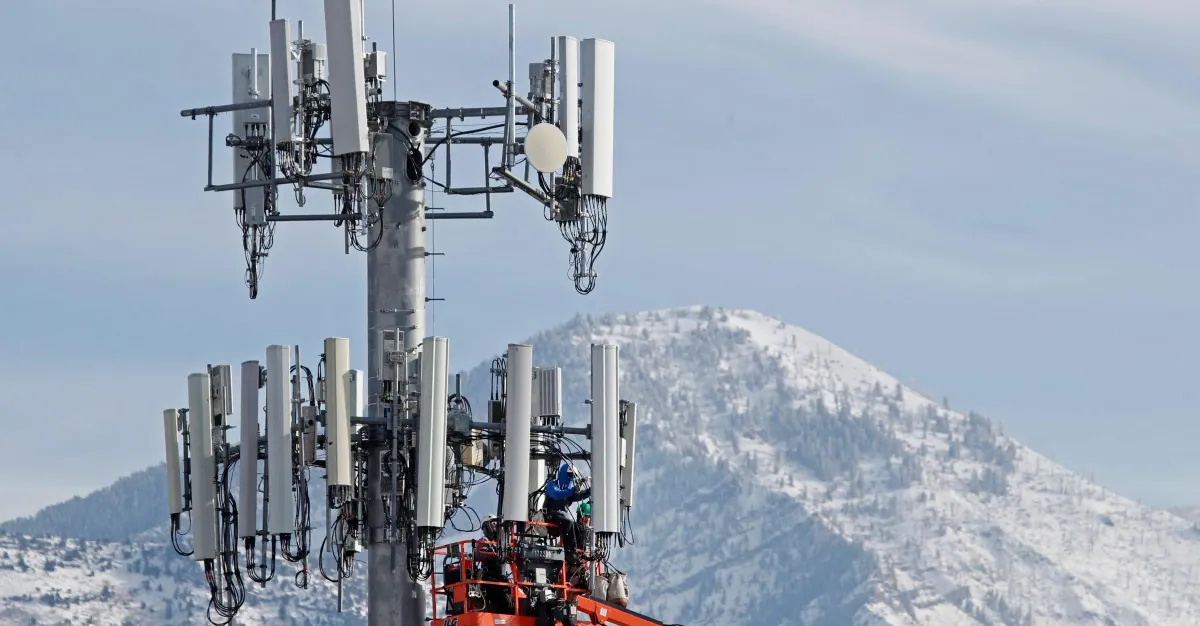
SpaceX wants real estate on America's cell towers, and it's reportedly negotiating for a lot of it. According to a Bloomberg report, the company is in talks with Crown Castle Inc., one of the largest cell tower owners in the country, to access at least 80,000 cell sites as part of its push to build out Starlink Mobile into a direct competitor to Verizon, AT&T, and T-Mobile.
That's not a small ask. Reuters notes the deal would put SpaceX on roughly half of the 158,500 cell towers currently operating in the US. For a company that has spent years selling satellite internet to rural homes and RVs, that's a dramatic shift in scale and ambition — this is infrastructure for a nationwide mobile network, not a niche add-on service.
Crown Castle's CEO, Chris Hillabrant, didn't confirm or deny the specific talks during an earnings call this week, but he didn't exactly dodge it either. Asked about a potential partnership with SpaceX, Amazon, or other satellite players, he said: "I don't think I want to get into customer-specific detail, but you can assume that we're talking to all parties." That's a company sitting at the center of a land grab trying to stay neutral in public while clearly fielding interest from everyone building a satellite-to-phone network.
Towers plus satellites
The strategic logic here is straightforward once you look at what SpaceX has been assembling. The company's direct-to-cell satellite constellation can beam signal straight to ordinary phones without a tower in between — that's been the headline pitch of Starlink Mobile since it launched. But satellite coverage alone has real limits in dense urban areas and indoors, where ground-based cell towers still do the heavy lifting. Pairing its satellites with physical tower access, as this deal would do, fills in the gaps that orbit can't easily reach and starts to look a lot more like the network a traditional carrier actually runs.
This isn't SpaceX's first big move toward that goal, either. Earlier this month, the company picked up a batch of low-band spectrum licenses — the frequencies that travel farther and penetrate buildings better, which is exactly what you want for a consumer mobile network. It also won FCC approval to launch 15,000 upgraded V2 Starlink Mobile satellites. SpaceX has said both moves are meant to "pave the way" for Starlink Mobile to become a "major" carrier in the US, in the company's own words.
And the spending has been serious. Last year, SpaceX bought 2GHz spectrum from satellite company EchoStar for $17 billion — a massive bet even by Elon Musk's standards, and a clear signal that this isn't a side project bolted onto the Starlink internet business.
Why this matters
Put the pieces together — spectrum, satellites, and now potentially tens of thousands of towers — and SpaceX is methodically building the three things any mobile carrier needs: airwaves to transmit on, satellites to extend coverage where towers can't reach, and ground infrastructure for everywhere else. None of those pieces alone makes SpaceX a carrier. Together, they start to look like one.
It's also notable who SpaceX would be leaning on to get there. Crown Castle doesn't build networks; it owns the towers that other companies' equipment sits on, renting space to whoever needs it. That Hillabrant described fielding interest from multiple satellite players, not just SpaceX, suggests tower owners like Crown Castle may be about to become even more valuable as the fight over satellite-to-phone service heats up.
None of this has been confirmed by SpaceX itself, and Bloomberg's report is still based on sources rather than an announced deal. But the direction is hard to miss. If the Crown Castle talks turn into an actual agreement, Starlink Mobile would go from a satellite-internet sideline to something that genuinely resembles a fourth major wireless carrier — one built less like Verizon or AT&T and more like them, piece by expensive piece.


