SpaceX Is Quietly Building a Fourth Wireless Carrier, and the Big Three Are Panicking
A LightShed Partners analyst explains why SpaceX's spectrum-buying spree signals Elon Musk is serious about taking on AT&T, Verizon, and T-Mobile — and why the carriers' dismissive response might be a mistake.
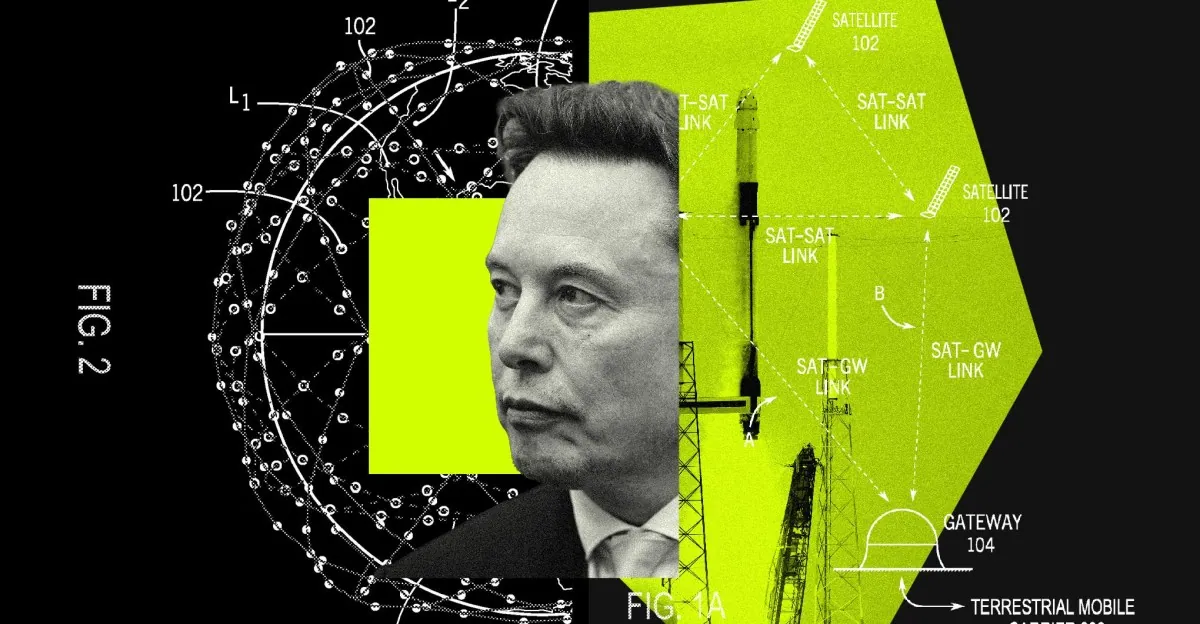
SpaceX just bought a pile of spectrum that nobody else wanted. That's the clearest sign yet that the company isn't just trying to beam internet down from satellites anymore. It's trying to become a real wireless carrier, with cell towers, terrestrial infrastructure, and a shot at stealing customers from AT&T, Verizon, and T-Mobile.
Last week, SpaceX agreed to buy a large block of low-band spectrum to expand its Starlink network. That purchase follows close to $20 billion SpaceX already spent on spectrum from EchoStar, and it comes right after the FCC approved deployment of 15,000 next-generation Starlink satellites. Put those three things together and the picture is unmistakable: SpaceX wants to build what it's calling "the world's most advanced mobile network."
Walter Piecyk, a partner and telecom analyst at LightShed Partners, has been tracking this buildout for months and correctly predicted where it was headed. He walked through why this spectrum matters, why the existing carriers seem to be underestimating the threat, and why the economics here might actually work in Elon Musk's favor — even though building a wireless network from scratch has wrecked plenty of companies before.
Why this spectrum, and why now
The spectrum SpaceX just bought has a strange backstory. It originally belonged to Nextel, the old push-to-talk walkie-talkie service, and Sprint was forced to divest it as a condition of its merger with T-Mobile. The government wanted a fourth wireless competitor to exist, so the spectrum went to EchoStar, whose CEO Charlie Ergen was supposed to build that fourth network. He never could afford to actually buy it, which eventually forced T-Mobile to put the spectrum up for sale. It sat there for years with no real buyer until SpaceX showed up.
According to Piecyk, SpaceX's strategy evolved in stages. The company doesn't typically want to own spectrum at all — satellite operators generally don't — but after an initial EchoStar purchase got a strongly positive reaction from investors, SpaceX went back for more. Piecyk says that pattern is classic Musk: buy in, get feedback, buy more.
What makes this particular spectrum valuable is physics. Satellite dishes mounted on a roof work fine for home broadband, but a phone in your pocket, or inside a building, needs something stronger. Low-band spectrum travels farther and penetrates walls better than higher frequencies, which makes it the foundation for any real terrestrial cell network. Piecyk notes that the FCC's approval conditions for SpaceX's earlier EchoStar spectrum made clear that satellites alone wouldn't cut it. SpaceX needed ground-based infrastructure, whatever public messaging about femtocells and alternative approaches might have suggested otherwise.
Piecyk also thinks the other carriers blew it. He argues Verizon or AT&T probably should have bought this spectrum themselves, just to keep it out of SpaceX's hands, even if they had no immediate use for it. "I don't think even these companies were taking Elon seriously and thinking that he would actually build the network," he said.
The Dish comparison, and why it doesn't quite hold
The obvious parallel is Dish Network's failed attempt to become the fourth major carrier. Dish promised a cheaper, more innovative network built on open-standard radio hardware and run on AWS to cut costs. It fell flat. At one point, Dish's entire network supported a single Motorola handset in Las Vegas, and even that depended on backup access to AT&T's network.
Piecyk's read is that Dish's failure wasn't really about the network, which he says functioned reasonably well on its own terms. It was about customer acquisition. Dish never built a go-to-market strategy that got people to actually sign up. SpaceX's advantage, in his view, is the opposite problem: Musk already has a massive built-in audience willing to buy whatever he's selling. The harder question is whether that translates into customers willing to switch their cell service, and whether SpaceX can get the network built fast enough to serve them.
Piecyk points to T-Mobile's early history as another model. When John Legere took over, T-Mobile's network was mediocre, but he sold customers on the promise of improvement before the infrastructure caught up, eventually convincing parent company Deutsche Telekom to fund real investment. SpaceX could follow a similar path: sign up customers on the strength of brand and marketing, lean on existing network assets and roaming deals in the near term, and build out capacity as the business proves itself.
What it would actually cost
The specific number that gets thrown around in criticism of SpaceX's wireless ambitions is scary: $100 billion to $200 billion. Piecyk pushes back on that framing. He notes that established carriers spend $10 billion to $15 billion a year just maintaining networks that already serve huge customer bases. Getting an initial SpaceX network up and running, enough to use low-band spectrum for real indoor coverage, is a different and much smaller problem. He estimates the initial capital expenditure at something closer to $10 billion to $15 billion, on top of the roughly $30 billion or so already spent on spectrum.
That's still a lot of money, but it doesn't require matching the scale of AT&T or Verizon's networks on day one. Piecyk describes a bootstrapping scenario: build enough network to capture an initial five or ten million customers, then reinvest as the business proves itself. He draws a comparison to how cable companies once pursued a strategy of using mobile virtual network operator deals to grab wireless customers cheaply, with the long-term theory that incumbents would eventually get desperate enough to offer better wholesale terms, or that spectrum would become available through future FCC auctions.
SpaceX also doesn't need the kind of margins traditional carriers run on. Established players post EBITDA margins around 60 percent, according to Piecyk, and SpaceX doesn't need to match that if wireless service becomes an entry point for other products, like home broadband or usage of Musk's AI chatbot Grok. He also raised machine-to-machine and internet-of-things connectivity as additional revenue angles the new satellite capability could unlock, though that's a promise the telecom industry has made before with both 4G and 5G without fully delivering on it.
Towers, partners, and a fraying alliance with T-Mobile
Piecyk is skeptical that SpaceX can avoid building conventional infrastructure. Despite talk of femtocells and small-cell setups next to Starlink dishes, he believes the company will need macro towers for real coverage and power. The good news for SpaceX is that it doesn't need to build towers from scratch. Large tower real estate investment trusts like American Tower already lease space to carriers, making it easier for SpaceX to mount additional antennas on existing infrastructure than it was for carriers building from zero decades ago.
EchoStar's ongoing bankruptcy could speed things along further. Piecyk notes EchoStar has radio equipment already installed on towers, using spectrum compatible with what SpaceX just purchased, that could potentially be bought cheaply and fast-track SpaceX's entry into the market. There's also a case, he says, for SpaceX simply acquiring EchoStar outright, since EchoStar holds additional spectrum that Verizon wants and SpaceX already owns a discounted equity stake in the company.
Meanwhile, SpaceX's current partnership with T-Mobile for direct-to-device satellite connectivity looks increasingly strained. That relationship launched with fanfare under former T-Mobile CEO Mike Sievert, but Piecyk says the dynamic shifted after Sievert's retirement and T-Mobile's leadership change. He described recent friction as mutual, with T-Mobile executives openly criticizing SpaceX's ambitions in recent months.
That public skepticism from all three major carriers, Piecyk argues, mirrors how cable executives once dismissed fixed wireless internet as "cell phone internet," only to watch it erode their broadband business. Whether SpaceX can pull off something comparable in wireless remains unproven. But the scale of its recent spectrum purchases, and the FCC's satellite approval alongside them, make clear this isn't a side project. It's a deliberate, expensive bet that Musk's playbook, heavy upfront investment backed by a devoted customer base, can work in an industry where plenty of well-funded challengers have failed before.


