Saudi Arabia's $55 Billion EA Takeover Clears Its Final Hurdle
A new SEC filing confirms Mohammed bin Salman's sovereign wealth fund will take Electronic Arts private next week, closing the largest leveraged buyout in history.
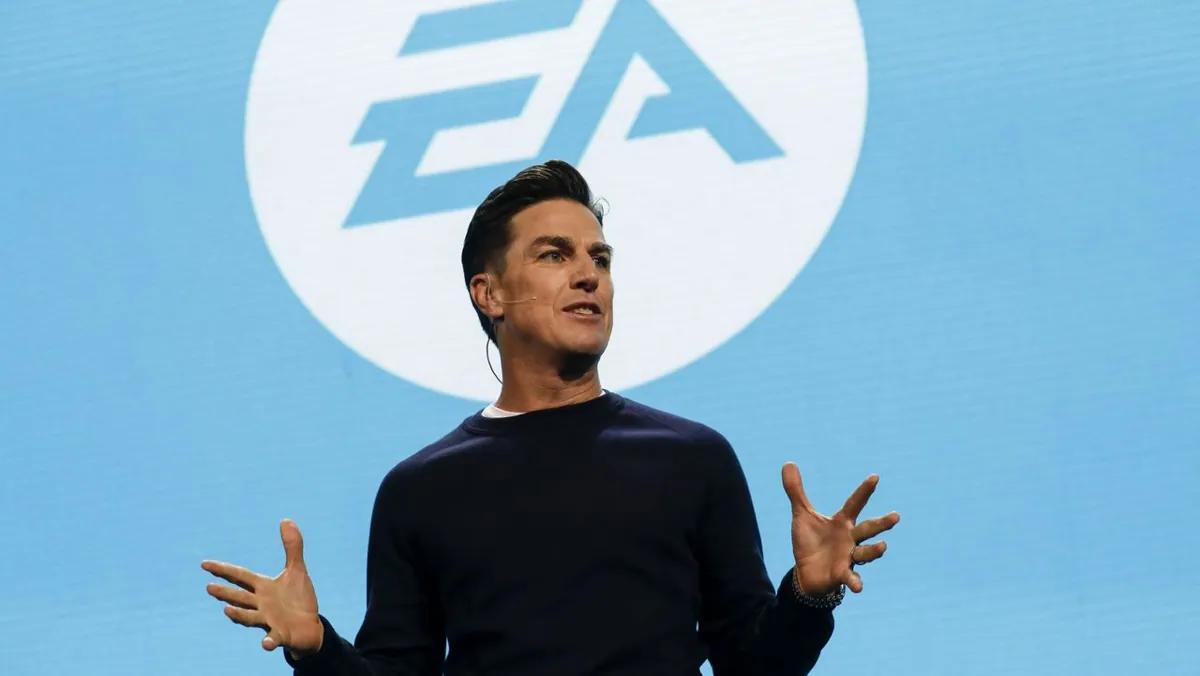
Electronic Arts is about to change hands, and the paperwork says it's happening fast. A Form 8-K filed with the US Securities and Exchange Commission confirms that every regulatory approval needed to complete Saudi Arabia's $55 billion acquisition of EA has now been secured, clearing the way for the deal to close on or about the close of trading on August 4, 2026, according to PC Gamer's reporting on the filing. The filing states that as of July 30, "all regulatory approvals required to complete the Merger have been obtained," with only "remaining customary closing conditions" left to satisfy.
In other words: this is happening, and it's happening next week.
The acquisition, led by Saudi Arabia's Public Investment Fund, is the largest leveraged buyout ever attempted, and it will take one of the world's biggest game publishers private under the financial control of a state-run sovereign wealth fund. For a deal of this size and political weight, it moved through US regulatory review with surprisingly little friction.
Why this deal sailed through
Compare it to Microsoft's acquisition of Activision Blizzard, which the Federal Trade Commission fought aggressively before ultimately losing in court. The PIF's takeover of EA was always a different kind of transaction. Microsoft buying Activision Blizzard combined two companies that made competing games, raising classic antitrust questions about market concentration. The PIF buying EA is simply a change in who owns the company. EA isn't merging with another game studio; it's being bought out and taken private. That distinction made it a much harder case for regulators to block on competition grounds, and as the filing shows, nobody managed to.
That doesn't mean the deal is risk-free. It just means the risks aren't the kind antitrust law is built to catch.
Who actually owns EA now
Once the deal closes, EA will operate as a private company, which loosens the public disclosure and governance requirements that come with being publicly traded. The fund behind the purchase is chaired by Mohammed bin Salman, Saudi Arabia's crown prince and de facto ruler, who is also credibly accused of orchestrating the 2018 murder of journalist and regime critic Jamal Khashoggi, per PC Gamer. That's not a side note. It's the person who will now, within whatever limits remain, shape the direction of one of the largest game publishers on Earth.
That reality has already driven some creators away. Several prominent Sims 4 content creators left EA's official creator network in 2025 specifically over the buyout. One of them, known as Lilsimsie, wrote that "the values represented by the people acquiring EA are fundamentally at odds with what I stand for and support" — a clear reference to Saudi Arabia's record on women's rights and LGBTQ+ repression, as PC Gamer notes. Former BioWare lead writer Trick Weekes raised a similar concern, predicting that EA's biggest commercial franchises would be fine under new ownership, but that more socially progressive content wouldn't survive. Weekes' framing, as quoted by PC Gamer, was blunt: "guns and football" games will be fine, but "gay stuff" and "politics [they're] not going to like" are likely to get cut.
The "guns and football" line isn't abstract. It points directly at Battlefield and EA FC, EA's two most reliable moneymakers, and the kinds of titles a new owner focused on returns would have every incentive to protect.
The debt problem nobody's talking about enough
Here's the part of this deal that has nothing to do with Saudi Arabia's politics and everything to do with basic math: this is a leveraged buyout, meaning a huge chunk of the $55 billion price tag is being financed with borrowed money, and EA itself ends up holding that debt. According to PC Gamer, the deal will leave EA saddled with $20 billion in debt once it closes.
That's an enormous weight for any company to carry, and the history of leveraged buyouts isn't exactly comforting. Companies in EA's position often respond to that kind of debt load with aggressive cost-cutting, trimming anything that isn't a proven, reliable earner and doubling down on the titles that already make money. For EA, that again points back to Battlefield and EA FC as the safe bets, and raises real questions about what happens to riskier or more creatively ambitious projects that don't carry the same guaranteed returns.
The politics around the politics
Part of why this deal faced so little resistance in Washington may come down to who's connected to it. One of the minority backers of the acquisition is Affinity Partners, the investment firm owned by Jared Kushner, son-in-law of President Donald Trump, according to PC Gamer. Trump himself maintains a close relationship with bin Salman. And the current chair of the FTC, Andrew Ferguson, is described in the reporting as a vocal Trump supporter. None of that is proof of anything improper on its own, but it helps explain why a deal of this scale, backed by a government with Saudi Arabia's human rights record, moved through US regulatory review without the kind of fight that stalled Microsoft's Activision Blizzard deal for years.
Not everyone is letting it go quietly. Players Alliance HQ, a group that's organized demonstrations against the takeover in the past, issued a sharp statement after the approval. "The Committee on Foreign Investment in the United States has failed the American consumer," the group said, according to PC Gamer. "By approving this unprecedented and corrupt $55 billion acquisition, private equity and the Saudi PIF gains a dangerous foothold in the videogame industry, which now threatens the affordability and freedom of creativity deeply critical to the success of gaming." The group added that it plans to keep pushing "to hold EA to account and prevent their anti-consumer practices from spreading across the industry."
That pressure campaign, though, arrives after the regulatory outcome has already been decided. The filing makes clear there's no approval left to withhold.
What happens August 4
Barring some last-minute surprise, EA will close out as a public company and reopen as a private one under PIF ownership next week. For players, the near-term experience probably won't shift much. Battlefield and EA FC aren't going anywhere; if anything, they become more central to the business, not less. The bigger questions are slower-burning: how EA services its new debt load, which projects survive the scrutiny that comes with that pressure, and how much influence its new ownership exerts over the kinds of stories and communities EA chooses to support.
The deal is done in every way that matters now. What it actually does to EA, as a studio and as a creative institution, is the part that's only beginning to show itself.


