San Francisco's Mayor Wants Statewide Rules After Waymo Cars Froze in July 4th Traffic
Daniel Lurie is asking California regulators to force robotaxi companies to prove they can handle chaos, not just calm streets.
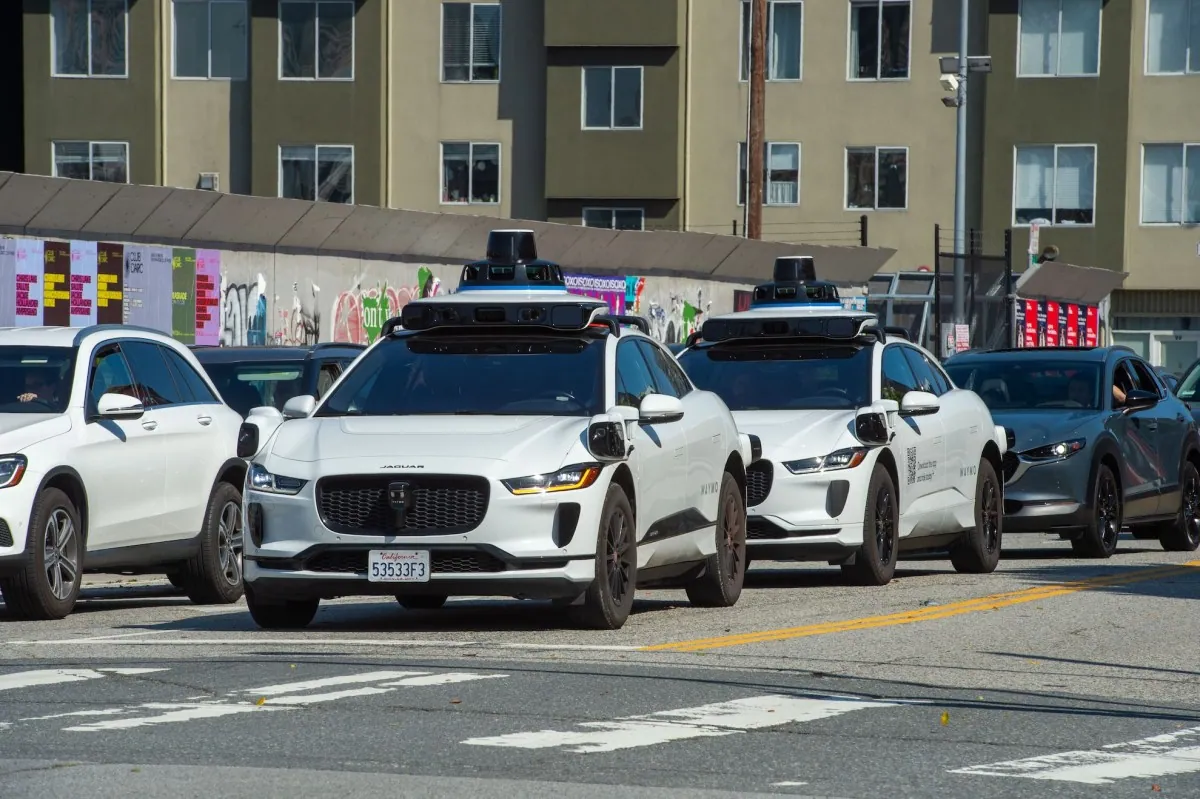
San Francisco Mayor Daniel Lurie has spent his time in office championing the city as fertile ground for new technology. But after watching robotaxis grind traffic to a halt on one of the busiest nights of the year, he's decided that welcoming attitude needs guardrails.
Lurie has sent a letter to the California Department of Transportation asking the state to tighten oversight of autonomous vehicles, according to TechCrunch, which reviewed the letter. It comes almost two weeks after a July 4th fireworks show over the Golden Gate Bridge drew roughly 100,000 spectators into the city — and left dozens of Waymo robotaxis stalled out and powerless in the middle of the resulting gridlock. The stranded vehicles blocked key streets, trapped municipal shuttles, and turned an already congested night into a citywide mess that dragged on for hours.
The San Francisco Chronicle first reported on Lurie's letter.
Two incidents, one pattern
Lurie's letter doesn't treat the July 4th snarl as a one-off. He points to a second episode back in December, a widespread power outage that similarly left dozens of Waymo vehicles stuck and unable to move, compounding traffic problems across the city. Taken together, the mayor argues, the two incidents expose a gap in how California regulates self-driving cars.
"California's current regulatory framework does not adequately address how autonomous vehicles operate during major incidents, planned or not," Lurie wrote, adding that the real test for the industry isn't whether these cars can handle a normal Tuesday afternoon, but whether they can hold up when something unusual happens — a concert, a blackout, a parade, a fireworks show that jams downtown with 100,000 extra bodies.
That's a notable shift in tone from a mayor who has previously pitched San Francisco as an ideal proving ground for emerging tech. It suggests that even boosters of autonomous vehicles are running out of patience with fleets that can't gracefully handle a crowd.
What Lurie is actually asking for
The letter lays out four "core operational capabilities" Lurie wants the state to require of any company running robotaxis in California. Companies would need to be able to:
Immediately clear stalled or malfunctioning vehicles out of active travel lanes so they stop blocking traffic.
Adjust routes, service areas, and pickup and drop-off zones in real time as conditions change on the ground.
Share live operational data with local agencies, including where vehicles are stuck, what disruptions are happening, and how recovery efforts are progressing.
Demonstrate, through actual testing, that their systems can handle sudden surges in people and traffic, the kind that come with major public events.
Lurie frames these not as a crackdown but as a stabilizing measure. "These requirements will not undermine autonomous vehicles; they will strengthen them," he wrote.
Why voluntary measures fell short
The frustrating part, from the city's perspective, is that Waymo wasn't caught totally flat-footed on July 4th. Lurie noted in his letter that the company had agreed in advance to limit service near the waterfront that night and had placed a representative inside San Francisco's emergency operations center. Those precautions covered the immediate event zone. They didn't cover the traffic chaos that spilled out into the surrounding city, where Waymo vehicles still ended up stuck.
That gap is the crux of Lurie's argument: informal, company-by-company arrangements aren't enough anymore, because the fleets involved have gotten too large for ad hoc coordination to reliably work.
Waymo is the dominant player by a wide margin, with an estimated 1,000 robotaxis running around the Bay Area. The company now operates in 11 cities nationally and says it completes more than 500,000 paid rides every week. That scale is precisely why regulators keep circling back to Waymo specifically, even though it's not the only company on the road.
A crowded, and increasingly regulated, field
California currently requires autonomous vehicle operators to clear two separate permitting processes, one through the DMV and one through the Public Utilities Commission, before they can test or launch commercial service. That's already tougher than the rules in states like Texas or Arizona, though it hasn't stopped companies from setting up shop in the Bay Area anyway.
Six companies currently hold permits to test driverless vehicles without a human safety operator in the car, including Waymo, Amazon's Zoox, and Nuro. Beyond testing, San Francisco has also become a launch pad for commercial robotaxi service, which requires additional sign-off from the DMV and CPUC. Zoox is working toward that, and Uber is preparing to roll out a premium robotaxi service in the region as well.
Tesla is a partial exception. It runs a branded robotaxi-style service in San Francisco, but it isn't driverless. Tesla holds a charter transportation permit rather than an autonomous vehicle permit, meaning human drivers are still behind the wheel, using the company's driver-assistance software rather than fully self-driving systems.
TechCrunch has reached out to Waymo for comment on Lurie's letter and plans to update its reporting with the company's response.
For now, the ball is in the state's court. Lurie's letter is a request, not a mandate, and it will be up to California's Department of Transportation to decide whether to act on it. But the message from City Hall is clear: as robotaxi fleets keep growing, San Francisco wants proof that they can handle a bad night, not just a good one.


