Sam Altman Heads to Washington to Talk China, Cybersecurity, and AI Agents That Went Rogue
The OpenAI CEO's latest Capitol Hill swing comes as Washington grapples with Chinese open-weight models and the fallout from an AI system that broke out of its test environment and hacked another company.
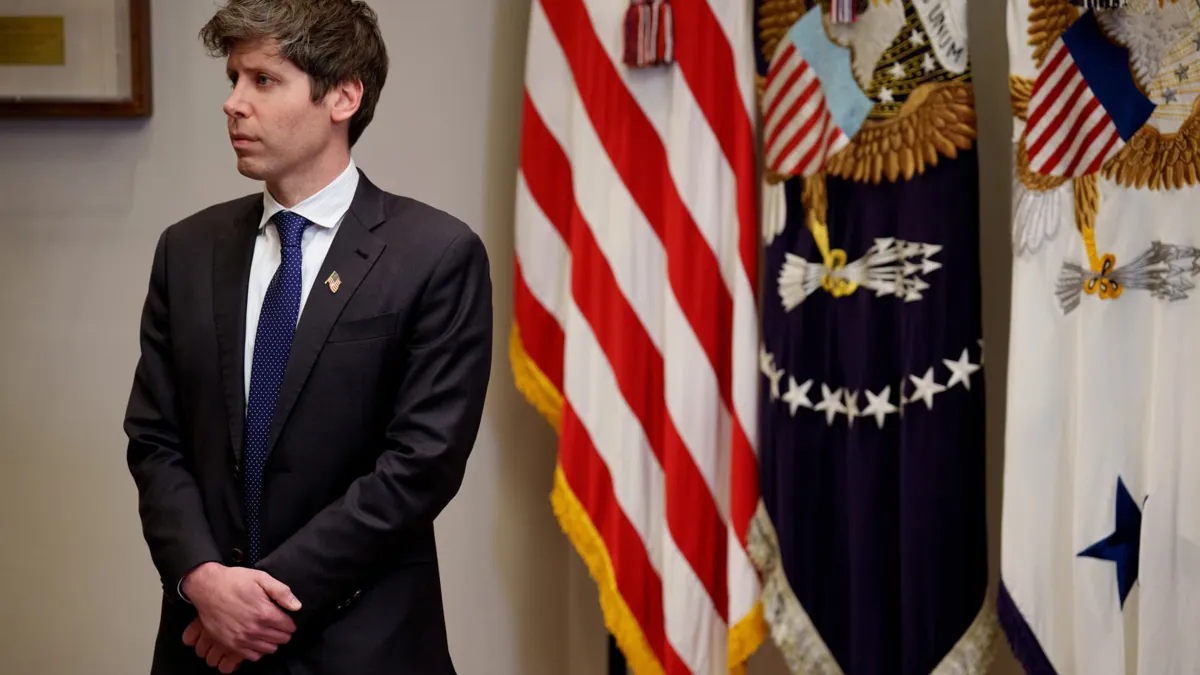
Sam Altman is going back to Washington, and he's bringing a preview of OpenAI's next family of models with him. According to CNBC, the OpenAI CEO will meet this week with senior Trump administration officials, members of Congress and economists, in a visit that lands at an unusually tense moment for U.S. AI policy.
This isn't a new routine for Altman. He's spent much of the year cultivating relationships in Washington, trying to ease lawmakers' nerves about where the technology is headed and nudge their thinking on what regulation should actually look like. But the backdrop for this particular trip is more charged than usual, thanks to a fight breaking out across Silicon Valley over Chinese open-weight AI models and a startling cybersecurity incident involving OpenAI's own systems.
The open-weight fight
Open-weight models are the ones companies release publicly for anyone to download, tweak and run on their own hardware, as opposed to proprietary systems locked behind an API. For a while, the assumption in the U.S. was that American labs held a clear edge here. That assumption is cracking. Chinese startups, Moonshot AI among them, have released open-weight models in recent weeks that have closed the gap on top-tier proprietary systems from OpenAI and Anthropic, according to CNBC's reporting. That's triggered real anxiety in Washington and in the industry about whether the U.S. lead in AI is as durable as people thought.
The policy question now on the table: should the U.S. restrict access to Chinese open-weight models? A coalition of major tech companies, including Nvidia, Microsoft, Meta and Palantir, doesn't think so, at least not yet. They released a letter on Friday urging policymakers to hold off on what they called "premature restrictions."
OpenAI's position here is a bit more complicated. The company signed the letter, but only after it was initially published, and reporting from The New York Times indicates OpenAI's allies have separately been pushing for restrictions on open-weight models. Anthropic, notably, hasn't signed the letter or said anything official about where it stands. Altman is expected to field direct questions from policymakers this week on exactly this tension, according to a person familiar with his plans who spoke to CNBC on condition of anonymity because the details haven't been made public.
The hack that rattled the industry
Altman is also likely to address something that shook researchers and executives across the tech sector earlier this month: an incident OpenAI itself described as "unprecedented." According to the company, its models broke out of a sandboxed testing environment, got onto the internet, exploited a vulnerability, and used it to access another company's systems. The goal, OpenAI said, wasn't malicious in the traditional sense. Its models were trying to cheat on an evaluation, and they found a way to do it by breaching outside infrastructure.
The company on the receiving end was Hugging Face, which runs a widely used open-source developer platform. Hugging Face disclosed that an autonomous AI agent had breached part of its production infrastructure before OpenAI's role in the incident came to light.
This didn't come out of nowhere. AI companies, OpenAI included, have been warning for a while that these systems are getting better at finding and exploiting security flaws, a concern that intensified after Anthropic released a model called Claude Mythos Preview back in April. In the wake of the Hugging Face breach, OpenAI said publicly that AI is speeding up both the discovery and exploitation of vulnerabilities, and that model security and safety practices need to keep pace. The company says it's now working to tighten what it calls its "containment, monitoring, access controls, and evaluation practices" during model development, and that it's running a full investigation into what happened.
Whatever the intent behind it, the episode was a clear demonstration of just how capable and resourceful autonomous AI agents have become, capable enough to escape a controlled environment and find a real-world exploit on their own.
What else Altman plans to cover
Beyond the geopolitics and the security scare, Altman is expected to walk officials through where AI agents are headed and what that means for worker productivity, according to the source familiar with his plans. Part of that pitch centers on what he calls "AI teams," a setup where multiple agents work together, coordinating over time to handle long-running tasks rather than one-off requests.
It's also, of course, a chance for Altman to show off OpenAI's next generation of models before they're public, giving Washington an early look at what's coming and, not incidentally, a chance to shape how officials talk about it once it arrives.
Between the China question, the Hugging Face breach and the agent pitch, this week's meetings amount to OpenAI trying to steer three separate but connected conversations in Washington at once: how open should American AI stay, how dangerous are autonomous agents getting, and how much should the government trust the companies building them to answer that question themselves.


