OpenAI Confirms It's Building More Than One Gadget
Greg Brockman says a "family of devices" is coming, but he's still not saying what they are or when they'll ship.
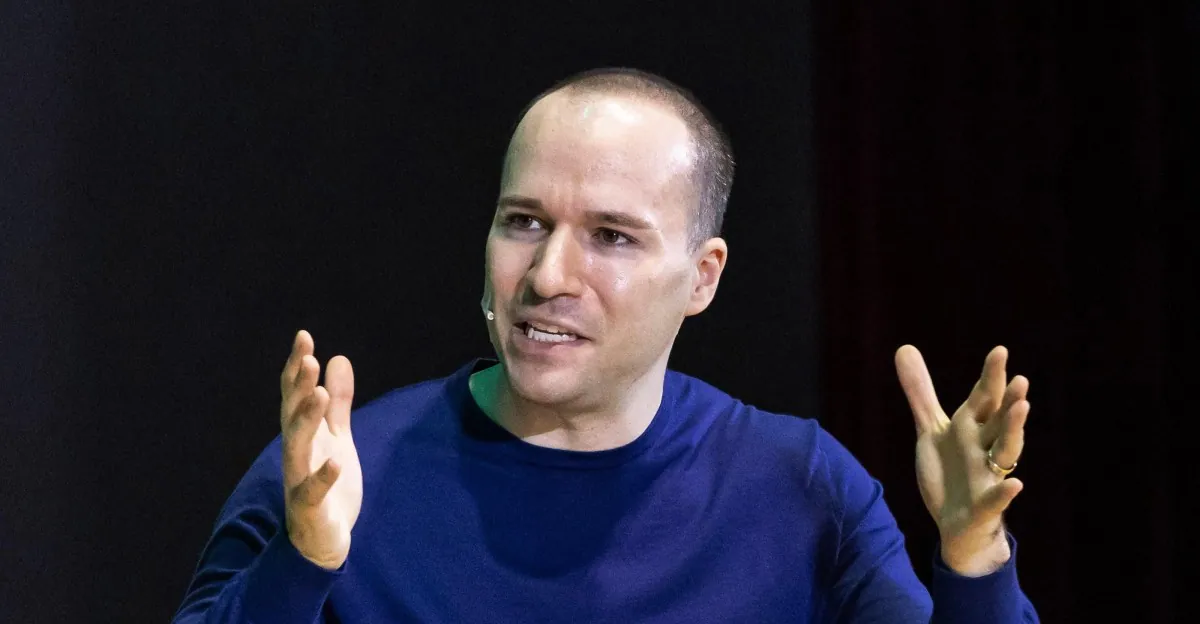
OpenAI is building more than one piece of hardware. That's the headline detail from a new interview OpenAI president Greg Brockman gave to Joanna Stern, in which he confirmed the company is developing what he called a "family of devices" for interacting with its AI models.
That phrase is the most concrete thing OpenAI has said publicly about its hardware ambitions, and it's still not very concrete. Brockman didn't confirm reports that OpenAI is working on a smart speaker rumored for a 2027 launch. He also didn't confirm or deny earlier speculation that one device could be a wearable in the mold of the Humane AI Pin, the ill-fated pin-on gadget that tried and failed to make a case for AI hardware separate from your phone. Asked for a timeline, Brockman offered only this: "you can expect them soon."
That vagueness isn't an accident. OpenAI has been notably tight-lipped about its hardware plans even as the project has become one of the worst-kept secrets in tech, largely because of who's involved. The company is developing these devices with Jony Ive, the designer behind the iPhone's look and feel during his decades at Apple. That partnership is also the source of OpenAI's most immediate legal headache: Apple has sued OpenAI, and Stern's interview gave Brockman a chance to respond directly.
He kept it short. Asked whether Apple's lawsuit could affect the devices in development, Brockman said, "We are focused on our own development and technology." He added, "We have no interest in other companies' trade secrets. We are plenty innovative. We are thinking about things from our own angle." It's a categorical denial without any specifics about the suit itself, and Brockman didn't elaborate further.
Betting that talking beats typing
The more interesting part of the interview isn't the hardware itself but the theory of computing behind it. Brockman said he expects people to shift from typing to talking to their computers for what he called the "vast majority" of tasks. That's a real bet on how humans will interact with machines going forward, and it's the same bet that's implicitly behind every voice-first AI device that's tried and mostly failed to catch on so far, from the AI Pin to Rabbit's R1.
Brockman didn't dodge the obvious problem with that vision: what happens when everyone in an open office is talking to their computer at once. His answer was to point to an unlikely product category that's already emerged to solve exactly that problem, soundproof masks sometimes nicknamed "beak" masks that let people speak privately in shared spaces. He said he doesn't personally use one, but that their mere existence is telling. In his words, it "really shows you where there's product market fit," even though, he acknowledged, nobody thinks strapping a beak to your face is the actual long-term answer.
It's a small moment in the interview, but it says something about how OpenAI is thinking about the transition it's betting on. If voice becomes the default way people interact with AI, the friction points won't just be technical. They'll be social, physical, architectural. Office design, headphones, and now apparently mask-shaped accessories become part of the same problem OpenAI is trying to solve with a speaker or a wearable.
The trust problem underneath it all
Hardware and voice interfaces are the flashier parts of the interview, but Brockman also spent time on something less glamorous and arguably more urgent: trust. He acknowledged that users have raised concerns about how private OpenAI's products actually are, specifically pointing to ChatGPT's "temporary chat" mode and questions about whether it really behaves the way people assume it does.
Brockman said OpenAI is working on technological fixes to that problem, not just policy promises. He described the goal as building "verifiable, auditable guarantees" that would ensure only the AI itself, and not OpenAI employees or systems, can review a user's private data. That's a meaningfully specific claim, if OpenAI can deliver on it: it would mean building infrastructure that makes certain privacy commitments checkable rather than just asserted.
That trust question matters more, not less, as OpenAI moves toward the kind of always-listening, always-on hardware a voice-first device implies. A chatbot you type into is one thing. A physical device sitting in your home or clipped to your shirt, built by the company that made the iPhone feel inevitable and now wants to do it again for AI, is a different level of intimacy. If OpenAI wants people to talk to their devices about the "vast majority" of what they do, it needs people to believe those conversations aren't being casually reviewed somewhere down the line.
None of this answers the two questions everyone actually wants answered: what does the device look like, and when does it ship. Brockman's "soon" is doing a lot of work in a sentence that otherwise reveals almost nothing. But the interview does confirm the shape of OpenAI's ambition, a lineup of devices rather than a single gadget, built on a bet that voice will replace typing, and shadowed by both a lawsuit from Apple and OpenAI's own unresolved privacy questions. The wait for specifics continues, but the pieces OpenAI is willing to talk about are starting to add up to something.


