OpenAI Opens ChatGPT Health to All US Users, Says Its AI Reasons "Better Than Clinician Level"
The wider rollout arrives days after a lawsuit accused ChatGPT of giving a user dangerous medical advice.
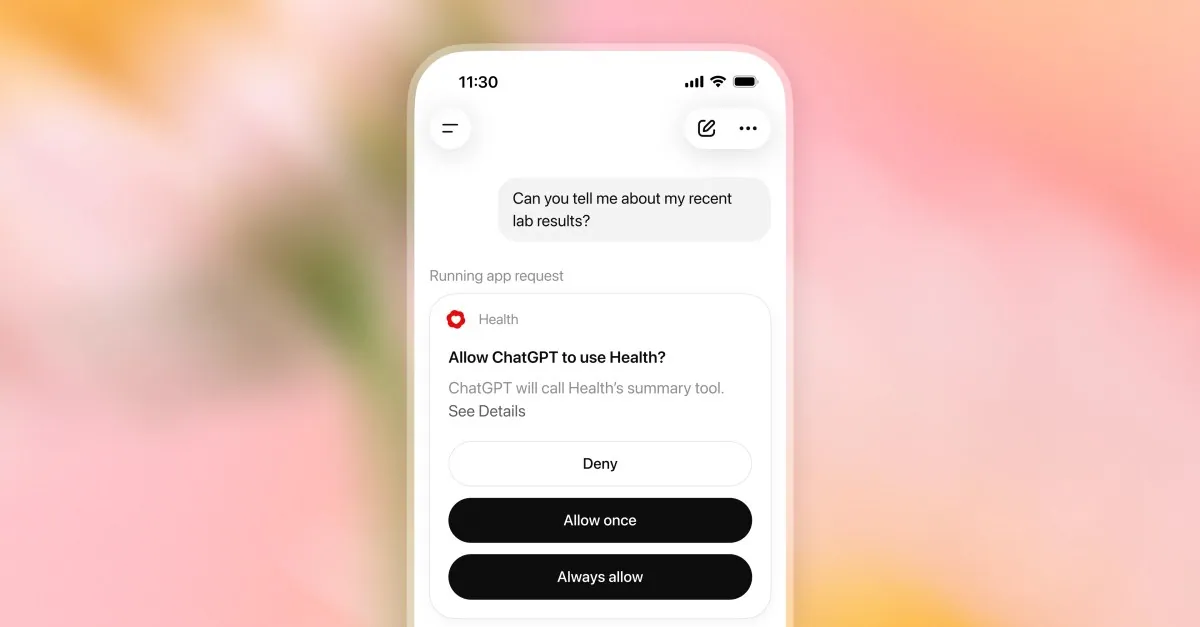
OpenAI is pushing ChatGPT Health out to every eligible user in the US starting Thursday, letting a much larger pool of people link their medical records, lab results, and fitness-tracking data directly to the chatbot. The expansion comes with a striking claim from the company: that its models can now reason about health issues at a level that beats human clinicians.
Ashley Alexander, OpenAI's vice president of health product, made that case during a briefing, saying the company's models "are now capable of reasoning at levels that are better than clinician level." It's the kind of statement that demands scrutiny, and when pressed for specifics on how OpenAI is measuring its models against actual doctors, the company's own health lead walked it back a notch. Karan Singhal, OpenAI's head of health, said he'd "temper" the claim, adding only that "there have been individual studies that have been pointing in that direction" — pointing to one such study out of Harvard and Stanford as an example.
That gap between the confident sound bite and the hedged follow-up lands at an awkward moment for OpenAI. On Wednesday, a Florida pastor sued the company, alleging that ChatGPT gave him "extremely dangerous medical recommendations" that led him to delay treatment for a pulmonary embolism, a potentially life-threatening blood clot in the lungs. OpenAI didn't have that lawsuit hanging over it when it first previewed ChatGPT Health, and it's now rolling out the feature more broadly while facing a very concrete example of what can go wrong when people lean on a chatbot for medical judgment.
What's actually changing
ChatGPT Health isn't new, but this update changes how it works. Previously, users who wanted the chatbot to draw on their connected medical information had to go to a separate ChatGPT Health tab. Now that capability moves into the main chat window, meaning you can ask a health question in your regular conversation with ChatGPT and have it pull from your linked records without switching screens.
Before it does that, ChatGPT will ask permission to use your health data to shape its answer. OpenAI says all conversations are encrypted both at rest and in transit, and that data connected specifically through Health gets an extra layer of encryption on top of that. Users retain control over exactly what gets linked, and can review or revoke access to categories like post-visit summaries, notes from a care team, lab results, and current medications.
On the data-source side, ChatGPT can currently connect to records from health providers as well as third-party services people already use to track their health: Apple Health, Weight Watchers, MyFitnessPal, and Function all made the list. That's a fairly wide net, spanning clinical records on one end and consumer wellness apps on the other, all feeding into the same assistant.
OpenAI is careful to frame this as a complement to medical care rather than a substitute for it, stating that ChatGPT Health "supports, not replaces, professional care." The rollout covers all logged-in ChatGPT users aged 18 and older, across the free, Go, Plus, and Pro tiers, and is available on both the web and iOS.
The model behind it
The timing lines up with OpenAI's recent release of GPT-5.6 Sol, which the company has billed as its strongest model yet specifically for health-related tasks. ChatGPT Health will run on OpenAI's newest models going forward, meaning the reasoning capabilities Alexander touted are tied directly to that release.
That's really the crux of the story: OpenAI is simultaneously making one of its boldest capability claims yet — outperforming clinicians — while its own health lead is publicly softening that same claim within the same briefing, and while a lawsuit alleging real-world harm from ChatGPT's medical advice is working its way through the courts. The company is betting that better models, tighter data integration, and more encryption safeguards are enough to make this rollout land as a genuine upgrade rather than a liability.
Whether "better than clinician level" holds up under real scrutiny is a different question than whether ChatGPT Health is useful. Plenty of people already use general-purpose chatbots to make sense of lab results or medication instructions; formalizing that with encrypted, permissioned data access is arguably safer than the status quo of pasting sensitive records into a chat window and hoping for the best. But the marketing language OpenAI chose to lead with sets a high bar, one that even its own health lead didn't fully stand behind when asked directly.
What happens next will likely hinge less on adoption numbers and more on how ChatGPT Health performs in the messy, high-stakes situations where medical advice actually matters, and on how the Florida lawsuit plays out as a test case for what happens when it doesn't.


