OpenAI's Policy Chief Wants a "New Deal" for AI. Critics Say It's Self-Serving.
Chris Lehane's essay lays out five policy priorities for the 2028 election, but experts say it leans on worker protections while skipping the accountability measures that made the New Deal work.
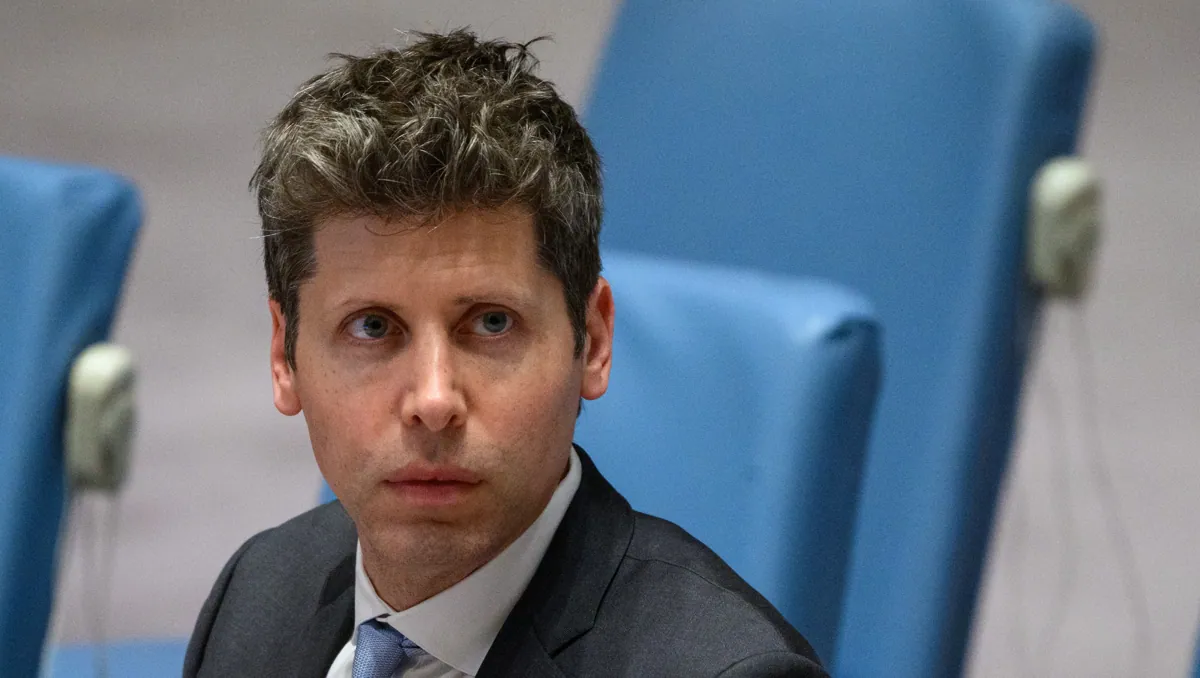
OpenAI is getting an early start on 2028. Chris Lehane, the company's chief global affairs officer, published an essay this week arguing that the next presidential election could become a referendum on artificial intelligence, and he wants politicians to start building policy around that reality now instead of just reacting to public anxiety as it surfaces.
The timing isn't an accident. Lehane's essay lands right after a midterm election in which Democrats flipped control of Congress, driven largely by voter anger over the cost of living. AI wasn't the headline issue, but opposition to data centers showed up as a real, bipartisan flashpoint in several races. Lehane seems to be betting that by 2028, AI won't be a side issue anymore. It'll be the issue.
To make his case, Lehane reaches for a big historical comparison: Franklin D. Roosevelt's New Deal, the raft of federal programs and reforms that followed the Great Depression and the upheaval of industrialization. His argument is that Americans today feel the same kind of anxiety about losing control of their economic future, and that AI needs its own "compelling third path" so people actually share in the technology's gains rather than just absorbing its disruptions. He lays out five priorities touching worker protections, education, tax policy, data center development, and AI safety.
It's a notable pivot in tone. Kate Brennan, who leads AI and corporate power policy at the AI Now Institute, told TechCrunch that this marks a real shift from OpenAI's policy posture a year ago, which was mostly about accelerating AI development, cutting regulatory friction, and building out infrastructure as fast as possible. Now the company's chief lobbyist is reaching for New Deal imagery and talking about worker protections.
But the comparison only goes so far. The actual New Deal built new government capacity to constrain corporate power and protect workers from it. Brennan isn't buying that Lehane's version does the same thing.
"Invoking a New Deal metaphor is to invoke state capacity to actually benefit the public," she said. "This is written by a private company that is trying to advocate for policies for its own benefit. It is ahistorical at best and harmful at worst."
Policy wrapped around adoption, not accountability
The pattern shows up across Lehane's specific proposals. On tax policy, he pitches incentives for workers to learn AI skills, easier capital access for entrepreneurs, and new models for employee ownership and profit-sharing. Those are meaningfully different from binding requirements that would force companies to share AI-generated wealth with workers or pay for the jobs their technology displaces. Brennan said she'd expect to see things like a revised corporate tax rate, incentives for hiring humans instead of automating roles, and guardrails against companies amassing outsized market power. None of that shows up in Lehane's framework.
"I was struck by how much of this policy is for a future that is already predicated on mass AI adoption and AI benefiting society, which we have yet to see," Brennan said. "All of it is predicated on benefiting from AI's upside."
Data centers get the same treatment. Lehane acknowledges the backlash, then leans hard into the upside: construction jobs, local tax revenue. He warns that politicians who back a data center moratorium risk ceding America's lead over China, and he reaches for an unusually sharp comparison, likening that stance to the 2002 vote authorizing the Iraq war.
On education, Lehane argues against keeping AI out of classrooms, warning that doing so would widen the gap between wealthy students and kids in rural communities. The argument assumes AI actually improves learning outcomes, a claim that remains unproven and one that, critics say, deserves more scrutiny rather than being treated as settled.
Safety promises with a complicated track record
Lehane's essay also calls for enforceable AI safety standards, independent evaluations, public oversight, and the ability to restrict or shut down AI systems if needed. Recent studies note that OpenAI and other labs still haven't published detailed plans for what they'd actually do if a model slipped outside human control.
Brennan called these stances "disingenuous," pointing to OpenAI's own record. In 2024, the company opposed California's SB 1047, a bill that would have required catastrophic risk evaluations and shutdown capabilities. Last year, OpenAI pushed to limit state-level AI regulation, arguing it could hamper American innovation. More recently, the company has softened some of those positions, backing several state safety laws and saying it's open to independent evaluators working inside the company.
Lehane also writes that people should retain control over consequential decisions made with AI rather than ceding judgment to machines entirely. That raises an obvious tension: what does human control actually look like in a world where people are increasingly required to use AI at work, in school, in healthcare, and in dealings with government?
TechCrunch reached out to OpenAI for more detail on Lehane's proposals and the company's positions but hadn't received a response by publication.
The real question
Lehane frames AI as a technology that can hand Americans back their economic agency. But the vision he describes ties middle-class success to deeper participation in an economy that OpenAI and companies like it are actively shaping. Whether that framework redistributes power or just makes the current arrangement more comfortable to live with is the question nobody outside OpenAI seems to think the essay answers.
With affordability already shaping up as a defining issue for 2028, and AI's footprint on jobs, electricity bills, and corporate wealth concentration growing more visible by the month, Lehane may be right that this becomes a central campaign issue. What's less certain is whether the industry writing the policy playbook will be the one setting its own limits.