Ex-OpenAI Engineer Accused of Bugging Exec Conference Room Will Stay Locked Up
A federal judge cited the Saudi government's apparent willingness to fund any bail at all costs as grounds for keeping Abdulrahman Alfozan in custody.
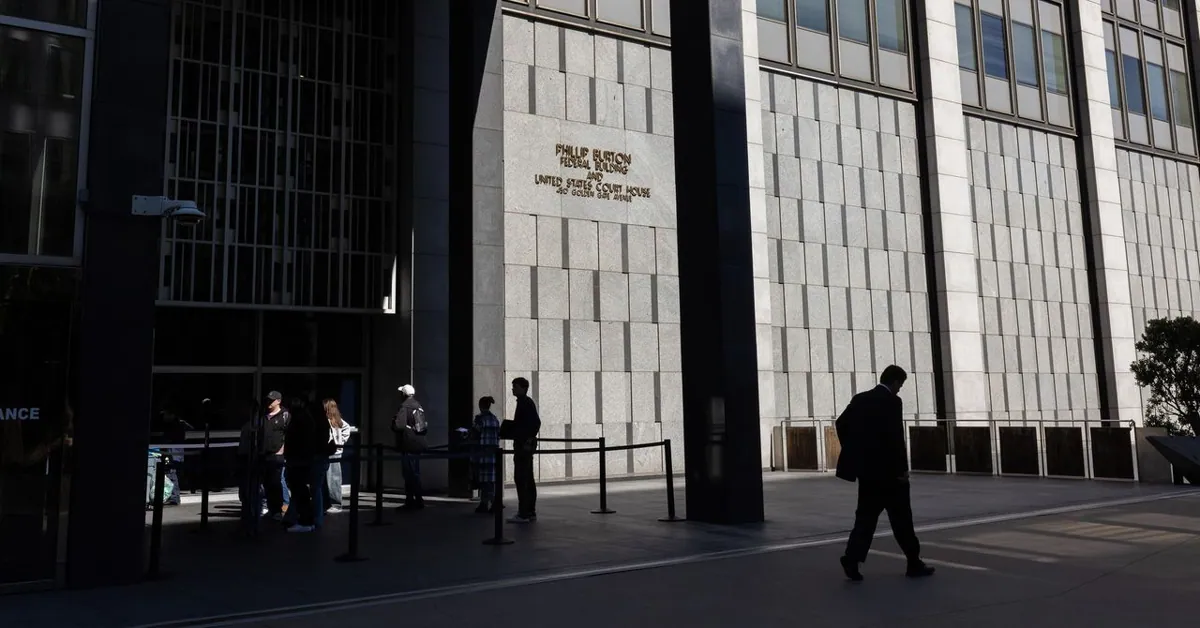
A federal magistrate judge ruled Monday that Abdulrahman Alfozan, the former OpenAI engineer accused of planting a hidden audio recorder in a company conference room, will remain in jail until trial. The decision turned less on the spying allegations themselves than on a detail that seemed to unsettle the judge: the Saudi government's apparent eagerness to bankroll Alfozan's release no matter the cost.
Prosecutors told Judge Alex Tse that the Saudi consulate had offered to work with a bail bonds firm to help spring Alfozan loose, framing it as evidence he's a flight risk. Tse didn't like what that implied. "I find that problematic," he said, according to Wired. "It seems like a blank check. 'We're going to pay whatever the court wants to get him out.' I'm more interested in people from his family wanting to put up assets." He went further, openly wondering aloud whether Alfozan might be an "asset" for the kingdom, and whether any bond backed by a foreign government could realistically keep him from leaving the country.
Alfozan's attorney, William Pernik, pushed back hard on the flight-risk framing, calling it baseless. But he couldn't convince Tse that his client was anchored to a life in the US. "There is a real threat here that once he leaves the case is over," the judge said.
The hearing itself drew an unusual crowd for a routine bail dispute: Wired reports the San Francisco courtroom was packed with journalists, a group of students on a field trip, and about 20 people there to support Alfozan, who appeared in an orange prison uniform with a medical mask pulled down around his neck.
What OpenAI says it found
The case started in late September, when OpenAI discovered a covert audio recording device hidden behind a TV in an executive conference room, stuffed inside a wad of toilet paper. The room was used for confidential business meetings. OpenAI traced the device to Alfozan, who had been at the company just over a year, fired him earlier this month, and the FBI arrested him shortly after.
The government's evidence goes beyond the device itself. Prosecutors say they recovered alleged chat logs between Alfozan and an AI chatbot in which he asked for help setting up listening equipment, along with a photo of Alfozan peering behind the TV after OpenAI had already removed the recorder. Authorities also say they found components for recording devices at his home, plus photos on his phone of other OpenAI monitors and a second conference room. OpenAI has said it previously found a separate listening device in a bag Alfozan left unattended in the office.
What was actually captured, if anything, is unclear. The device's data was encrypted, according to authorities, and prosecutors haven't offered a motive. They've pointed instead to Alfozan's outside ties: a past role at a Saudi venture capital firm, consulting work for Saudi companies, and reported connections to senior figures in the Saudi government.
Pernik dismissed any suggestion of state-directed espionage, telling the judge there was no evidence Alfozan was spying for Saudi Arabia or doing anything covert at all. "It's not as if he sneaked in under the covers of darkness," he said, describing the conference room as open and accessible to anyone. As for the recording hardware found at Alfozan's home, Pernik said it was tied to personal tech projects, including an attempt to improve a smart litter box for the couple's cat. "This is a gentleman who spent 15 years of life immersed at this intersection of technology and personal life," he told the court.
The Saudi connection prosecutors are leaning on
The strongest thread in the government's flight-risk argument is a set of WhatsApp messages. Prosecutors allege Alfozan was in frequent contact throughout 2025 and into 2026 with an unnamed member of the Saudi royal family, who was reportedly trying to recruit him back to Saudi Arabia for a role on an upcoming AI initiative. In May, according to a court filing cited by Wired, that person wrote to Alfozan: "Saudi needs you more then [sic] the US!" Alfozan allegedly replied "100," which prosecutors characterize as agreement.
Then there's the matter of his family's travel. Authorities say the Saudi government purchased plane tickets for Alfozan's wife and infant son to return to Saudi Arabia just days after his arrest. His wife ultimately left on an earlier flight booked by her sister's husband, who works for the Saudi navy. She hasn't been accused of any wrongdoing, and the FBI declined last week to say whether she might face charges.
Alfozan's legal team offered a more mundane explanation for the family's travel plans. According to his attorneys, his wife needed to leave the country to renew her American student visa, and Alfozan had intended to travel with her before his arrest intervened. The one-way ticket to Riyadh that prosecutors flagged as suspicious, they argued, was typical for him, since his job sometimes required early returns to the US. One of his attorneys, Nas Yasin, said the wife's flight was booked by her sister's husband in a personal capacity, and that she had just obtained a new US visitor visa and planned to fly back to California as soon as Tuesday.
Prosecutors also pointed to Alfozan's financial resources as evidence he could disappear if released: a $385,000 salary plus a $2.2 million profit-sharing package from OpenAI, on top of earnings from earlier stints at Meta and other tech companies.
Alfozan faces a single count of using a device to intercept communications, which carries up to five years in prison, though prosecutors have signaled additional charges are possible. After the hour-long hearing, Pernik told reporters he was disappointed with the custody ruling and intends to keep fighting it. Alfozan's next court date is set for November 6.


