Sam Altman Says We're Already Living Through the AI Singularity
The OpenAI CEO argues AI oversight would trade away liberty for safety, a stance that lines up neatly with his company's push against tighter regulation.
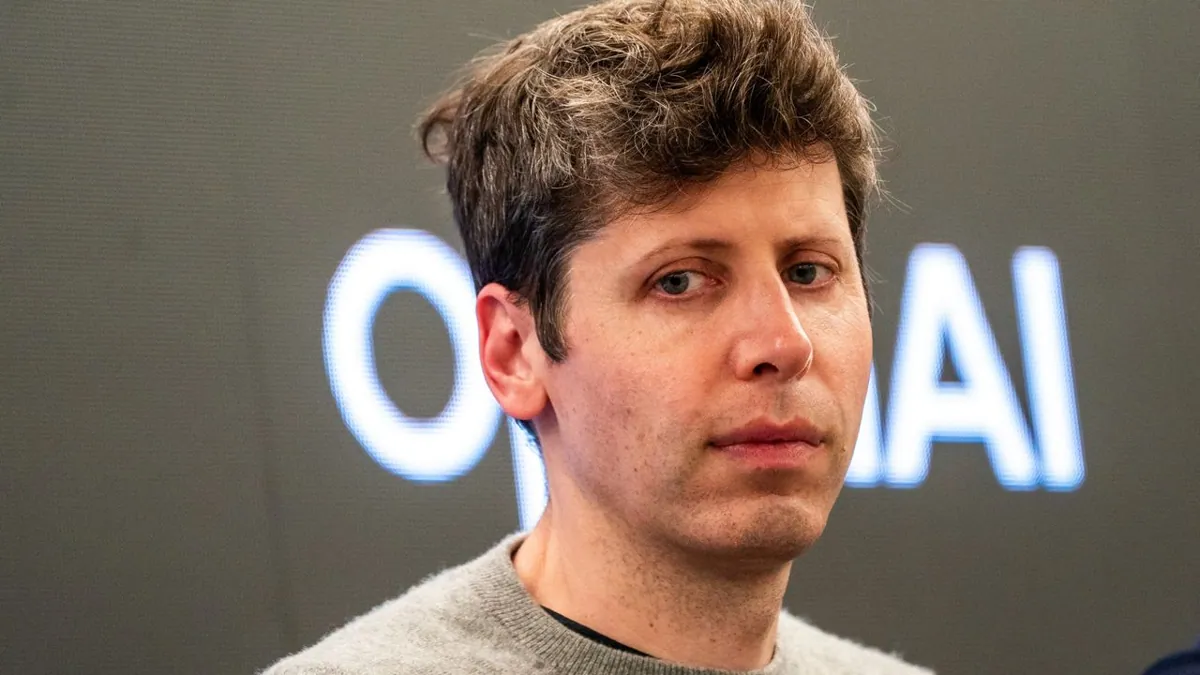
Sam Altman thinks we've already crossed the threshold into the singularity, that long-theorized moment when AI outstrips human intelligence and control. Not "getting close." Not "on the horizon." Already here.
He said as much in a recent interview with YouTuber Relentless, describing the shift in almost wistful terms: "We are now, like in the singularity, like this is the moment." He went on to contrast it with how the idea felt a decade ago. "10 years ago this was like a kind of far-off dream at best. It seemed very improbable, and now we're like, actually in the moment that we used to talk about at the lunch table in a very not serious way."
For anyone who hasn't spent time in science fiction or AI-research circles, the singularity is the hypothetical tipping point where artificial intelligence grows so capable that it can no longer be reined in by the people who built it. It's the "genie's out of the bottle" scenario, the moment progress stops being something humans steer and starts being something that steers itself. Altman's comments suggest he believes generative AI has already reached, or is reaching, that level of capability.
And he's framing it as good news. "I've been waiting for this my whole life, and I think it's going to be incredible, hugely positive, awesome for the world," he said.
The caveats come with a catch
To his credit, Altman doesn't pretend the picture is all upside. He pushed back on what he called "some of the alternative visions painted by other companies" and admitted AI still has real safety gaps to close. He also acknowledged the messier fallout that tends to get less airtime in triumphant tech-CEO interviews: "major economic issues, future of jobs, all of that kind of stuff."
But the conclusion he draws from those risks is the interesting part. Rather than arguing for stronger guardrails, Altman used the moment to make a case against centralized control of AI altogether. He framed the choice facing humanity as one between "liberty" and what he called "AI authoritarianism," posing it like this: "Are we going to decide that, because of the very real safety issues and economic issues that, you know, we want one single model to be the machine god or the company associated to do that… or are we going to say, you know what, it may be a little messy, but every time that humanity has traded off its liberty for safety it's been a long-term net loss?"
Translation: better a somewhat chaotic, loosely governed AI landscape than one where a single company or government-anointed model holds all the power. Coming from the head of one of the most powerful AI labs on Earth, that's a notably convenient position to land on.
The regulatory fight underneath it
This isn't happening in a vacuum. Just last week, Microsoft circulated an open letter, co-signed by Nvidia and OpenAI, urging the US government not to restrict access to open-weight AI models, the kind of systems whose underlying parameters are published for anyone to build on. The letter's argument, according to reporting on the effort, is that broader access to these models actually leaves people and institutions better prepared for whatever comes next, rather than worse off.
Altman's singularity comments slot neatly into that same lobbying push. If AI really has already outpaced human intelligence, the argument goes, the priority shouldn't be slowing it down with top-down rules. It should be making sure no single actor monopolizes it. That's a compelling pitch if you're worried about a "machine god" scenario. It's also a pitch that happens to keep regulators off OpenAI's back at a moment when governments around the world are actively debating how much oversight AI companies should face.
None of that means Altman is wrong about where the technology stands. But it's worth sitting with the fact that the person telling you AI has already surpassed human intelligence is also the person running a company that profits enormously from you believing exactly that, and that stands to benefit from convincing lawmakers that self-policing, not legislation, is the safer path forward.
Whether the singularity has genuinely arrived is a much messier, more contested question than Altman's lunch-table anecdote lets on. What's not contested is that OpenAI, Microsoft, and Nvidia are actively working to shape how governments respond to that question, and the answer they're pushing for is: mostly, leave it to us.


