New York Hits Pause on Massive AI Data Centers for a Year
Governor Kathy Hochul's executive order freezes construction of hyperscale facilities while the state writes new rules on power, water, and community impact.
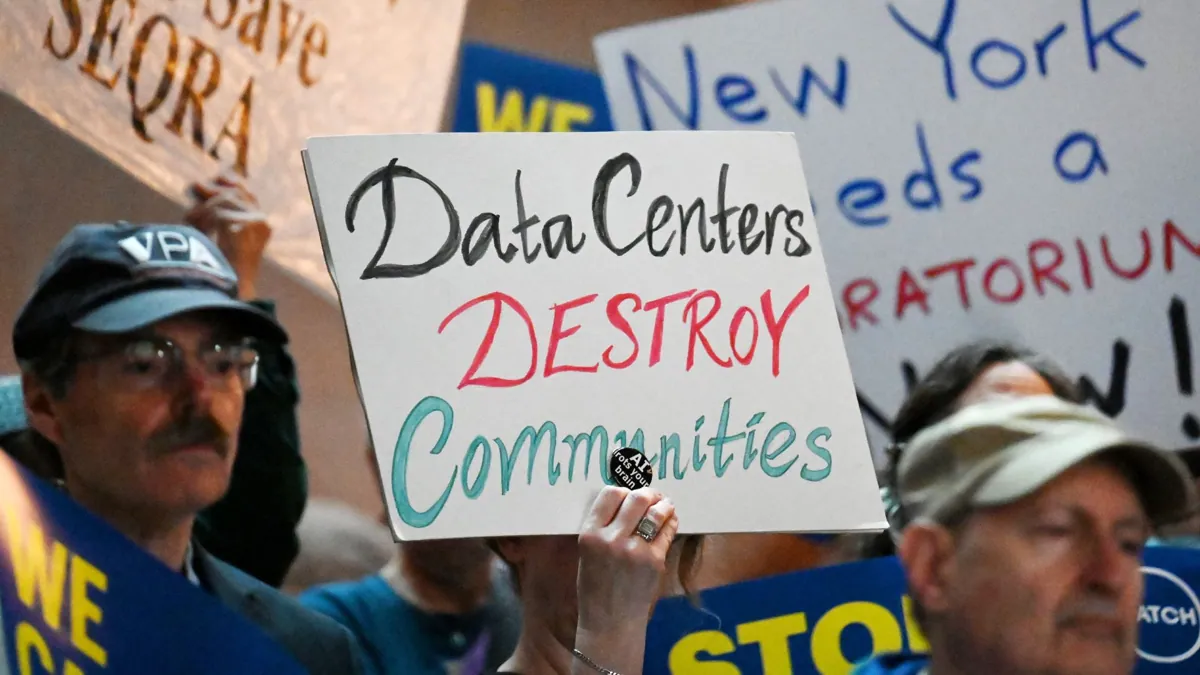
New York just became the latest battleground in the fight over who pays the price for the AI boom. Governor Kathy Hochul signed an executive order on Tuesday putting a one-year moratorium on new hyperscale data centers, the massive facilities that draw 50 megawatts of power or more, giving state agencies time to write rules governing how these projects get built and who they affect.
The order doesn't ban data centers outright. It hits pause on the biggest ones, the kind of industrial-scale facilities that power AI training and cloud computing, while regulators figure out how to handle their strain on electricity grids, water supplies, and nearby neighborhoods. Hochul framed it as a matter of basic fairness.
"As data center development threatens to hike up utility bills, deplete our natural resources and create uncertainty for New Yorkers, it's my responsibility to take action and lead," Hochul said. "New York will lead the way in creating the strongest standards in the nation for data center development, ensuring that when companies succeed because of New York, New Yorkers succeed too."
Why New York is stepping in now
New York hasn't been a major hub in the data center gold rush the way Virginia or Texas has. But the state has started to feel the early pressure. According to The City Reporter, roughly 30 potential data center projects sought connections to the state's power grid between 2020 and 2025. That, combined with a pipeline of additional projects in planning stages, has state officials and local advocacy groups worried that New York's infrastructure isn't ready for what could be coming.
The math behind that worry is straightforward. New York's average residential electricity price has climbed nearly 68% since 2019, and data centers are notorious for their appetite for power and water, both of which can strain local utilities and drive up costs for everyone else on the grid. When a single facility can consume as much electricity as a small city, residents nearby tend to notice the difference on their bills.
What the order actually does
While the moratorium is in effect, the state Department of Public Service will put together an environmental impact statement to evaluate how future data center projects affect air quality, water quality, and energy and water use. That analysis is meant to give regulators an actual factual baseline before more projects get approved, rather than green-lighting facilities and dealing with the fallout afterward.
Hochul has also directed Empire State Development, the state's economic development agency, to publish a Community Investment Framework within 60 days. The goal is to give local governments and communities a clear playbook for negotiating benefits when a large-scale data center deal comes to town, things like infrastructure upgrades, child care investment, and direct financial support for the surrounding area. In other words, if a company wants to build a facility that strains local resources, the community gets leverage to demand something back.
Separately, Hochul is pushing legislation to repeal sales tax exemptions that currently apply to large data centers across the state, another sign the administration wants these projects to carry more of their own weight financially rather than leaning on tax breaks while local costs rise.
Part of a bigger national pushback
New York isn't operating in isolation here. Other states have floated or introduced similar moratoriums, and the friction between data center growth and local communities has become a recurring flashpoint across the country. Residents in multiple states have organized against proposed data centers, raising the same complaints: noise, water consumption, energy costs, and broader climate impact.
The sentiment shows up in the polling, too. A recent Reuters/Ipsos survey found that only one in three Americans approve of the current pace of data center construction, and most respondents said they'd oppose having one built in their own community. Earlier this year, Senator Bernie Sanders introduced a bill calling for a nationwide pause on data center construction, built on much the same reasoning driving New York's move.
The industry's response has been mixed. Data center operator Digital Realty told Reuters it's willing to work with policymakers but doesn't think a blanket pause is the answer. NTT Global Data Centers CEO Doug Adams struck a more conciliatory note, telling Reuters the scrutiny reflects a legitimate desire to understand how these facilities affect the communities around them, and that the company welcomes the conversation.
That split captures where this fight sits right now. Data center operators want predictability and speed as AI demand accelerates. States want assurance that the communities hosting these facilities aren't left covering the costs. New York's year-long timeout is a bet that it can build both, if it slows down long enough to write the rules first. What happens over the next twelve months, and whether other states follow with moratoriums of their own, will say a lot about whether that bet pays off.


