Nvidia's Next Move: Selling the Whole Rack, Not Just the Chip
With Vera Rubin, Nvidia is pushing deeper into CPU territory it once ceded to rivals, timing the pitch to land right before AMD's big product event.
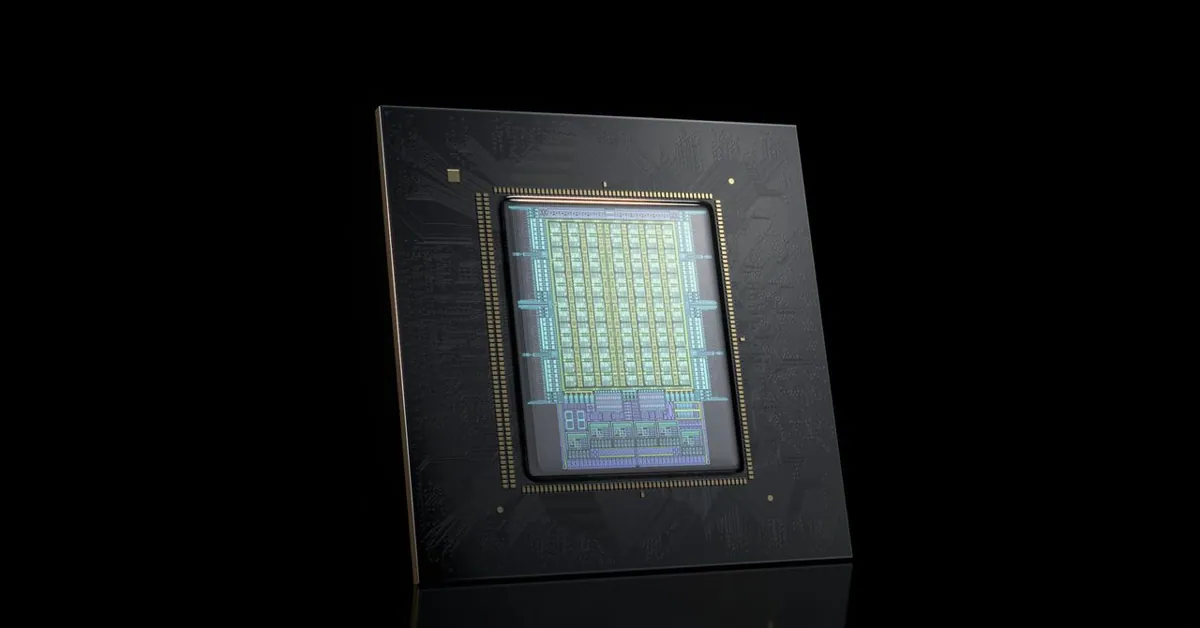
Nvidia spent last week doing something it doesn't usually need to do this loudly: convincing people it makes good CPUs.
At a technical workshop held at the company's Santa Clara headquarters, executives walked a small group of journalists through new performance claims for Vera Rubin, the next-generation chip system set to succeed Nvidia's current Grace Blackwell superchips. The timing wasn't subtle. AMD holds its own annual product event in San Francisco on Thursday, where it's expected to show off its next wave of AI and data center chips, and Nvidia clearly wanted to get its numbers into the conversation first.
The headline story from the workshop isn't really about raw GPU horsepower, the thing Nvidia is already famous for. It's about the company's growing ambition to be the default supplier of CPUs, too, and by extension, of the entire rack a data center needs to run AI.
Why CPUs suddenly matter again
For years, GPUs did the heavy lifting in AI, and CPUs played a supporting role. That balance is shifting. As the industry moves toward agentic AI systems, software that can plan, use tools, and chain together multiple steps on its own, there's growing demand for CPUs to handle the orchestration work: managing data flow, networking, and the software logic that ties everything together. That shift helps explain why Nvidia is increasingly marketing itself as a seller of complete AI systems rather than just the accelerator chips inside them.
Vera Rubin is the vehicle for that pitch. It pairs Nvidia's new Vera CPU with its Rubin GPU at a ratio of one CPU for every two GPUs. A full Vera Rubin NVL72 system packs 36 Vera CPUs alongside 72 Rubin GPUs into a single liquid-cooled rack. Nvidia is also selling the Vera CPU on its own, and has reportedly told customers in China it could be available as early as August.
The pitch: faster, more efficient, easier to install
Nvidia says the Vera Rubin NVL72 system can process ten times as many tokens per watt as Grace Blackwell, its current flagship. The company also claims its Vera CPU beats rival chips from AMD and Intel on agentic AI workloads, though the benchmarks it used to make that comparison reportedly relied on somewhat older generations of competitors' hardware.
Memory is another selling point. Vera Rubin's localized memory subsystems offer nearly triple the memory bandwidth of Grace Blackwell, according to Nvidia, a meaningful upgrade at a moment when high-bandwidth memory is in short supply industry-wide.
Nvidia also says it has dramatically cut the cabling needed to wire chips together across multi-rack systems, branding Vera Rubin as "cable-free compute" and "hot-swappable." Executives Ian Buck and Andrew Bell both pointed to this as a practical win: installation time for a rack could theoretically shrink from a couple of hours down to a few minutes. The system is also fully liquid-cooled, which Nvidia says cuts energy use compared to air cooling.
Buck, Nvidia's longtime vice president of accelerated computing and the architect of its CUDA software platform, framed the pace of releases as existential. "We're on a roadmap to crank out new architectures, not just GPUs but CPUs," he told reporters. "We're going to keep innovating, because it's do this or die in Silicon Valley."
Notably, Buck led the briefings rather than CEO Jensen Huang, who was in Japan that week announcing partnerships with Japanese firms to build AI for robotics.
A design choice with a point to make
One of the more technical arguments Nvidia is making concerns chip architecture itself. Most modern processors, including the x86 chips that still generate the bulk of data center CPU revenue, use a chiplet design, stitching together multiple smaller chips. Vera Rubin skips that approach entirely in favor of a single, monolithic chip.
Hannah Coutand, who runs product marketing for Nvidia's DGX Cloud, argued that chiplet designs impose "a heavy tax on memory bandwidth and data movement," while a monolithic chip lets data move faster across one integrated circuit. It's a pointed contrast with AMD, which has long been a pioneer of chiplet architecture in x86 processors and has been steadily gaining ground in the data center CPU market over the past two years. Nvidia's CPUs, by comparison, are built on ARM, an architecture prized for power efficiency rather than raw compatibility with legacy software.
Watching for delays
Nvidia has been feeding out details on Vera Rubin gradually since unveiling it in spring 2025, all while insisting the rollout stays on schedule. Huang has repeatedly said the system is ramping toward full production and will ship in the second half of this year, with Microsoft, OpenAI, and Oracle named as early customers. During a tour of an Nvidia data center lab in Silicon Valley, executives said OpenAI already has one Vera Rubin rack running.
The insistence on staying on schedule isn't just marketing reflex. Nvidia's previous-generation Blackwell chips reportedly ran into overheating problems when connected together in Nvidia's own custom server racks, forcing design changes and shipment delays. Any hint of a repeat would be costly, especially with AMD pressing its advantage.
That pressure was on full display over the weekend, when AMD released more details on its own Helios AI chip rack, built specifically to go head-to-head with Nvidia's new lineup. Both companies are chasing the same prize: long-term, large-scale supply contracts with hyperscalers like Meta and Amazon, and AI labs including OpenAI, Anthropic, and SpaceX's xAI.
The contest increasingly isn't just about who makes the fastest GPU. It's about who can convince the biggest AI builders to buy an entire rack, cables, cooling, CPUs and all, from a single vendor.


