Jensen Huang Shrugs Off Memory Glut Fears, Says Demand Will Keep Pace Through 2029
The Nvidia CEO pushed back on warnings of an AI chip supercycle slowdown, even as memory stocks reel from oversupply fears and rising competition from China.
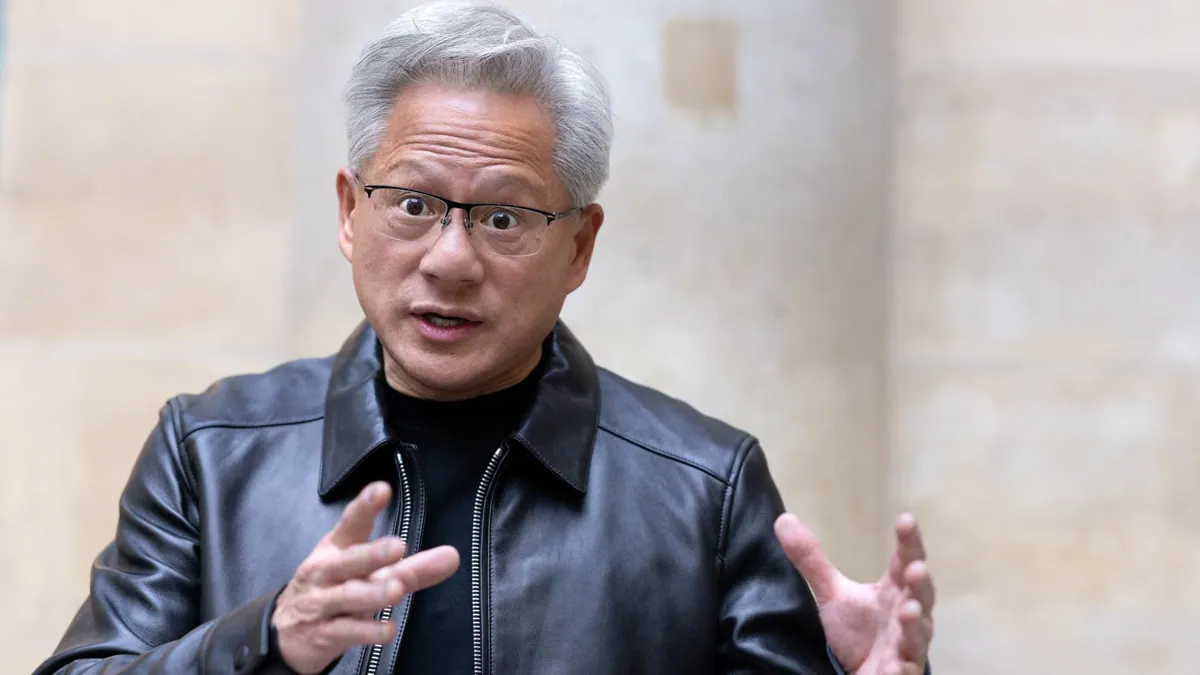
Nvidia CEO Jensen Huang isn't buying the memory glut panic that's rattled chip stocks over the past week. Asked directly about forecasts of an oversupply hitting by 2029, Huang told CNBC's Arjun Kharpal there's little reason to worry.
"One of the things that's really great about memory is that you can always use more of it," Huang said during a wide-ranging interview on the sidelines of Nvidia's GTC Berlin conference. He argued that HBM — a high-bandwidth type of RAM used in AI data centers — still has years of runway ahead.
The comments land at a tense moment for the memory market. Shares of major suppliers have taken a hit since October 15, when an opinion column in a prominent South Korean publication warned the country's government to prepare for the AI boom cooling off. The column, citing two industry experts, predicted a "flood of new supply" that would turn the memory business into what it called a "red ocean" by 2029 — enough new capacity entering the market to crush pricing and margins. The experts went further, suggesting the current AI supercycle could end entirely and give way to a downturn.
That's a significant claim given how central memory has become to the AI buildout. It's a core component in Nvidia's chips, and a supply glut would squeeze the companies that manufacture it — SK Hynix, Samsung, and Micron chief among them. Lower prices might sound good for buyers, but they'd also threaten the profitability that's fueled massive capital investment in memory production.
Elon Musk weighed in on the original warning too, predicting China "will be making a LOT of RAM in 2028" — a nod to the other force unsettling the memory market right now: Chinese competition.
China's wildcard: CXMT
Part of what's spooked investors isn't just the 2029 oversupply thesis. It's also a more immediate development: ChangXin Memory Technologies, the Chinese memory maker known as CXMT, recently unveiled a new design architecture that could meaningfully boost manufacturing efficiency. That news fed worries that CXMT could start eating into market share currently held by SK Hynix, Samsung, and Micron, according to CNBC.
Huang's response to whether Nvidia might eventually partner with CXMT was notably open-ended. "We're open-minded," he said, when asked directly about using the Chinese firm's memory products. He framed it as business as usual rather than anything unusual: "We work with Chinese companies; just about the whole world works with Chinese companies in the supply chain somewhere."
He went further, praising China's manufacturing capability in blunt terms. "China is incredible at the fundamental infrastructure technology, and no country collectively is better at manufacturing than China, and so we have to take their capabilities very seriously," Huang said.
A side effect of U.S. export controls
Huang also connected China's rising chip capabilities to a cause much closer to home: American export restrictions. The U.S. currently blocks sales of its most advanced semiconductors — including Nvidia's top-tier chips — to Chinese customers. But the controls haven't been airtight. Some Chinese companies have found workarounds, tapping into that computing power indirectly through data centers located in Southeast Asia. According to experts cited by CNBC, that access has played a real role in making Chinese AI models more competitive.
Huang said the restrictions, rather than slowing China down, pushed it to move faster. "China definitely accelerated because of all the regulations," he said. He was specific about what that acceleration looks like in practice: "We've definitely accelerated China's initiatives, its nationalization of semiconductor manufacturing capabilities, and all of the industrial support that has been put into that sector, and so there's no question we've accelerated that."
It's a notable admission from the CEO of the company most directly affected by those same export rules — essentially arguing that the policy designed to contain China's chip ambitions may have had the opposite effect, pushing Beijing to build the domestic capacity it otherwise might have kept buying from abroad.
Despite that, Huang struck a confident note about American competitiveness, describing U.S. tech firms as "mighty" and ready to compete "from anybody."
What it means
Huang's comments won't settle the debate over where memory supply and AI demand are headed by 2029 — that's still a forecasting argument between analysts, not something either side can prove right now. But his willingness to publicly dismiss the glut concerns, while simultaneously signaling openness to working with a rising Chinese memory supplier, says a lot about how Nvidia is positioning itself. The company isn't betting on scarcity to protect its business. It's betting that AI's appetite for memory, wherever that memory comes from, keeps growing regardless.


