Nvidia, Microsoft, Meta Push Back on Efforts to Restrict Open-Source AI
More than 20 companies signed a letter warning Washington against clamping down on freely downloadable AI models just as Chinese alternatives start beating American ones on benchmarks.
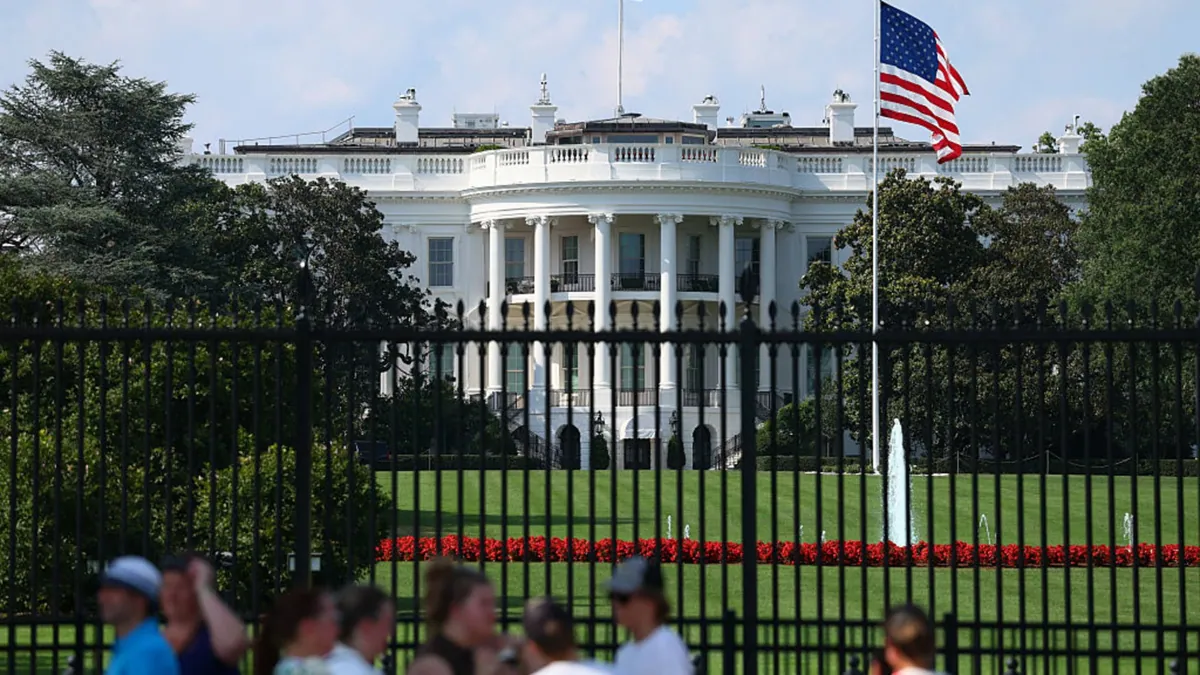
Nvidia, Microsoft, Meta, Palantir and over 20 other companies published a joint letter on Friday telling policymakers not to rush into restricting open-weight AI models, arguing that doing so could "stifle competition or drive innovation overseas."
The letter lands at a tense moment. Open-weight models — the kind anyone can download, tweak, and run on their own servers — have become a flashpoint in Washington over the past few weeks, as Chinese developers have started outpacing American labs on some fronts. Officials inside the administration have reportedly been debating whether to restrict U.S. access to those Chinese models altogether.
The spark was Kimi K3, a model released this month by the Chinese startup Moonshot AI that beat leading American systems on a number of industry benchmarks. That result rattled officials enough that Treasury Secretary Scott Bessent told CNBC on Tuesday the administration would investigate whether Chinese firms had stolen American intellectual property to build models like it, adding that the government has "the ability to sanction them because of this theft."
A split over how open is too open
The letter's signatories are making a different argument: that shutting off open models, foreign or domestic, would backfire. They wrote that open-weight systems help keep the AI market competitive and spread the technology's benefits "broadly shared rather than concentrated in a few hands," rather than letting a handful of companies control access to the most powerful tools.
They also pushed back on the idea that closed, proprietary models are automatically the safer choice. "Relying solely on closed models is not inherently safe: they can be breached, misused, or fail in ways that outsiders cannot detect," the letter said, adding that concentrating advanced AI capability behind a small number of closed systems "compounds that risk."
Nvidia CEO Jensen Huang and Microsoft CEO Satya Nadella both posted the letter to their personal social media accounts, giving it extra visibility from two of the industry's most closely watched executives.
Notably absent from the signatory list: OpenAI and Anthropic, the two companies most associated with closed, proprietary models and the ones most directly threatened by a rising open-weight competitor like Kimi K3. Both companies are valued at close to $1 trillion and are preparing for IPOs that could arrive as early as this year — Anthropic confidentially filed its prospectus with the SEC in June, and OpenAI did the same days later.
That doesn't mean OpenAI is opposed to the letter's spirit. Greg Brockman, the company's president, told reporters in New York on Thursday that he hasn't taken part in any administration discussions about banning Chinese open-weight models, and that he personally supports wide access to AI. "I think that, that fundamentally, AI and AI usage is something that is actually very important to democratize," Brockman said. "And so, for me, at a sort of deep level, I think that having more models, more usage, that is a good thing."
The distillation question
Underneath the policy debate is a more technical dispute: how, exactly, did Moonshot AI build a model that competes with the best American labs have to offer? White House advisor Michael Kratsios said Wednesday that Kimi K3 was built in part through distillation of Anthropic's technology — a process where a smaller model is trained using the outputs of a stronger, existing one. Distillation itself is a common and legitimate technique in AI development. Kratsios said as much, calling it "a vital role in the open innovation ecosystem," but he drew a line at what he called "large-scale, covert industrial distillation aimed at stealing proprietary U.S. technology," which he labeled "unacceptable."
The letter's signatories agree that theft should be dealt with, just not through blanket bans on the underlying technique. They argued that concerns about unlawful distillation should be handled through "targeted legal and commercial frameworks," rather than "sweeping restrictions on techniques that play an important role in AI innovation" — a distinction that matters a great deal to companies like Meta, whose Llama models are themselves open-weight and widely used as a base for other developers' work.
The letter closes on a broader argument about what U.S. AI dominance should actually look like. "Our AI leadership will be judged not by one frontier AI model, but by whether the United States builds a strong, open ecosystem that diffuses into every sector," the companies wrote, calling that ecosystem "essential for creating opportunities for innovation and prosperity across the country."
What comes next
The letter doesn't resolve the underlying tension it's responding to. The administration is still weighing whether to act against Chinese open-weight models, and Bessent has already floated sanctions over alleged IP theft. Kratsios has signaled the White House sees a real distinction between ordinary distillation and what he calls covert theft of U.S. technology, but hasn't said what enforcement would look like. Meanwhile, OpenAI and Anthropic — the companies with the most to lose from cheap, high-performing open alternatives — are staying out of the lobbying fight in public even as they head toward blockbuster IPOs. How Washington threads the needle between protecting American AI companies and not walling off the open-source ecosystem those same companies rely on is likely to be one of the more consequential policy fights in tech this year.


