Jensen Huang Says AI Neocloud Demand Is Outrunning Available Capital
Nvidia's CEO told CNBC that smaller GPU-focused cloud providers are seeing explosive demand, but a shortage of working capital is throttling how fast they can grow.
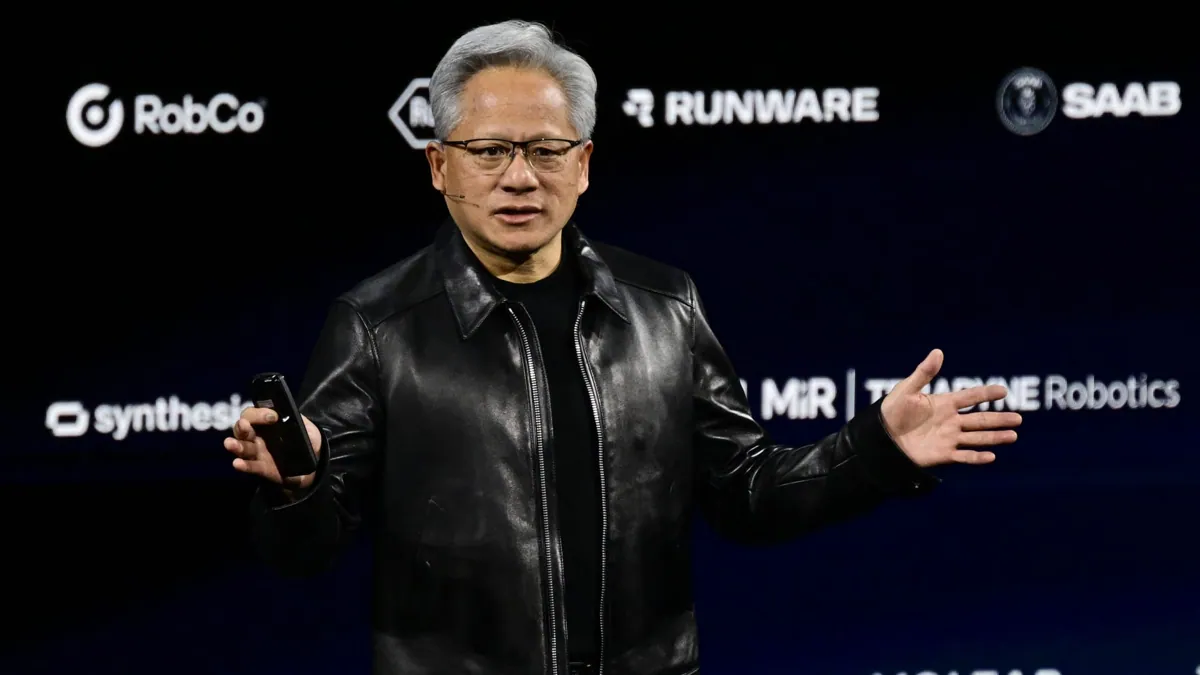
Nvidia CEO Jensen Huang says the appetite for neocloud computing power has become so intense that the real bottleneck isn't chips or customers anymore. It's cash.
Speaking with CNBC's Arjun Kharpal on the sidelines of Nvidia's GTC conference in Berlin on Thursday, Huang said demand for neoclouds — cloud providers that specialize in renting out GPU capacity for AI workloads, rather than the broader infrastructure offered by traditional hyperscalers — is "off the charts." He added that their technical capabilities are "extraordinary."
The constraint, according to Huang, is working capital. "What is missing in the middle is the working capital to fuel that growth," he told CNBC, pointing to demand spread across so many corners of the AI industry that capital simply can't keep pace. "There's a scarcity of capital," he said. "The demand of the capital is much greater than the availability of the capital."
Huang framed this as a temporary mismatch rather than a structural problem, saying, "That's going to get solved."
The comments land at a moment when the economics of AI infrastructure are under close scrutiny. Building and operating the data centers that power large language models and other AI systems requires enormous upfront spending on GPUs, power, cooling and real estate, long before that infrastructure generates steady revenue. Neoclouds, many of which have scaled up quickly to meet AI-driven demand, are especially exposed to that gap between spending today and cash flow tomorrow. Huang's remarks suggest that gap is wide enough right now that even companies with strong demand pipelines are straining to finance their own growth.
That tension matters beyond the neocloud sector itself. Nvidia's own growth is tightly linked to how much GPU capacity gets built out globally, so a capital crunch among the companies buying and deploying its chips is a signal worth watching. If neoclouds can't raise the working capital to expand as fast as demand allows, that could eventually show up as a drag on infrastructure buildout, even as underlying appetite for AI compute keeps climbing.
Huang's comments were brief and came amid a live, breaking-news setting at GTC Berlin, so he didn't detail how the capital shortage might get resolved, whether through new financing structures, investor interest or other means. CNBC noted its report was still being updated at the time of publication.
What's clear from Huang's framing is a split between two different signals coming out of the AI infrastructure boom: demand that, by his account, remains strong and arguably underserved, and financing that hasn't caught up. How quickly that gap closes, and who ends up supplying the capital, will say a lot about whether the current pace of AI infrastructure expansion is sustainable or about to hit a funding wall.


