Netflix, Disney and YouTube Circle World Cup Rights in Deal That Could Hit $2 Billion
FIFA is preparing to sell U.S. broadcast rights for the 2030 and 2034 tournaments as a single English-Spanish package, and streaming giants want in.
Fox has owned the English-language U.S. rights to the men's World Cup for over a decade. That run may be ending. Netflix, Disney and Alphabet's YouTube are all weighing bids to take those rights away from Fox for the 2030 and 2034 tournaments, according to people familiar with the matter cited by CNBC. Amazon and Apple, both already deep in soccer streaming through other deals, could join the bidding too.
The numbers being floated are striking. Executives at various media companies are reportedly budgeting between $1.5 billion and $2 billion just for the U.S. rights to each tournament. For context, Fox paid $485 million for the English-language rights to this year's World Cup, and NBCUniversal's Telemundo paid $600 million for the Spanish-language rights, according to The Athletic and people familiar with the matter. Combined, that's roughly $1.1 billion for one tournament. The next deal could nearly double that, for rights to games that will air at far less convenient hours for American viewers.
Why FIFA wants one buyer, not two
The most consequential detail in this story isn't the price tag, it's the packaging. FIFA has told media companies during early talks, which started earlier this year, that it intends to sell the English- and Spanish-language U.S. rights together as one bundle rather than splitting them the way it has for every recent World Cup, including this year's.
That's a deliberate strategy to drive up the price. A single buyer controlling both language rights removes the awkward overlap that's played out this year, where Telemundo's Peacock streaming service has pulled in an unknown number of English-speaking viewers at a lower price point than Fox's own streaming product. Peacock runs $10.99 a month; Fox One costs $19.99. Telemundo even hired Owen Wilson, who has no particular ties to Spanish-language media, as a spokesperson for its Spanish coverage, further blurring the audience lines. Selling one combined package would end that kind of cross-shopping and give FIFA a cleaner, higher-value negotiation.
It also has a side effect: it likely prices NBCUniversal out. People familiar with the matter told CNBC that NBCUniversal isn't expected to compete near the $2 billion mark if the rights are sold as a single bundle, which would end Telemundo's run as FIFA's Spanish-language U.S. partner. That's notable timing, given Comcast announced last month that it plans to spin off NBCUniversal, putting fresh scrutiny on the unit's finances. NBCUniversal already carries heavy annual costs for NFL Sunday Night Football and NBA rights. An NBC spokesperson declined to comment.
Why streamers suddenly want in
Netflix, Disney and YouTube all reportedly see World Cup rights as a genuine lever for subscriber growth. FIFA has already signaled real interest in Netflix specifically, having awarded it the rights to the Women's World Cup in both 2027 and 2031. Disney brings its own advantage to the table: it could spread coverage across ESPN and ABC in addition to streaming, mirroring the broadcast-plus-cable-plus-streaming approach that's helped Fox post strong ratings this year.
FIFA won't sell the global rights in one shot, since many countries have laws requiring the World Cup to air on free, over-the-air television. But the U.S. market is a different animal entirely, driven by advertising dollars and the kind of viewership numbers usually reserved for the NFL playoffs. Spokespeople for FIFA, Netflix, YouTube and Disney all declined to comment on the discussions.
The ratings case for a bigger check
The audience numbers from this year's tournament help explain why bidders are willing to pay so much more than FIFA's last negotiated deal, struck with Fox and Telemundo back in 2011 and later extended through 2026.
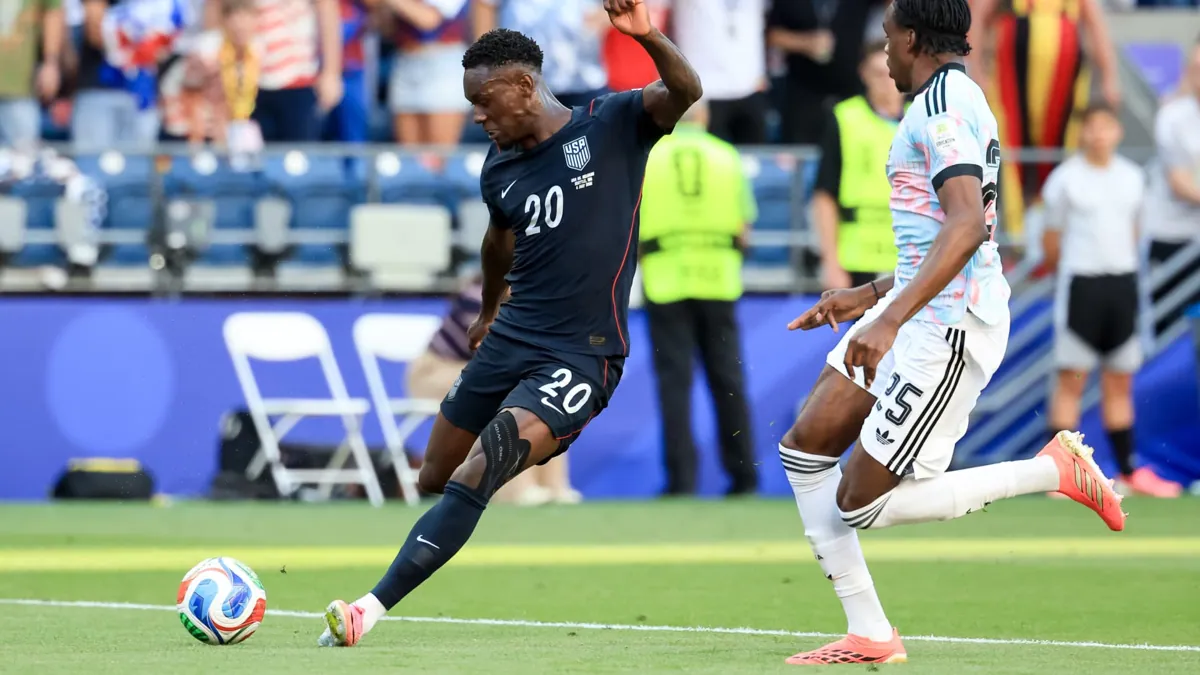
The U.S. victory over Bosnia and Herzegovina last week became the most-watched soccer broadcast in English-language television history, averaging more than 26 million viewers on Fox, according to Fox Sports. Another 9.8 million watched on Telemundo or Peacock. The Monday night matchup between the U.S. and Belgium is expected to top that: estimates from AdImpact put the combined English and Spanish audience at 47.9 million viewers, though official Nielsen numbers hadn't been released at the time of reporting.
Even games without the U.S. team are pulling serious numbers. More than 11 million people tuned in to watch Portugal play Croatia on Fox, making it the most-watched non-final World Cup match in U.S. history that didn't involve the American team.
The time zone problem
There's a complication bidders can't ignore. This year's tournament is hosted across the U.S., Mexico and Canada, giving American viewers convenient kickoff times. That won't be the case going forward. The 2030 World Cup will be held in Morocco, Portugal and Spain, putting games five or six hours ahead of U.S. Eastern time. The 2034 tournament heads to Saudi Arabia, where the time difference is even steeper.
That's normally the kind of scheduling headache that suppresses U.S. ad rates and viewership. But given how this year's numbers have performed even in a best-case time zone scenario, bidders appear convinced the World Cup's pull is strong enough to justify paying up regardless of when the games actually air.
Formal discussions between FIFA and prospective media partners are expected to kick off sometime in the next three months. Whoever wins will be paying a price that reflects not just soccer's growing American audience, but streaming companies' broader hunger for live events big enough to move subscriber numbers on their own.


