Starlink Restrictions on Ukraine's Military Drones Persist Despite Trump's Claims They Were Fixed
Ukrainian officials say Starshield speed limits are still grounding drone strikes on Russian targets, even as the White House insists SpaceX resolved the issue.
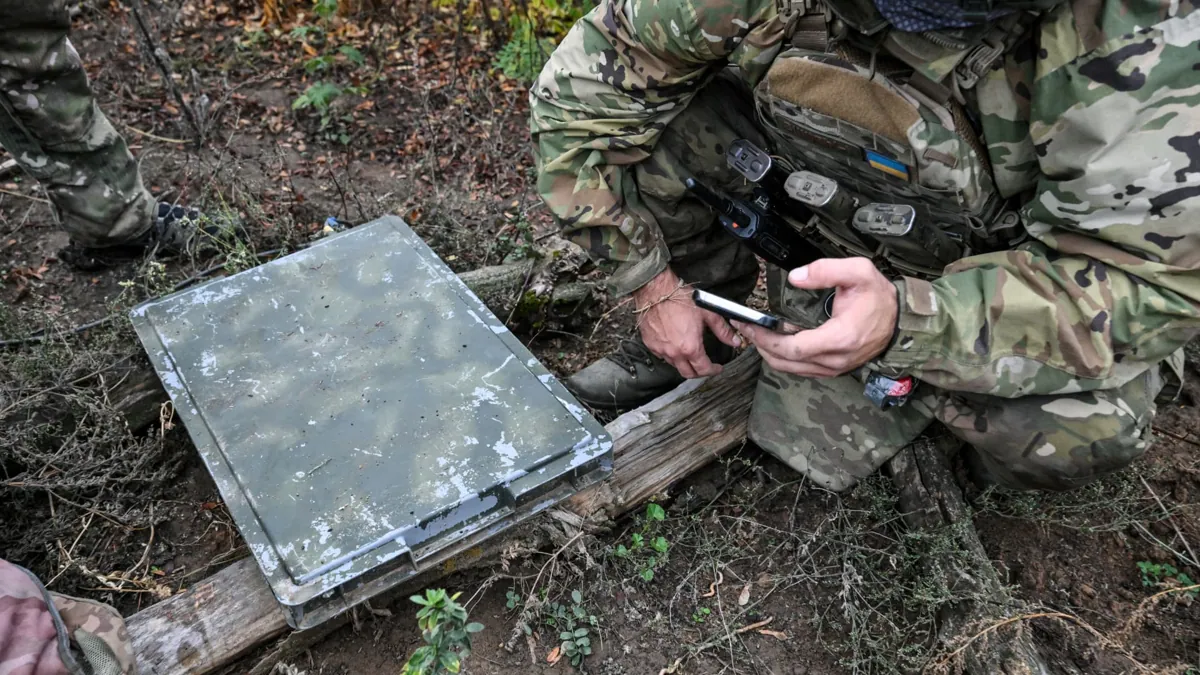
Ukraine says Elon Musk's SpaceX is still capping the speed of its military Starlink terminals, more than a week after the restrictions first surfaced and despite public assurances from President Trump that the problem had been fixed.
Denys Sienik, Ukraine's deputy ambassador to the U.S., said Friday that "nothing has changed" and that the country's defenders are still waiting on the capabilities they need. "Every day matters for Ukraine, because every Ukrainian life matters," he wrote on X.
The restrictions center on Starshield, the military-grade version of Starlink that Ukraine relies on to fly attack drones. Since October 14, Ukrainian officials have said SpaceX imposed a speed cap on the system: any drone moving faster than 100 mph loses its connection. That's a serious problem for a military that depends on fast-moving drones to strike Russian logistics and supply lines deep behind the front.
Dmitri Alperovitch, chairman of the Silverado Policy Accelerator and a co-founder of CrowdStrike, told CNBC the terminals were still malfunctioning Friday, well after Trump suggested the issue had been resolved. "They are losing drones," he said. "Ability to do mid strike to hit Russian logistics is now limited."
President Volodymyr Zelenskyy told ABC News the system was still experiencing issues Friday, and his defense tech advisor, Serhii Beskrestnov, said much the same on Telegram. Beskrestnov noted that in a few isolated cases Starlink seemed to work beyond the supposed limits, but cautioned that was likely just a quirk of SpaceX's algorithms, not an actual lifting of restrictions.
Mixed signals from the White House
Who's actually behind the throttling is still unclear, and the public statements from Washington haven't helped clarify things. The Wall Street Journal reported Thursday that Trump called Musk directly about lifting the Starshield restrictions. Trump himself didn't confirm or deny making that call when asked Thursday, saying only, "The bottom line, he put it back."
Then on Friday, Trump reversed course, telling reporters he hadn't actually spoken with Musk at all, while still maintaining that Starshield service had been restored. "I've heard it was fixed," he said outside the White House. "But if it's not, I'll speak to him."
That's a notably different story from the one Ukrainian officials and Alperovitch are telling in real time, with drones reportedly still dropping out of contact mid-mission. Neither Musk nor SpaceX responded to CNBC's request for comment.
Ukraine looks for a backup plan
The uncertainty over whether Starlink will keep working — and who controls the switch — has pushed Ukraine to start building alternatives. Zelenskyy said Wednesday he met with Norwegian officials and defense contractor Kongsberg to discuss air defense systems and "launching work on new satellite communication capabilities" for Ukrainian forces.
A day later, Ukraine's Ministry of Defense signed a letter of intent with Nokia and the Finnish space intelligence firm ICEYE to explore cooperation in space and help build what the companies called "sovereign satellite communications" for Ukraine's defense needs.
"Modern warfare has proven that reliable communications are a matter of national security," Zelenskyy said in a statement. "We must all rely on capabilities that we can control."
That last line gets at the real issue here. Starlink has become essential infrastructure for Ukraine's war effort, but it's infrastructure controlled by one company and, by extension, one person. Experts have previously told CNBC that finding a genuine substitute won't be easy. No other satellite internet service currently matches Starlink's coverage or performance, which is exactly why a speed cap imposed without public explanation can disrupt real military operations within days.
For now, Ukraine is stuck managing a dependency it can't quickly replace, while conflicting statements from Washington leave open the question of whether the fix everyone keeps referencing has actually happened at all.


