Elon Musk Loses $130 Billion in a Week as Tesla and SpaceX Both Slide
Weak earnings hit Tesla, SpaceX shares keep sinking ahead of a Starship test, and Musk sparred with a journalist over his politics.
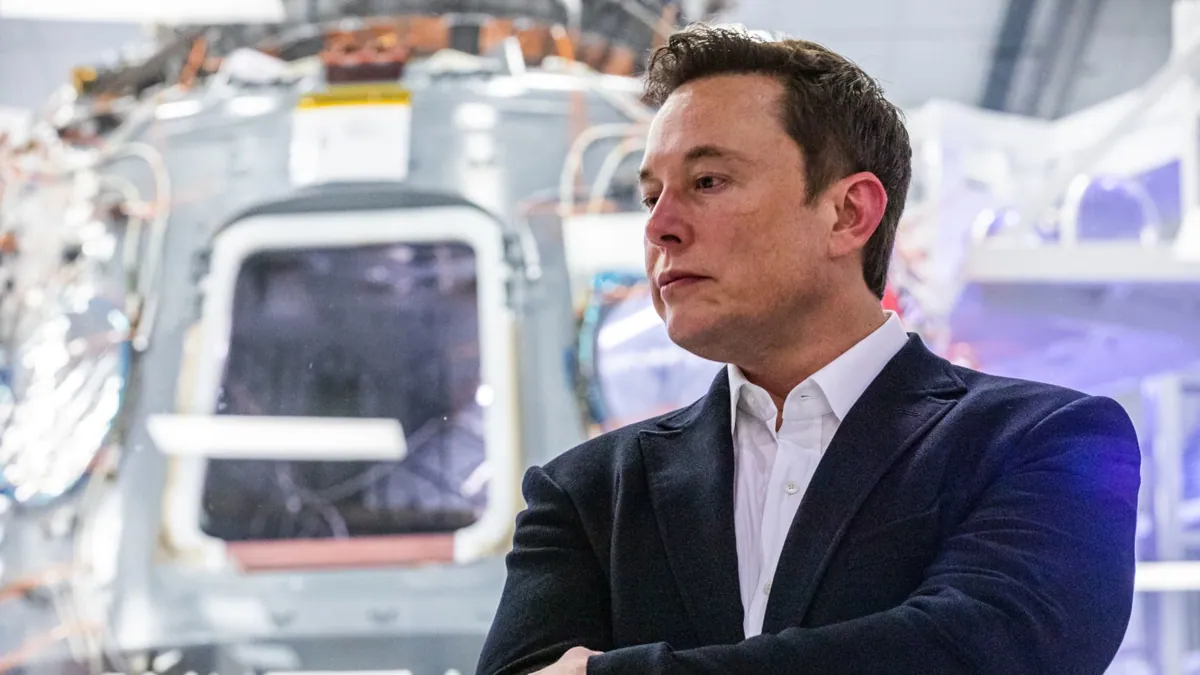
Elon Musk had a rough five days, even by his standards. Tesla shares fell 18% over the week to close at $313.03 on Friday, marking the stock's worst weekly performance since 2022. SpaceX, meanwhile, slid another 7.2% over the same stretch to close at $115.07, its lowest price since the company's record-setting IPO last month.
Together, the drops erased roughly $130 billion of Musk's personal wealth, just weeks after he'd become the world's first trillionaire. Musk himself acknowledged the reversal in a post on X on Friday, writing simply: "(Former) trillionaire."
The Tesla slide traces directly to Wednesday's second-quarter earnings report, which came in weaker than Wall Street expected. The company turned cash flow negative, a shift driven by heavy spending on Musk's longer-term bets: robotaxis, humanoid robots, and a large-scale chip fabrication plant. Those are the kinds of projects that could reshape Tesla's business down the line, but they're expensive now, and they're not generating revenue yet.
Analysts at Argus Research, which rates the stock a hold, laid out the concern bluntly in a note Friday. "We expect this to pressure free cash flow and delay earnings growth, without providing any near-term shareholder return," the firm wrote, adding that it will be "nearly impossible for Tesla to generate any consistency in profit growth in the near-term."
That assessment lines up with the stock's broader trend this year. Tesla is now down 30% in 2026, making it by far the worst-performing megacap in tech, a category that includes some of the most closely watched stocks in the market.
SpaceX's post-IPO comedown
SpaceX's troubles have a different shape. The company's shares popped when it first went public last month, but they've been sliding steadily since, dropping in four of the last five weeks. The stock now sits about 43% below its peak closing price from June 16.
The timing matters because SpaceX is set to attempt the 13th test flight of Starship on Friday evening, launching from the company's Starbase, Texas facility. Starship is the largest rocket ever built or flown, and this flight will debut a new version, Starship V3. The rocket is designed to be fully reusable, a feature SpaceX considers essential to its plan to dramatically expand the Starlink satellite network. Beyond Starlink, Starship is central to SpaceX's ambitions to return American astronauts to the lunar surface and, eventually, to carry crewed missions to Mars.
Getting there hasn't been smooth. SpaceX pushed the test originally planned for Thursday to Friday, citing weather in a post on X, the platform Musk also owns. That follows a scrubbed attempt the previous week, when the rocket's booster triggered an automatic hold that cut off the engines just as they were beginning to ignite, according to a SpaceX employee who described the incident during a livestream.
A clean launch of Starship V3 would be the first major technical milestone for SpaceX since it went public, and it would give investors something concrete to point to after weeks of decline. A repeat failure would do the opposite, adding pressure to a stock already down sharply from its post-IPO high.
A combative interview
Musk's week wasn't confined to the markets. He sat down for an interview with The Economist that turned tense when editor-in-chief Zanny Minton Beddoes pressed him on his political alliances, describing his support as extending beyond the populist right into "very fringe parties" in several countries.
The question wasn't out of nowhere. Musk has backed Germany's AfD, a party known for hardline anti-immigrant positions, and endorsed the UK's Restore Britain, a group founded by Rupert Lowe that has called to "reverse mass migration." He's also provided financial and vocal support to President Trump and taken on a formal role in the current administration.
Musk pushed back hard on the framing. "It's just normal people!" he said, and went on to criticize Beddoes and what he called "the traditional media" for what he described as an unfair depiction of the far right.
Taken together, the week captures the split-screen nature of Musk's current position: a fortune that swung by nine figures in a matter of days, a rocket program on the verge of a high-stakes test, and a public fight over how his politics are being characterized. The Starship launch Friday evening is the next concrete data point investors and space watchers alike will be parsing for signs of where things go from here.


