Microsoft's New AI Tool Fixes Weather Forecasts' Weakest Spot: Three Weeks Out
The open-source system doesn't predict weather itself — it corrects the errors already baked into other models, and it can run on a regular CPU instead of a supercomputer.
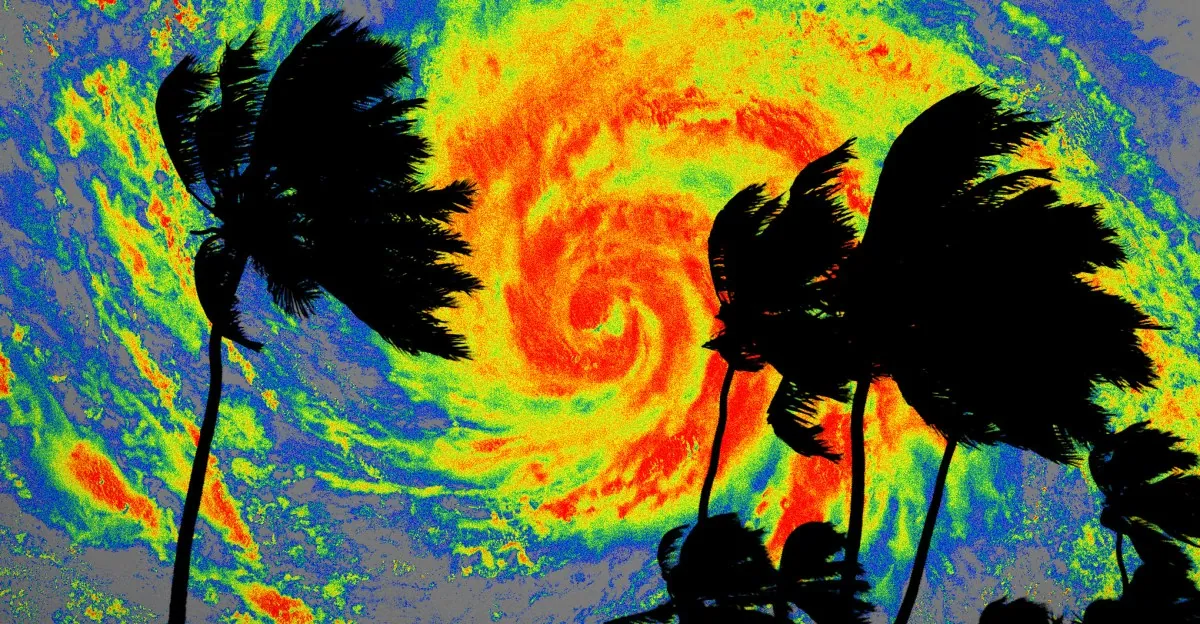
Weather forecasting has a blind spot. Both traditional physics-based models and the newer AI systems that have popped up in recent years are pretty reliable for the next several days, then get progressively shakier the further out they look. Past the two-week mark, accuracy tends to fall apart. Microsoft says it's found a practical way to shore up exactly that window — the two-to-six-week range that matters most to farmers planning a planting season or emergency managers bracing for a storm cycle.
The research, published today in Nature, doesn't introduce a new weather model. Instead, Microsoft built a machine learning layer that sits on top of existing forecasting systems and corrects their mistakes. The tool is called Probabilistic Bias Correction, or PBC, and the company has released it as open-source software.
That framing matters because of who it's aimed at. State-of-the-art weather forecasting is expensive. Physics-based models run on supercomputers simulating atmospheric dynamics in enormous detail, while the newer generation of AI weather models leans on powerful GPU clusters to crank through historical data. Both are out of reach for a lot of national weather agencies, particularly in lower-income countries. Microsoft says PBC can run on ordinary CPUs, making it a far cheaper add-on than building or operating a forecasting system from scratch.
Why forecasts drift the longer they run
To understand what PBC fixes, it helps to know why forecasts get worse over time in the first place. Physics-based models try to simulate the atmosphere's actual behavior; AI models instead hunt for patterns in historical weather data. Both approaches hit the same wall: gaps in the underlying data, whether from regions with few weather stations or atmospheric processes scientists don't fully understand yet. Models paper over those gaps with approximations, and those approximations turn into a kind of systematic bias — a consistent, predictable kind of error rather than random noise.
That bias compounds the further a model projects into the future. A small, repeatable skew early on becomes a bigger distortion three or four weeks out.
Lester Mackey, senior principal researcher at Microsoft Research New England, offered one concrete example to The Verge: climate change itself can bias a model. A forecasting system trained on historical records may still be anchored to a cooler baseline than the climate we're actually in now, since greenhouse gas emissions have shifted the backdrop the model was built on. PBC is designed to catch biases like that and correct for them using machine learning, rather than requiring the underlying model to be rebuilt or retrained.
The results, and who's already validated it
The team tested PBC against one of the field's benchmark systems: the European Centre for Medium-Range Weather Forecasts' physics-based model. According to the paper, PBC improved accuracy for 98 percent of precipitation targets and 92 percent of temperature targets. Run against ECMWF's newer AI forecasting system, PBC reportedly doubled its accuracy in the study's analysis.
ECMWF had already recognized the work before publication, awarding it in the organization's AI Weather Quest competition. Matthew Chantry, ECMWF's strategic lead for machine learning, described the paper in a comment to The Verge as "a good example of new ideas being developed for the benefit and consideration of the community," while also noting the gap between a promising method and an operational one: "As always, turning ideas into reality [in] an operational process is a most challenging step."
That caveat is worth sitting with. Research results and production deployment are different things, and a tool that performs well in a Nature paper still has to prove itself inside the messier reality of an actual forecasting agency's workflow.
Built to help agencies that can't afford supercomputers
The paper has a long list of contributors beyond Microsoft, including researchers from MIT and ECMWF. One of them, Genevieve Flaspohler, worked on PBC as a Microsoft intern alongside Mackey. She's since become executive director of Rhiza Research, a nonprofit now testing the tool in the field. Rhiza is working with the Kenya Meteorological Service Authority, backed by Gates Foundation funding, to see whether AI-driven corrections can improve early-warning systems ahead of what's expected to be an unusually intense rainy season tied to a record El Niño.
Flaspohler's case for PBC centers on accessibility: because the model is lightweight and relatively simple to train, she told The Verge, scientists without access to major compute resources can still adapt it to their own region's conditions. That's a different value proposition than most AI weather tools on the market, which tend to compete on raw forecasting power rather than on how cheaply they can be run.
Mackey framed the stakes similarly, telling The Verge he's hopeful about both "the increased resource efficiency of weather forecasting and the extended reliability of forecasts, especially for extreme weather."
Microsoft joins Google, Nvidia, and a growing list of companies racing to apply machine learning to weather prediction, but most of that competition has been about building better standalone models. PBC's bet is different: rather than replacing the forecasting systems agencies already rely on, it tries to make them more honest about their own blind spots, cheaply enough that a weather service without a supercomputer budget could still use it. Whether that translates from a Nature paper into daily forecasts for farmers in Kenya or emergency planners anywhere else is the test still ahead.


