Wall Street Delivers a Split Verdict on Big Tech's AI Spending Spree
Microsoft's cloud growth and Copilot adoption won investors over, while Meta's cash burn and vague answers on AI strategy sent its stock tumbling.
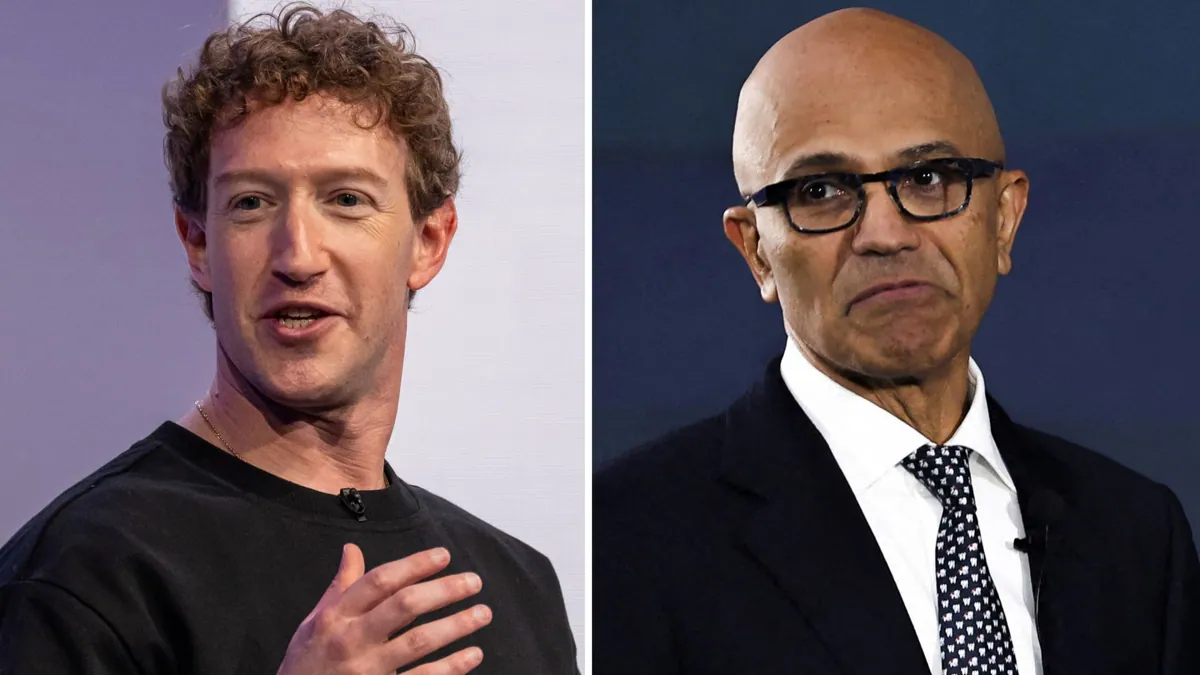
Two of the biggest spenders in the AI arms race reported earnings this week, and investors reacted like they were looking at entirely different industries. Microsoft shares jumped 8% in premarket trading. Meta's fell 8.5%. Same AI boom, same enormous capital outlays, opposite reactions.
The split came down to one question that's increasingly dogging every company pouring billions into AI infrastructure: is any of this spending actually turning into revenue yet?
Microsoft answered with numbers that convinced people it is. The company's fiscal fourth-quarter revenue beat analyst estimates, and its Azure cloud business grew 43%, ahead of what the market expected. More striking, Microsoft said it now has more than 30 million paid seats for Microsoft 365 Copilot, its AI assistant built into Office and other work tools. That's up from over 20 million as of April, meaning the user base roughly grew by half in just a few months.
That kind of adoption curve matters because it's concrete evidence that Microsoft can charge people for AI features and they'll pay. Tracy Woo, principal analyst at Forrester, framed it as validation for Microsoft's massive infrastructure bet, writing that the company's revenue performance and accelerating Copilot adoption "signals that its $190 billion data‑center buildout is beginning to deliver returns."
That's the sentence every AI-spending company wants an analyst to write about them right now. Microsoft got it even while reiterating its 2026 capital expenditure forecast and hinting at another spending increase in fiscal 2027, at a moment when investors have grown increasingly nervous about how much money Big Tech is committing to data centers and chips with no guaranteed payoff. The stock rose 8% in extended trading Wednesday. It's still down about 24% for the year, a reminder that even a strong quarter hasn't erased the broader market's unease about AI capital costs.
Meta's numbers didn't tell the same story
Meta missed on both earnings and its own revenue guidance for the current quarter. The company said it expects revenue of between $61 billion and $64 billion this quarter, putting the midpoint at $62.5 billion. Analysts polled by LSEG had been expecting $63.15 billion. Not a massive gap, but in a market this jumpy about AI spending, it was enough to spook investors.
The more alarming figure was buried a little deeper: Meta's free cash flow collapsed 91% year-over-year, down to just $784 million, as the company keeps funneling money into AI infrastructure. That's the kind of number that makes investors start asking hard questions about when, or whether, the spending turns into growth rather than just cost.
Meta's shares slid in extended trading Wednesday and are down roughly 16% for the year.
CEO Mark Zuckerberg tried to offer a silver lining, telling investors the company is "getting a lot of offers for compute at a significant premium" over what Meta originally paid for it. Read plainly, that suggests Meta has built out more computing capacity than it currently needs and could start renting the excess out to other companies, turning what's currently a pure cost center into a potential revenue stream.
It's an intriguing idea, but Zuckerberg offered almost nothing on how it would actually work. He also acknowledged, in the same breath, that Meta will still need to hold onto compute for its own future product development, which muddies exactly how much surplus capacity would even be available to sell.
Ben Barringer, head of technology research at Quilter Cheviot, put it bluntly in a note Thursday: "Right now, the narrative from Mark Zuckerberg is a little light on detail and relying on what could be done in the future." He added that Meta "still has a crucial role to play in the AI world, but it is still finding its way somewhat, and that is why we see both costs and revenues looking a little volatile."
Why the market is grading on a curve
Both companies are spending enormous sums building out AI infrastructure. The difference is that Microsoft can point to Azure's growth and Copilot's seat count as tangible signs that the spending is converting into paying customers and usage. Meta, for now, is asking investors to trust that a compute-leasing business might materialize, without a roadmap for what it looks like or how big it could get.
That distinction is becoming the dividing line across the AI trade generally. Investors aren't punishing companies simply for spending big anymore. They're punishing the ones who can't yet show where the money comes back. Microsoft cleared that bar this quarter. Meta didn't, and its stock reaction shows just how quickly patience is wearing thin for companies still asking the market to wait and see.


