Meta's $25 Billion Problem: How Refusing to Settle Cost the Company Billions More
A New Mexico judge handed down the fine after the state alone rejected a multistate settlement, and the ruling leans heavily on internal Meta messages showing executives knew exactly what they were doing.
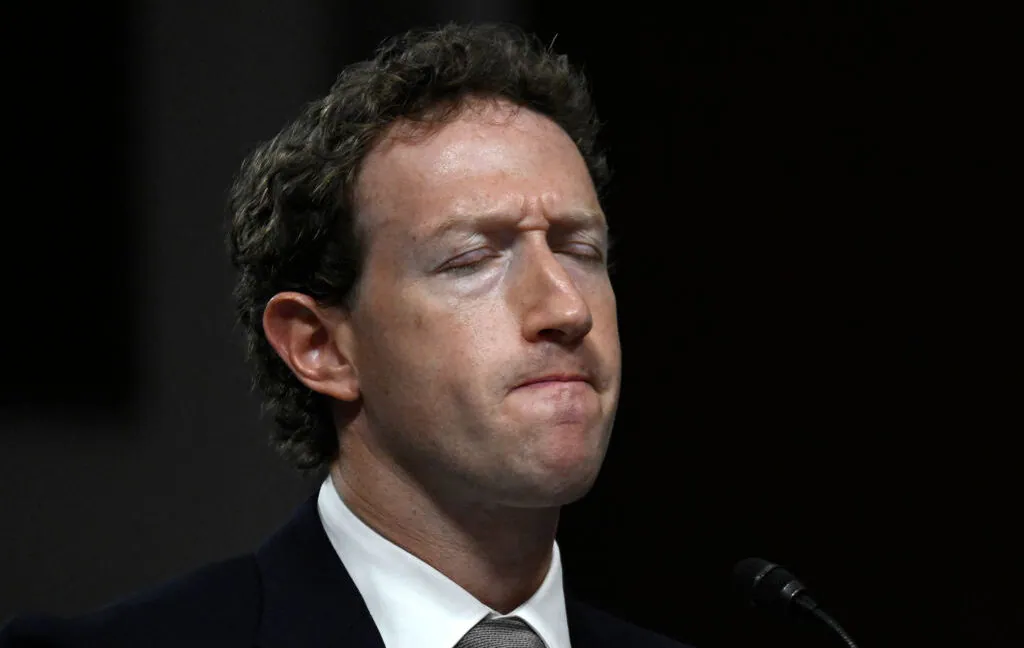
A federal judge has ordered Meta to pay New Mexico $25 billion for more than a decade of deceiving users about their data, making it one of the largest consumer protection penalties ever levied against a tech company. The fine landed because New Mexico did something almost no other state did: it refused to join a multistate settlement and took Meta to trial instead.
That decision just got very expensive for Meta. According to the company's own third-quarter earnings report, highlighted by The Verge, Meta already paid close to $10 billion to settle with the states that did join the multistate deal. New Mexico held out, went to a jury, and walked away with a penalty roughly two and a half times that amount, on its own.
US District Court Judge Francis J. Mathew, in a Wednesday opinion, said there was no "bright line rule" for setting the right penalty for Meta's conduct, which the trial record traced back to 2010. The violations touched user control over data, third-party misuse of that data, misinformation, hate speech, and what Meta told the public about how fairly it enforced its own rules. Mathew found that top leadership, including Mark Zuckerberg, knew the company was making misleading statements to the public — and he concluded that history justified "the highest level of penalty allowed by the NW Unfair Practices Act."
"The jury was unequivocal: Facebook systematically misled the public," Mathew wrote, adding that the company "took advantage of the public's lack of knowledge respecting Facebook's practices to a grossly unfair degree."
A decade of deception, according to the jury
New Mexico Attorney General Torrez had actually pushed for more — up to $40 billion — arguing that all 2 million residents of the state were harmed and that nothing short of a penalty big enough to move Meta's stock price would force real change. Mathew didn't go that far, but he agreed the scale of the misconduct demanded a serious number. A jury had already found nearly 44 million violations of New Mexico's consumer protection statute.
The opinion lays out why. Mathew wrote that the violations "were not the product of a single misleading statement or isolated incident" but "arose from repeated public representations over more than 11 years, concerning multiple core aspects of Facebook's platform and business." His read on Meta's motive: the company chose to keep users in the dark about how their data was being used so it could capitalize on information people didn't realize they were sharing, while trying to out-compete rivals like the platform then known as Twitter.
The internal evidence cited in the ruling is pointed. Rather than help users understand Facebook's privacy settings, Mathew wrote, Zuckerberg "chose instead to capitalize on that lack of understanding in order to manipulate users into sharing more of their personal information publicly." One internal message attributed to Zuckerberg instructed: "Give them a chance to change their privacy settings but obviously don't encourage it."
Meta's handling of third-party data misuse followed a similar pattern, according to the opinion. The company flagged only two out of 2,000 apps that were associated with misusing user data, and Mathew wrote that Meta "deliberately" narrowed its internal definition of data misuse specifically to avoid the "operational burden" of notifying more people.
The ruling also addresses misinformation. Meta's own internal research reportedly found "substantial amounts of misleading, false, and possibly false political, health, and science content," and found an even greater concentration of that content in top-performing ads than in top-performing organic posts. Instead of acting on or disclosing that research, Mathew wrote, Meta buried it. The company was also found to have misrepresented that ordinary users got "equal treatment" compared to celebrities and influencers, when in practice one class of users received warnings before enforcement action and had harmful content decisions overturned far more often.
Why Meta thought it would pay much less
Meta had been banking on a very different number. The company hoped a penalty closer to the $5 billion it paid the FTC in 2019 to resolve the Cambridge Analytica scandal, and argued in court that anything above roughly $3.4 billion would be unconstitutional, according to AP News.
Mathew rejected that framing outright. The FTC settlement "cannot be viewed in a vacuum," he wrote, pointing out that the penalties, consent agreements, and decrees Meta has faced since Cambridge Analytica came to light "have not deterred Meta from using deceptive trade practices." In his view, a decade of public promises about data security and control, repeatedly broken, warranted something far more severe than a Cambridge Analytica-sized check.
Meta confirmed to Ars Technica that it plans to appeal, and legal experts told Reuters the company has a real shot at getting the fine reduced on constitutional grounds. A Meta spokesperson argued the ruling, combined with Torrez's broader enforcement approach, "makes it all but impossible to do business in the state of New Mexico," and framed the underlying lawsuit as an attempt "to impose a tax on speech to enforce new rules for what people can say online." The company said it remains confident it will prevail on appeal and intends to keep building what it described as a platform that connects Americans, supports small businesses, and helps the US "maintain its competitive edge" — language that nods toward Meta's AI ambitions at a moment when the company is also looking for support from the Trump administration.
Critics say even $25 billion isn't enough
Despite the headline number, some critics argue the penalty barely registers for a company pulling in roughly $200 billion a year, calling it a "drop in the bucket." Nidhi Hegde, executive director of the watchdog group American Economic Liberties Project, told AP News that users benefit when more enforcers are willing to take companies like Meta to trial rather than accept settlements along the lines of the FTC's.
Hegde pointed to Meta's AI push as the next front worth watching. "Right now, they are rolling out Muse, an AI assistant encouraging people to trust it with everything from their bank accounts to their medical information," she said. "Which is why we need more enforcers with courage and laws with actual teeth to rein them in."
Torrez, for his part, called the ruling "a historic day for New Mexico and for consumers across the country" and said it proves "no corporation is too powerful to be held accountable." He framed the case as a template other states could use. "This case has always been about more than one company or one scandal," Torrez said. "It is about whether corporations can mislead consumers about what happens to their personal information without facing meaningful consequences."
For Meta, the appeal is where this actually gets decided. The company's constitutional arguments have genuine traction, according to legal experts, and a reduction on appeal is plausible. But the bigger signal from this case is already out: one state that refused to settle and went to trial instead ended up extracting a penalty that dwarfs what nearly every other state got by negotiating. Other attorneys general are almost certainly taking notes.


