Meta Is About to Start Making Its Own AI Chips at Scale
With GPU costs soaring and supply tight, Meta plans to begin production of its custom silicon in September, according to an internal memo cited by Reuters.
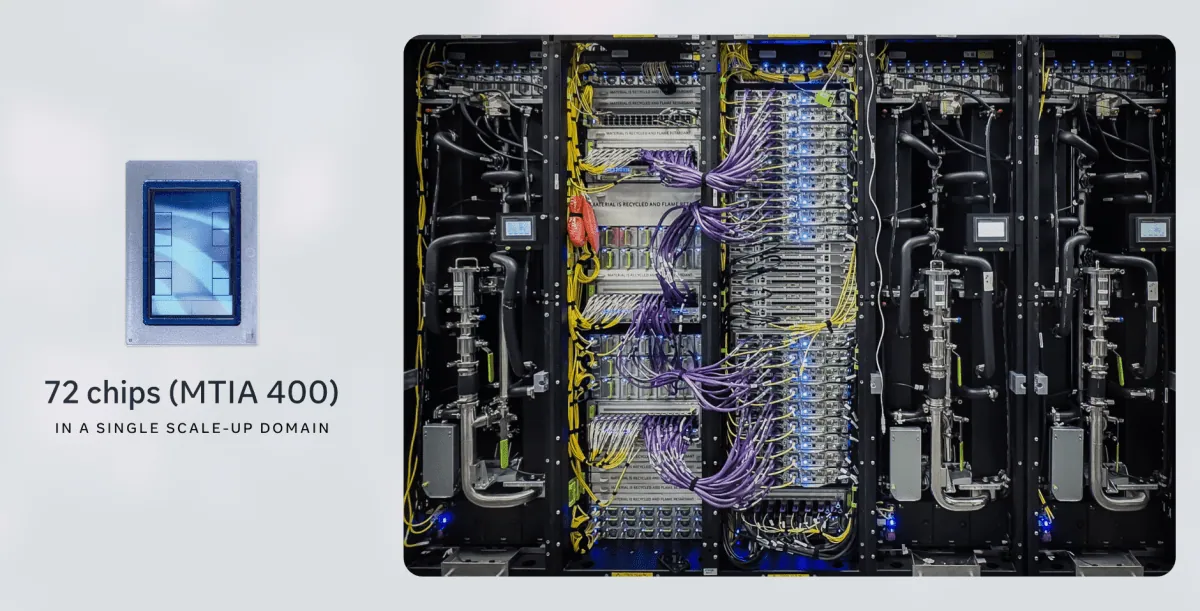
Meta will begin manufacturing the newest version of its custom AI chip in September, according to an internal memo reported by Reuters. The move is part of a broader push to cut down on how much the company spends on GPUs from Nvidia and AMD at a moment when those chips remain in short supply and high demand across the industry.
The memo reportedly said at least one chip cleared its testing phase in roughly six weeks, a sign the program is moving quickly toward real production. Meta is designing the chips with Broadcom, but manufacturing will happen at TSMC, the Taiwanese foundry that also builds chips for Nvidia, Apple, and much of the rest of the industry. Meta is also lining up other suppliers for the effort: RAM from Samsung, storage from Sandisk, and fiber-optic components from Sumitomo Electric, per the Reuters report.
This isn't a new venture for Meta. The company has been building its own AI chips since 2023 under a program called MTIA — the Meta Training and Inference Accelerator. In March, Meta detailed four new chips in that lineup, some already in deployment and others slated to roll out this year and next. Meta described its approach as modular, using what it calls chiplets that can be mixed and updated as needs change, rather than redesigning each chip from scratch. The company said at the time that "each MTIA generation builds on the last, using modular chiplets, incorporating the latest AI workload insights and hardware technologies, and deploying on a shorter cadence." That design philosophy reflects a practical reality: AI models and workloads are evolving so fast that a chip planned today may need to handle very different demands by the time it actually reaches production.
Meta plans to put these chips to work training the ranking and recommendation algorithms that power its apps, handling broader AI workloads, and running inference — the process of actually executing a trained model to generate results — for products across its platforms.
The cost of staying in the AI race
None of this comes cheap, and Meta isn't pretending otherwise. The company said in April that it expects capital expenditures of between $125 billion and $145 billion this year, with a large share of that flowing into AI infrastructure. Custom chips are one lever Meta can pull to soften that bill, but the company still expects to spend heavily with Nvidia and AMD regardless, according to Reuters.
The chip program is just one piece of a much larger buildout. Meta has been signing data center and power agreements around the world, spending tens of billions of dollars to secure the computing capacity needed to train and run its Muse Spark series of AI models. According to Reuters, which cited the internal memo, Meta plans to deploy 7 gigawatts of compute capacity this year and double that figure next year — a scale that underscores just how much raw power modern AI systems require.
Beyond the MTIA chips, Meta has struck a series of other deals to diversify where its compute comes from. It signed an agreement with Arm last year to support its recommendation systems, along with a multibillion-dollar deal with AMD for its Instinct GPU line and a multibillion-dollar agreement with Amazon to tap the cloud giant's own custom CPUs for AI work.
Meta isn't alone in trying to escape Nvidia's shadow
Meta's push to build its own silicon fits a pattern that's reshaping the AI hardware business. Nvidia has dominated the market for AI training and inference chips, but its position has also made it a chokepoint that everyone else wants to route around. OpenAI unveiled its own inference processor last month, built in partnership with Broadcom. Anthropic is reportedly weighing whether to develop chips of its own with Samsung. Amazon and Google already design their own chips for AI training and inference. And a growing crowd of startups is chasing the same opportunity, betting that demand for AI compute will keep climbing faster than the traditional chip supply chain can keep up.
Meta declined to comment on the report.
The bigger picture is straightforward: the biggest AI players no longer want to be entirely dependent on one supplier for the hardware their entire business runs on. Custom silicon gives them more control over cost, supply, and design, even if it means taking on the enormous complexity of chipmaking themselves. Meta's September production start will be an early test of how well that bet pays off — and how much it actually dents the company's Nvidia and AMD bills going forward.


