Meta Opens Up Its Coding AI as Zuckerberg Bets Big on Agents
Muse Spark 1.1 moves from a private preview to a public one, with aggressive pricing meant to lure developers away from OpenAI and Anthropic.
Meta is taking its coding-focused AI model out of the shadows and putting it in front of developers, a move that puts the company squarely in competition with OpenAI and Anthropic for one of the most valuable corners of the AI market.
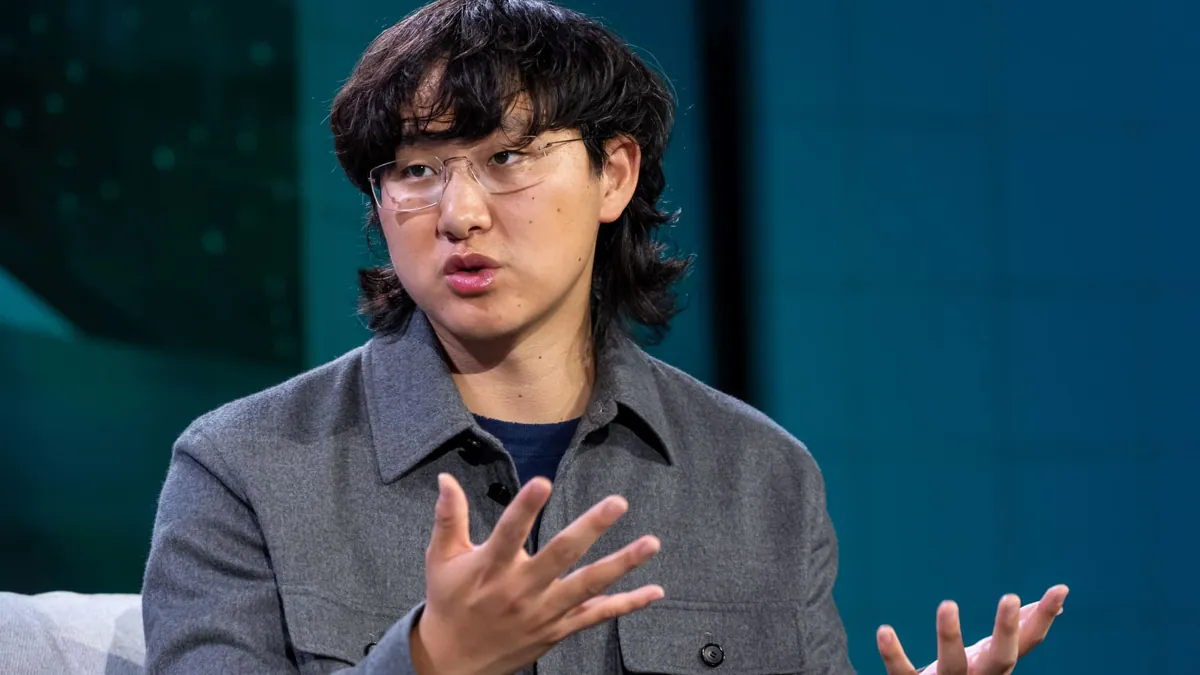
The company introduced Muse Spark 1.1 on Thursday, calling it its strongest model yet for coding and "agentic" work, according to Alexandr Wang, Meta's AI chief, who spoke with CNBC. Agentic, in this context, means AI systems that can act on their own, chaining together multiple steps to complete a task rather than just answering a single prompt. That capability has become the industry's main battleground over the past year, and it's the reason Meta is pushing hard into coding models in the first place: better code generation, Wang argues, is a building block for AI agents that can eventually operate like a team of tireless digital interns.
The original Muse Spark launched in April but was tightly restricted, available only to select partners through what Meta called a private API preview. The 1.1 update changes that. Meta is opening a public preview through a developer portal, where users can sign up and get integration instructions. Some early partners already have access, and a Meta spokesperson said new users will join a waitlist and get added over time. Notably, Meta is keeping the model within its own ecosystem for now rather than listing it on third-party marketplaces like OpenRouter, a popular hub where developers shop across different AI providers. "This is going to be served on top of the computer infrastructure that we've built," Wang said.
A pricing play aimed squarely at rivals
Wang described the pricing strategy behind Muse Spark 1.1 as "very aggressive and attractive" relative to comparable offerings from Anthropic and OpenAI. Every new API account starts with $20 in free credits. After that, Meta will charge $1.25 per million tokens of input and $4.25 per million tokens of output. Tokens are the chunks of text AI models process and generate, and per-token pricing is the standard way developers pay for access to these systems at scale.
"The goal is to really have attractive pricing that scales with immense consumption usage," Wang said.
Beyond price, Wang said Muse Spark 1.1 beats rival models on certain tasks that require interacting with third-party coding tools and services, and that Meta specifically trained it to work smoothly with the most popular "harnesses," the frameworks developers use to run AI models inside real applications. That's a direct response to the current moment in AI: the first half of 2026 saw a surge of interest in AI agents, fueled in part by the rapid popularity of a tool called OpenClaw, which developers use to manage models powering advanced digital assistants. Meta wants Muse Spark plugged into that ecosystem rather than sitting outside it.
The second Muse launch this week
Muse Spark 1.1 isn't Meta's only release this week. On Tuesday, the company shipped Muse Image, an AI image-generation model previously known internally by the code name Mango, aimed at creators and advertisers who use Meta's platforms. Together, the two launches mark a notable acceleration for the Muse family just three months after Meta introduced its first model under Wang's leadership.
That pace reflects the pressure building on CEO Mark Zuckerberg. Meta is spending at the same scale as its hyperscaler peers on AI infrastructure, but unlike Amazon, Microsoft or Google, it doesn't yet operate a cloud business it can sell that capacity through, though it has said it plans to start one. Meta has also lagged its competitors in producing widely adopted models and consumer AI applications, leaving Wall Street looking for concrete signs that the company's enormous AI spending is translating into products people and developers actually want to use.
A shift away from open source
The rollout also underscores a broader strategic pivot. Meta built its AI reputation on the open-source Llama model family, giving developers free access to build on top of it. With Muse Spark, the company is instead selling access to a proprietary model, a shift toward the same business model OpenAI and Anthropic already run.
Wang said Meta hasn't abandoned open source entirely. He noted that his research group, Meta Superintelligence Labs, has a version of Muse Spark in development that the company intends to release openly, though he wouldn't say when.
Wang also pointed to a more personal use case he's been testing himself: using Muse Spark as a health assistant capable of searching the web, digging through academic papers, and pulling in personal health data to help answer questions. He called it a use case that "really encapsulates the needs of these agentic systems."
Looking ahead, Wang confirmed Meta is already training a more powerful successor, currently code-named Watermelon, following the naming pattern set by Muse Spark's own code name, Avocado. He gave no timeline for its release.
For now, the real test is whether developers bite. Meta has the pricing, the infrastructure and a model it says can hold its own on coding benchmarks. Whether that's enough to pull developers away from entrenched habits with OpenAI and Anthropic is the next thing to watch.


