Meta's New Stock Class Doubles as a Zuckerberg Tax Shield
The company says its new non-voting shares are about raising capital, but SEC filings show they're also designed to let Zuckerberg cash out without losing his grip on Meta.
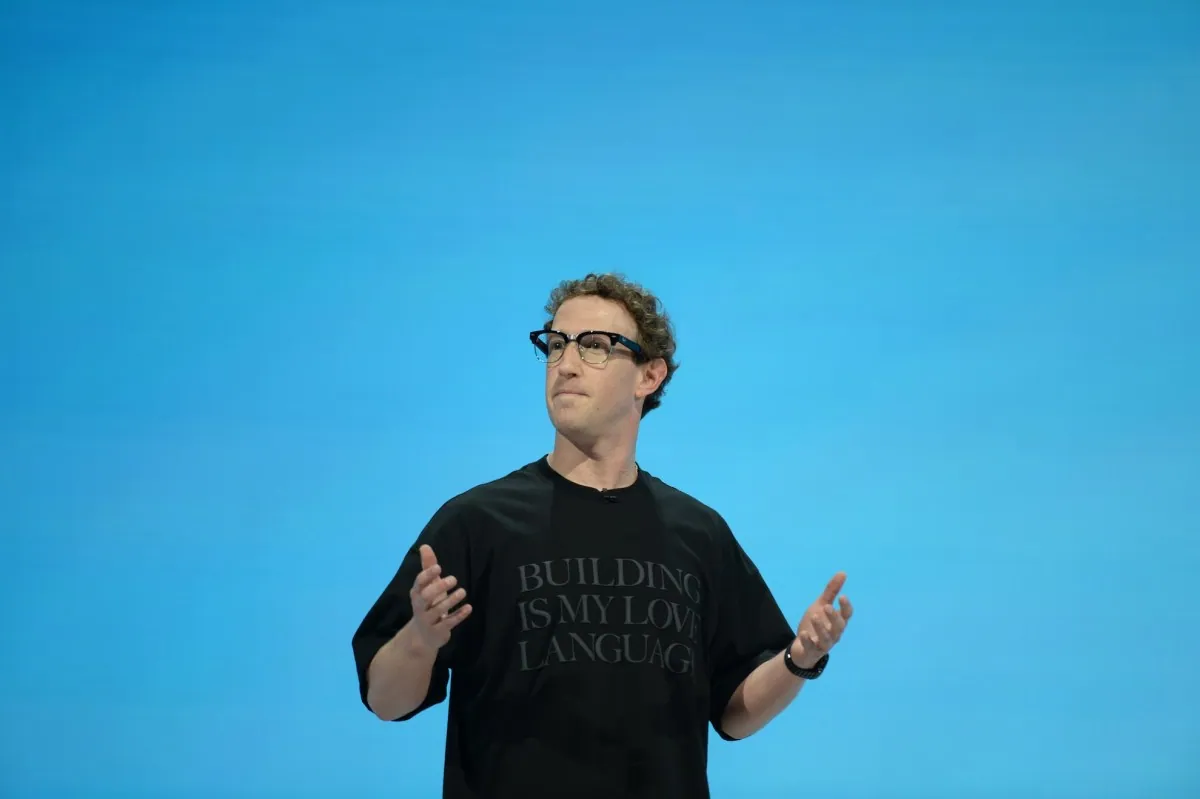
Meta announced a new class of stock on its Wednesday earnings call, and the official reasoning sounded routine enough: raise capital, pay employees, fund acquisitions, keep feeding the company's AI spending. But reporting from the New York Times, backed by Meta's own SEC filings, points to a more specific motive — giving Mark Zuckerberg a way to pay a potential California wealth tax without giving up control of the company he founded.
The new shares, called Class C common stock, carry an ownership stake but zero voting rights. They take effect in January. Meta's board approved giving one Class C share for every existing Class A or Class B share, a move the company is calling a one-time stock dividend that functions like a two-for-one split. Meta says the dividend "will not change the voting power of any shareholder" — which matters a lot, because Zuckerberg currently controls around 60% of Meta's vote, and the whole point of this maneuver is to keep it that way.
The Prop 40 connection
The tax in question is Proposition 40, a California ballot measure drafted by Berkeley tax law professors and sponsored by SEIU United Healthcare Workers West, the state's largest healthcare union. It would impose a one-time 5% wealth tax on the net worth of several hundred billionaires who primarily reside in California. Backers estimate it could raise as much as $100 billion over five years, with most of that money earmarked for healthcare and the rest split between food assistance and education.
For Zuckerberg, that tax bill could reportedly run as high as $11 billion. The problem: most of his wealth is tied up in Meta stock, and selling large amounts of his voting shares to cover a tax bill would mean selling his control along with it.
That's where the new Class C shares come in. Meta's SEC filing spells it out directly, stating the dividend "will allow Mr. Zuckerberg to immediately sell or transfer up to 20% of the shares of Class C common stock that he receives in the Dividend, representing 10% of his overall economic stake in the Company, for any reason, including so that he may pay his potential tax liability under California Proposition 40, if enacted into law, without affecting his majority voting control." Because the dividend hands out shares one-for-one, roughly half of Zuckerberg's post-dividend holdings will be the non-voting Class C variety — so a 20% cap on those shares works out to 10% of his total stake in the company, enough room to cover a tax bill without touching his voting shares.
How the plan came together
According to the Times, the filing shows Zuckerberg had been discussing the tax with Meta's board as early as July, with the conversation continuing through additional meetings into August. The paper also reports that in September, Zuckerberg told the board that if they couldn't land on a solution, he'd consider listing his Palo Alto property for sale — a move that would likely have triggered significant media attention. The stock plan emerged shortly after, per the Times.
Meta, for its part, is framing the new share class as part of a broader effort to keep Zuckerberg anchored in California. When TechCrunck asked the company for comment, it pointed to a line from its earnings release: "The Special Committee affirmed its belief that it was important for Mr. Zuckerberg to continue to lead the Company from California, including because it was crucial that Mr. Zuckerberg remains in close coordination with the Company's management and in close proximity to Meta Superintelligence Labs."
A flashpoint in Silicon Valley
Prop 40 has become a lightning rod among Silicon Valley's wealthiest figures. Google co-founder Sergey Brin has campaigned hard against it, pouring significant money into defeating the measure. Other business leaders and critics have argued online that the tax would backfire, pushing capital and high-net-worth residents out of the state entirely.
Meta's workaround complicates that narrative somewhat. Rather than fleeing, the company appears to be engineering a path to pay the tax while keeping its CEO — and his headquarters — right where they are. Democratic Representative Ro Khanna, a supporter of the measure, picked up on that irony on X: "Looks like billionaires will stay and figure out a way to pay the tax," he wrote, adding, "If we pass Prop 40, poor California kids can have healthcare."
Prop 40 hasn't passed yet, and its fate is still up to California voters. But Meta's new stock structure suggests that at least one of the state's largest companies is treating the tax less as an existential threat and more as a problem to be engineered around.


