Jensen Huang Uses His First Post on X to Defend Open-Source AI
Nvidia's CEO joined Google, OpenAI, Meta, and a dozen other tech giants in urging Washington not to restrict open-weight AI models before they've had a chance to develop.
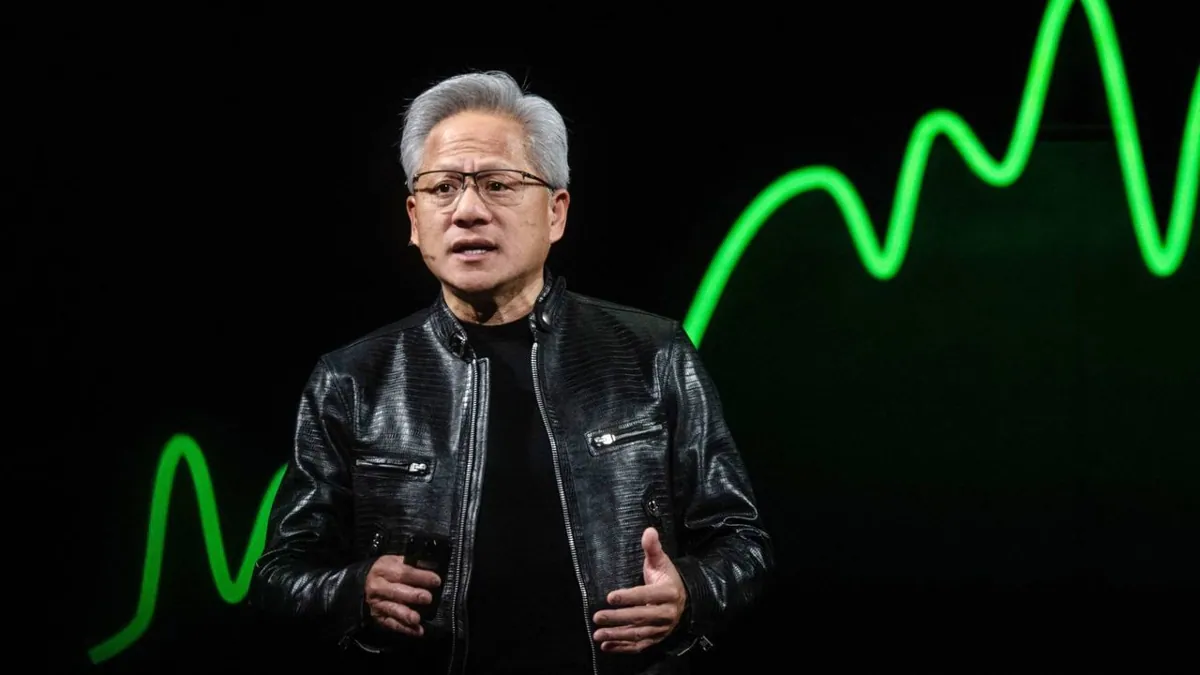
Jensen Huang finally showed up on X last month. When he made his first post there, he didn't use it to talk about GPUs, data centers, or Nvidia's stock price. He used it to make a case for open-source AI, joining a coalition of companies that includes Google, OpenAI, and Meta in warning the US government against clamping down on open models too soon.
The push comes in the form of an open letter, signed by a notably broad swath of the industry: AMD, Cloudflare, Google, GitHub, IBM, Hugging Face, LM Studio, Meta, OpenAI, and Nvidia among them. Their shared argument is that so-called "open" AI models, the kind where developers release the underlying weights and sometimes the code so anyone can inspect, run, or modify them, are too valuable to strangle with premature regulation.
It's worth being clear about the distinction the letter is built around. Open models let users see and tweak the machinery under the hood, and can be run locally instead of through a company's servers. Closed models, the kind most consumers interact with through ChatGPT or similar tools, keep their weights locked away and are only accessible via the cloud or an API, controlled entirely by the company that built them.
Why open models suddenly became a flashpoint
This debate isn't happening in a vacuum. Open models coming out of China, most notably DeepSeek, rattled American AI companies at the start of last year by offering capabilities comparable to the biggest US products, for free, and runnable locally. That set off alarm bells in Washington, and according to PC Gamer's reporting, the Trump administration was reportedly considering a ban on Chinese AI models just last week, citing cybersecurity concerns.
That context makes the timing of this letter pointed. There's a geopolitical dimension underneath the technical one: open models can be copied, studied, and built upon by anyone, anywhere, which means sharing too much about how America's leading AI systems work could theoretically hand an edge to rivals. The people signing this letter are betting that the opposite is true, that keeping the door open to open-weight development actually protects American AI dominance rather than threatening it.
Microsoft, in comments tied to the same letter, argued that open weights strengthen competition and "expand access to the AI economy." The logic is straightforward: the more people and companies building on AI, open or closed, the bigger the pie gets for everyone already in the business, including the chipmakers and cloud providers who signed on.
What Huang actually said
In his own words, Huang wrote: "AI will transform every industry, power every company, and be built by every country. Open models strengthen safety and cybersecurity, accelerate innovation and diffusion, and enable sovereignty. The world needs both frontier closed models and frontier open models."
That last line matters. This isn't an argument that open should replace closed, or vice versa. It's a case for letting both tracks keep running, rather than the government picking a lane on behalf of the entire industry.
The letter itself doesn't pretend open models are risk-free. It states plainly that "open weights carry real and distinct risks. Once released, the weights are beyond the original developer's control, and modified versions are difficult to trace or reverse." But it argues the fix for that isn't banning open weights outright, it's managing the risk while preserving the benefits. The stated goal is avoiding "premature restrictions on open models that stifle competition or drive innovation overseas."
The self-interest angle
It's fair to read some self-interest into a letter signed by nearly every major player in AI and the hardware that powers it. Wider adoption of AI, open or closed, is good business for companies that have poured enormous sums into the infrastructure behind it. Nvidia sells the chips. Cloudflare and Google sell the infrastructure. Hugging Face and LM Studio are built around distributing and running open models. If AI adoption slows, so does demand across all of it.
There's also an unspoken tension the letter doesn't fully resolve: the same companies pushing for AI's continued expansion are the ones whose hardware demands have driven up chip prices, strained power grids, and drawn scrutiny over water and energy use tied to data centers. Framing open access as a matter of safety, competition, and national sovereignty gives the push a public-interest gloss, but it also happens to align neatly with the financial interests of everyone who signed their name to it.
What happens next depends largely on Washington. The administration's reported interest in restricting Chinese AI models suggests regulators are already leaning toward tighter controls of some kind. Whether that appetite extends to open-weight models more broadly, including the ones built by American companies, is the question this letter is trying to head off before it gets asked.


