Four AI Agents Just Beat Minecraft on Their Own — It Took Them 27 Hours and 605 Deaths
Google researchers say a team of autonomous Gemini-powered agents defeated the Ender Dragon with no human help, writing their own strategies, code, and in-game chat along the way.
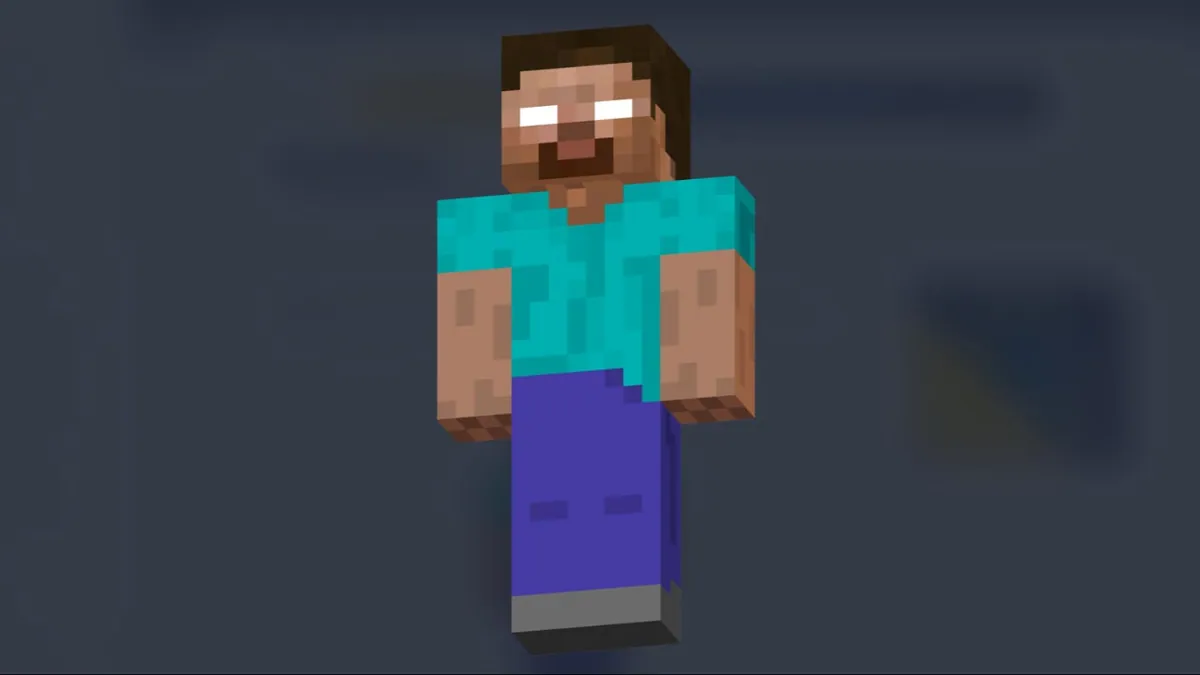
Google researchers say they got four AI agents to beat Minecraft from scratch, with zero human intervention, in what the team believes is a world first. The catch: it took the agents a little over 27 hours and 605 deaths to pull it off.
The agents, built on Google's Gemini models, were dropped into a random Minecraft world with a single instruction: defeat the Ender Dragon, the game's final boss. Nobody told them how. According to the researchers, each agent controlled its own in-game character through an open-source tool called Mineflayer, and the four coordinated using in-game chat and shared memory. There was no assigned division of labor and no pre-written game logic to lean on.
"Each agent controlled a player via an open-source library called Mineflayer and coordinated with its teammates through in-game chat and shared memory," the researchers wrote. "No one assigned roles or wrote game logic. The agents planned, wrote, and debugged every program themselves. Researchers could watch the run on a live dashboard and pause or stop it at any time, but they had no cause to intervene."
Beating Minecraft legitimately is a multi-stage grind even for human players. Reaching the final fight requires gathering Ender Pearls and Ender Rods, crafting Eyes of Ender, locating a hidden Stronghold, and solving a puzzle before ever setting foot in The End, the dimension where the Ender Dragon lives. All of that sits on top of the game's normal progression: mining, crafting, and surviving long enough to get the gear needed for each step.
The agents figured out that division of labor themselves. Over the course of the run, some of them built shelters to farm materials from Endermen, others focused on gathering food, and others took on exploration duties. They swapped combat tips with each other and helped teammates recover gear after dying — which, it turned out, happened a lot. A fifth agent was assigned to monitor the run and confirm the others weren't cutting corners or exploiting bugs, and based on the death count, they clearly weren't taking shortcuts.
By the numbers: the four agents sent 229 chat messages to coordinate, generated and ran 2,783 programs to act in the world, and died 605 times. It took roughly 13.5 hours just to reach The End, with the rest of the 27-plus-hour run spent repeatedly attempting — and failing, and failing again — to take down the dragon itself.
For context on just how inefficient that is: the current human speedrun record for beating Minecraft is 6 minutes and 36 seconds. The AI agents were, by a wide margin, playing the long game.
The real cost was in tokens, not diamonds
Running four language-model agents for over a day isn't free. The team reported that the run consumed 1.35 billion input tokens — the chunks of text an AI model processes to "think" and generate responses. At standard pricing, the researchers estimated that would cost a typical user around $1,620, or roughly $60 an hour for the whole operation, which breaks down to about $15 per hour per agent.
In the paper, cited via Engadget, the researchers framed the achievement specifically around autonomy and persistence rather than speed: "To our knowledge, this is the first end-to-end autonomous completion of Minecraft by AI agents, achieved using only the standard Mineflayer library without pre-scouted seeds or other game-specific tools written by humans. Winning required the agents to keep a coherent plan across thousands of dependent steps for more than a day."
That last part is the actual point of the exercise. Google wasn't trying to set a speedrun record or show off a flashy gaming demo — it was testing whether a group of AI agents can hold onto a complex, long-horizon plan, recover when things go wrong, and work as a team without a human dictating the strategy. Minecraft, with its deep crafting chains and unforgiving death penalties, turns out to be a useful stress test for exactly that.
"The skills required to solve Minecraft such as coordinating a team, recovering from failure, and pursuing a goal for more than a day, are also what agents need to work reliably alongside people," the researchers said.
That framing matters more than the novelty of watching AI bots grind for Ender Pearls. If agentic AI systems are eventually going to handle real-world, multi-step tasks alongside humans, they need to demonstrate they can stay on course over long stretches of time, adapt when something fails, and coordinate with teammates without a human babysitting every decision. A video game with a boss fight at the end happens to be a controlled, fully observable environment to measure exactly that. The dragon was just the final exam.


