Intel's Q2 Earnings Show a Company That Sounds Different Than It Did a Year Ago
Revenue jumped 25% year-over-year and Foundry losses narrowed, prompting CEO Lip-Bu Tan to strike a notably more confident tone than the doom-laden outlook of 2025.
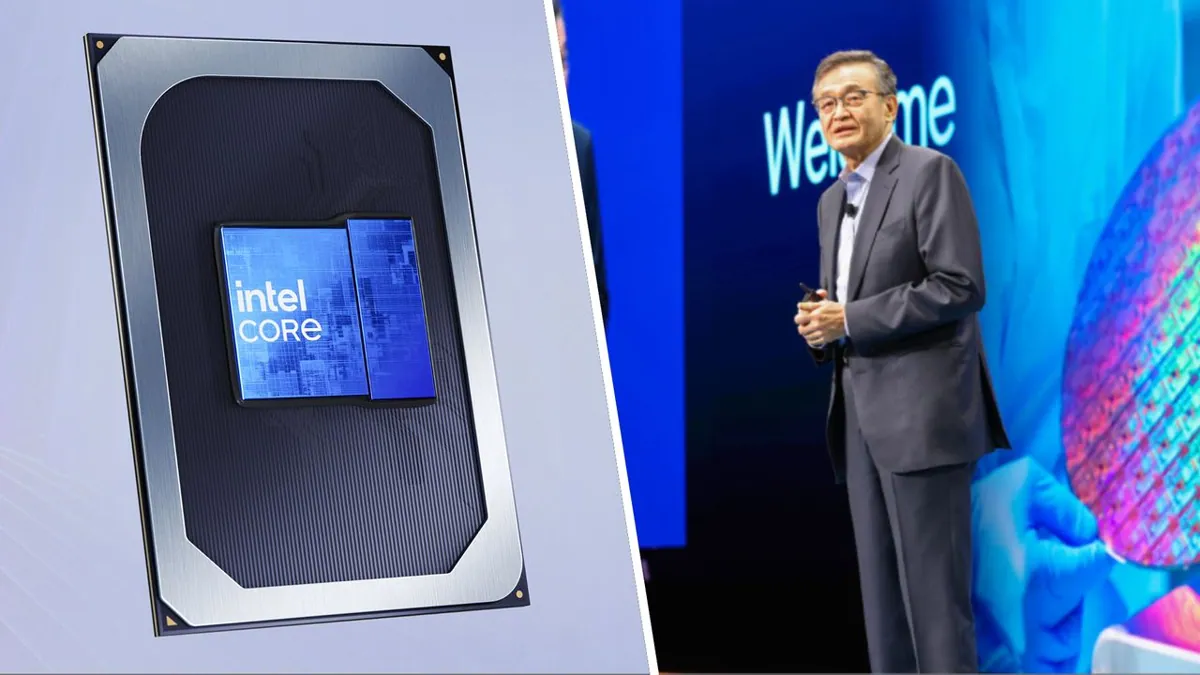
A year ago, Intel's earnings calls were exercises in damage control. Layoffs, threats to cut cutting-edge chip development, and open speculation about whether a rival might buy the company outright. This week's Q2 2026 report reads like a different company entirely. Revenue, margins, and earnings per share all beat expectations, and the Foundry division, long treated as Intel's biggest liability, actually looks like it's finding its footing.
The numbers tell part of the story. CFO David Zinsner reported revenue of $16.1 billion, up from $13.6 billion in Q1 and 25% higher than the same quarter last year, which Intel is calling its best growth since 2011. For context, Q2 2025 revenue was $12.9 billion, and back then the mood inside the company was grim enough that Intel was actively shrinking its workforce.
From "no more blank checks" to renewed confidence
The shift in tone is the real story here, and it starts with CEO Lip-Bu Tan, who took over roughly a year ago and immediately signaled he had little patience left for Intel's manufacturing arm if it didn't produce results. At the time, Tan warned he'd halt development of Intel's most advanced process nodes without a major customer commitment or clear progress on the 14A node, telling employees bluntly, "There are no more blank checks."
That threat hasn't aged the way you might expect. On the latest earnings call, via Seeking Alpha, Tan struck a strikingly different note: "My confidence in our foundry process roadmap has grown significantly since joining over a year ago. I am more confident than ever of the strategic in significant and unique value proposition of Intel Foundry." He pointed to Intel's factories running Intel 7, Intel 3, and Intel 18A processes, all of which exceeded internal volume targets in Q2, driven by better yields, faster cycle times, and rising wafer starts.
That matters directly for gamers and PC builders, because 18A is the process behind Intel's Core Ultra 3 "Panther Lake" chips. There have been reports of Intel working through wafer-to-wafer variability issues on 18A, and while the company isn't exactly volunteering every manufacturing headache on an earnings call, the reported yield and cycle-time improvements align with that narrative. There's also an unconfirmed rumor floating around that Nova Lake desktop chips could shift back to Intel 18A after initially being slated for TSMC production, the same arrangement Arrow Lake currently uses, though nothing concrete has been confirmed there.
Looking further ahead, Tan expressed optimism about 14A, Intel's next major process node, which is reportedly targeting risk production in the second half of 2027 and high-volume production in 2028. That's still years away from showing up in any gaming rig, but Tan says early development metrics are outperforming where 18A was at the same stage: "Looking beyond 18A, I'm encouraged by our progress on Intel 14A. Defect density and transistor performance are all outpacing 18A development."
Foundry is still bleeding money, just less of it
None of this means Foundry is suddenly profitable. The division posted an operating loss of $2.1 billion for the quarter, a reminder of just how expensive it is to build and run advanced chip fabs. But that loss shrank by $348 million compared to the previous quarter, a meaningful improvement even if the business remains firmly in the red.
Tan framed the broader trajectory as validation of Intel's strategy, telling investors: "Our advanced packaging and wafer foundry capabilities become increasingly vital assets. Our strategy is clear and pace of execution is accelerating. Opportunities in front of us are substantial. Our strategy is showing early results, and I'm confident that Intel is well positioned to help define the next era of computing."
Compare that to what Tan was saying in the equivalent quarter last year: "Let's say, I also know that turning the company around will take time and require patience. We have a lot to fix in order to move the company forward, and I'm determined to drive the changes necessary to improve our performance." Same executive, same job, dramatically different framing twelve months apart.
Good news for Intel, mixed news for PC gamers
On the consumer side, Intel's Client Computing and Physical AI Group, the division responsible for the chips that end up in gaming PCs, pulled in $8.9 billion, up 15% quarter over quarter. Zinsner called that result "better than our expectations." Some of that strength is likely tied to the ongoing memory shortage rattling the PC hardware market, which has pushed demand and pricing in unpredictable directions across the industry. It also comes on the heels of Intel's Arrow Lake refresh, the Core Ultra 7 270K Plus and Ultra 5 250K Plus, chips that turned out to be solid value despite lukewarm expectations heading into launch.
The catch is that Intel can't keep up with demand right now. Zinsner acknowledged as much on the call: "It's important to note that despite exceeding our expectations for wafer outs in the quarter, strengthening demand continues to outstrip our growing supply." He added that Intel plans to prioritize server chips and data center production over the rest of the year, since that's where growth is concentrated, even as demand on the client and gaming side is expected to soften somewhat as the memory crunch continues. As he put it bluntly: "we can't fulfill the demand… So we'll pivot as much of the production as possible over to CPUs and data centers to try to do our best to catch up to what is a pretty significant difference between our ability to supply and the demand out there."
That's a frustrating dynamic if you're shopping for a new gaming CPU, but it's also exactly the kind of problem Intel wants to have after years of Foundry sitting underutilized. The company also picked up at least one new Foundry customer this week in Fortinet, adding to the sense that outside interest in Intel's manufacturing capacity is finally building.
Intel isn't suddenly competitive with TSMC across the board, and it still trails AMD and Nvidia in significant ways. But the contrast with a year ago is hard to miss. There's no talk of workforce cuts in this earnings call, no hedging about whether Foundry survives, and no atmosphere resembling 2024's acquisition chatter, when rivals were rumored to be sizing up Intel as a takeover target. Whether this momentum holds through 14A's rollout and beyond is the real test, but for now, Intel sounds like a company that believes it's climbing out of the hole rather than digging deeper into it.


