Intel's Stock Craters 20% as PC Slump Overshadows AI-Driven Earnings Beat
The chipmaker beat Wall Street's third-quarter targets, but a bleak forecast tied to sagging PC demand sent shares tumbling in extended trading.
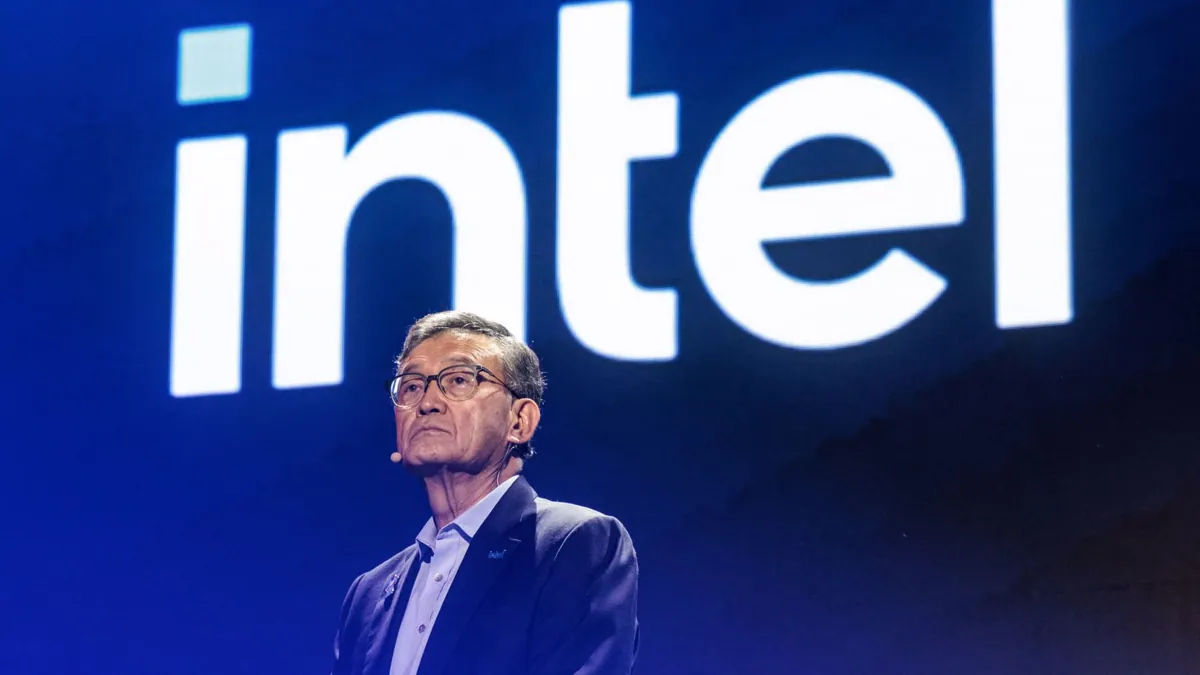
Intel beat Wall Street's third-quarter expectations on Thursday, then watched its stock drop 20% in extended trading anyway. The culprit: a fourth-quarter forecast that came in well below what analysts were hoping for, with the company pointing squarely at a global PC market that isn't recovering as fast as hoped.
The headline numbers looked fine on their own. Intel posted adjusted earnings of 52 cents per share on revenue of $16.51 billion, topping the 40 cents and $16.5 billion that analysts polled by LSEG had projected. Revenue was up 21% from $13.7 billion a year earlier. But investors weren't buying the quarter in isolation — they were reacting to what Intel said comes next.
For the current quarter, Intel guided to adjusted earnings of just 25 cents per share on revenue of $15 billion to $16 billion. Wall Street wanted $17.1 billion in revenue and 43 cents in earnings. That gap is what triggered the selloff.
A tale of two businesses
Inside Intel's results, there's a split that tells the real story. The company's client computing and physical AI group, which covers the chips that go into everyday PCs, saw revenue fall 5% year-over-year to $8.1 billion and missed estimates. Meanwhile, data center and AI revenue jumped 78% to $7.3 billion. One side of Intel's business is thriving on the AI buildout; the other is stuck in a market that's shrinking.
The drag comes from outside Intel's control, at least in the short term. Global PC shipments fell 4% in the second quarter compared with a year earlier, according to Counterpoint Research, as memory and other component costs have climbed. Intel finance chief David Zinsner didn't sugarcoat the outlook, saying in the earnings release that the company expects the PC slowdown to persist "at least through the first half of next year." He added that Intel remains optimistic about the rest of its portfolio and plans to keep investing in capacity and working capital to build future supply.
CEO Lip-Bu Tan struck a similar note, saying Intel sees "robust demand" for CPUs and its broader computing platforms over the long run, even with the near-term industry headwinds.
Riding the agentic AI wave, sort of
Intel's pitch to investors has increasingly leaned on a specific AI trend: agentic applications. While the generative AI boom has mostly been a GPU story, benefiting Nvidia and Advanced Micro Devices as they power large language models and chatbots, agentic AI tools, such as Meta's Muse and OpenAI's Dots, depend more heavily on CPUs to coordinate tasks and manage data for operations running in the cloud. That's Intel's home turf, and it's part of why the company's data center business is growing so fast even as its PC business contracts.
The timing of Intel's report puts it ahead of its two biggest GPU rivals. AMD reports earnings next week, and Nvidia, now the world's most valuable company on the strength of its GPU dominance, reports in mid-November.
Intel's stock had been a standout performer this year, up roughly 150% through late October. But October itself has been rough, with shares down about 23% for the month as broader concerns surface over whether the AI infrastructure buildout across the industry is outpacing actual demand. Thursday's post-earnings drop adds to that pressure.
The foundry bet, still unproven
Beyond the PC and AI chip story, Intel is also trying to rebuild itself as a contract chip manufacturer, and that effort remains a work in progress. Intel is currently the only U.S.-based maker of advanced logic chips, and it's now running high-volume production of its most advanced node, called 18A, out of a new fab in Arizona. The goal is to give chip designers an alternative to Taiwan Semiconductor Manufacturing Co., the industry's dominant foundry.
Right now, Intel remains the only major customer actually using that chip. But according to TechInsights analyst Dan Hutcheson, there's real interest from outside companies in Intel's next-generation node, 14A, as a hedge against relying solely on TSMC. "People want a second source to be able to twist TSMC's arm and keep them honest on pricing," Hutcheson said, adding that "all the big ones have been testing there."
That foundry ambition carries political weight, too. The Trump administration took a 10% stake in Intel last year after the company fell behind on its 7-nanometer and 10-nanometer manufacturing technology. Nvidia and SoftBank also poured billions into the company around the same time. Tan, who took over as CEO, has been noticeably more conservative about foundry spending than his predecessor Pat Gelsinger, who had launched an aggressive push to expand Intel's manufacturing ambitions.
Progress on physical construction is slow but ongoing. Last week, Intel said crews installed the first structural truss at its large Ohio fab, a facility that was originally supposed to be producing chips by 2025. Its Arizona fab is now expected to start operations by the end of 2028.
On the customer side, Intel got a vote of confidence this week from Oracle, which expanded its deal with the chipmaker at its annual AI conference. Oracle said it will deploy Intel's next-generation Xeon server processors alongside the latest rack-scale systems from Nvidia and AMD as it continues building out data center capacity.
Intel also shored up its balance sheet in August, completing a $23 billion equity offering, part of a broader wave of spending across the tech industry as companies race to build out AI infrastructure.
For now, the picture is mixed: a data center business accelerating on AI tailwinds, a foundry business making slow but real progress toward a second customer, and a PC business that Intel itself says won't recover for months. Investors on Thursday decided the PC problem was the one that mattered most.


