Chip Giants' New Worry: Not Enough Money to Build the AI Boom
Intel's Lip-Bu Tan and Broadcom's Hock Tan say the industry has muscled through chip and power shortages before, but financing AI's next phase may be a tougher problem to solve.
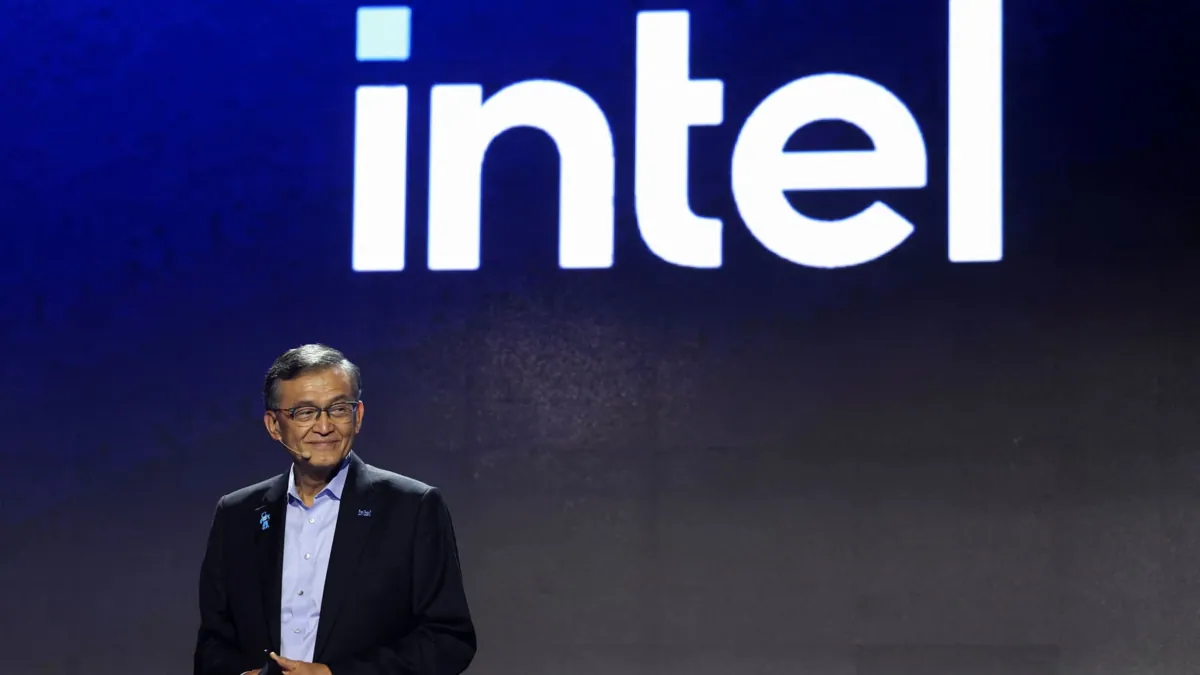
The AI buildout has survived chip shortages, memory squeezes and power constraints. Now the leaders of two of the industry's most important chipmakers say the real threat might be something less technical: money.
Speaking Monday at the DBS Asia Future Forward Conference in Singapore, Broadcom CEO Hock Tan and Intel CEO Lip-Bu Tan both pointed to capital, not components, as the constraint most likely to slow the AI expansion from here. That's a notable shift in framing. For the past two years, the conversation around AI infrastructure has centered on physical scarcity — not enough advanced chips, not enough high-bandwidth memory, not enough electricity to run it all. These two executives are now saying the bigger risk may be financial.
"[What] I think might be the biggest constraint is capital," Hock Tan said, according to CNBC. Lip-Bu Tan framed it in similar terms, naming the rising cost of capital as the immediate pressure point, with a second-order concern close behind: whether the money being poured into AI will actually pay off.
"If there's any challenge in the front, it's capital and the cost of capital, and then the other part is in the longer run, people want to see the ROI," he said.
Why financing is suddenly the worry
The scale of AI infrastructure spending helps explain the concern. Companies have committed enormous sums to data centers, advanced chips and the power systems needed to run them, largely betting that demand for AI computing will keep climbing. That bet requires continuous access to cheap capital, because these projects are expensive upfront and often take years to generate returns.
Rising borrowing costs complicate that math. Higher bond yields make debt-financed data center construction and chip purchases more expensive, which squeezes the economics of projects designed around a lower cost of capital. For an industry used to treating money as the least constrained input, that's a meaningful change in the risk picture.
It's also a different kind of problem than the ones the industry has faced so far. Chip shortages, memory scarcity and power bottlenecks are supply problems — they get fixed by building more fabs, more memory plants, more transmission lines and generation capacity. A capital crunch is a market problem, shaped by interest rates, investor appetite and confidence in future returns. It's harder to engineer your way out of.
The old bottlenecks are easing
Notably, Hock Tan sounded far less worried about the physical shortages that have defined AI's buildout so far. He described a pattern of recurring bottlenecks over the past two years that the industry has consistently worked through.
"[In the] last two years we have seen a series of bottlenecks that keep coming out, but then we overcome it," he said. "Memory shortage today might not be that way a year from now."
He pointed to wafer shortages potentially easing by 2028 or 2029, with power availability improving as new infrastructure comes online. That's a notably specific timeline, and it suggests Broadcom believes the supply side of the AI buildout — the part that's dominated headlines for two years — is a solvable, roughly time-bound problem.
Demand still outpaces supply, for now
Both CEOs remain confident about near-term demand. Hock Tan said compute infrastructure demand continues to exceed what the industry can supply, and he expects that imbalance to persist through 2029, possibly into 2030. Lip-Bu Tan was similarly upbeat about the next two to three years, pointing to expanding AI application adoption as the driver of continued computing demand.
That's a striking contrast: executives simultaneously warning about a capital bottleneck while projecting years of demand exceeding supply. The tension sits right at the center of their comments. The AI industry doesn't appear worried about running out of customers anytime soon. It's increasingly worried about whether the financial structure underpinning all that infrastructure can hold up.
Both executives tied the longer-term outlook to a harder question: whether AI actually delivers on its economic promise. Hock Tan said demand for computing infrastructure could soften if adoption of advanced AI models disappoints, or if improvements in model capability start to plateau. Lip-Bu Tan was more direct about what comes next, saying companies will increasingly need to show real returns from their AI investments, through efficiency gains and new business models, not just growth projections.
That's the pivot point buried in these remarks. The chip shortages get fixed with time and factories. The capital question gets fixed only if AI starts generating the returns that justify the spending. If it doesn't, the industry's current era of near-limitless infrastructure investment runs into a wall that no new fab or power plant can remove.


