Ilya Sutskever's Secretive AI Lab Gets a Multibillion-Dollar Compute Boost From Nvidia
Safe Superintelligence emerges from two years of near-total silence with a partnership that hands it dramatically more computing power — and no clearer picture of what it's building.
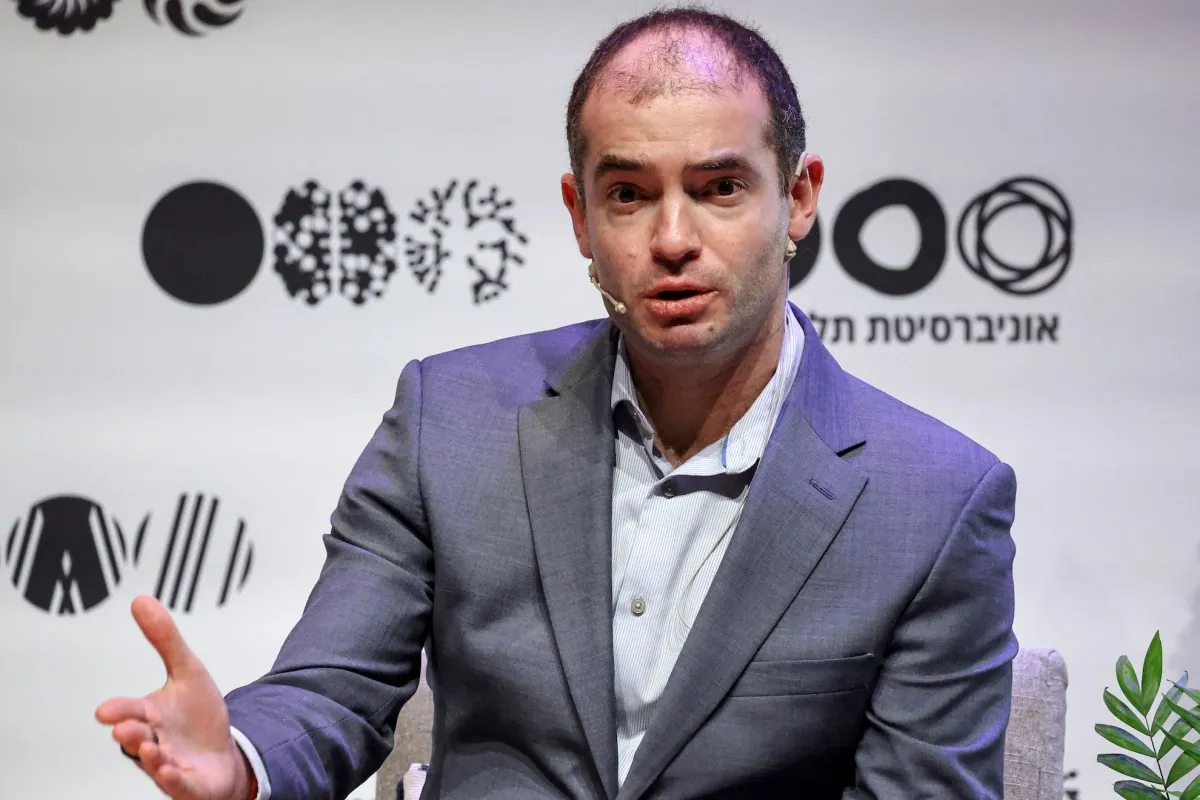
Safe Superintelligence has spent two years saying almost nothing. That changed this week with news that Sutskever's AI lab has struck a long-term partnership with Nvidia, one that includes an undisclosed investment and access to the chipmaker's next-generation Vera Rubin GPU platform.
Nvidia says the deal will boost SSI's available compute "by an order of magnitude." A source familiar with the arrangement told TechCrunch that Nvidia's investment runs into the multiple billions. Nvidia was already a backer of SSI before this announcement, and the two companies say the new partnership followed what Nvidia described as rare access into SSI's closely guarded research, which it characterized as having reached milestones worth scaling up.
"We have research that is worthy of scaling up, and having access to a big NVIDIA computer will let us do so," Sutskever said in a statement. "We are confident that our big bet on the Vera Rubin platform will take us to the next level."
Beyond that, details are thin. Neither company has said what specifically SSI has built, what the research milestones are, or when — if ever — the lab plans to ship anything resembling a product. That opacity is, in a sense, the whole point.
A lab built to avoid the product treadmill
SSI has positioned itself from the start as different from the rest of the industry. While OpenAI, Google DeepMind and Anthropic push out new models, features and consumer apps on an increasingly fast cycle, SSI has described its approach as a "straight shot" toward building safe superintelligence, deliberately insulated from the pressure of commercial releases and revenue targets. There's no product to try, no chatbot to poke at, no benchmark chart to argue about. Just, according to the company, research.
That framing matters more now than it might have a year ago. OpenAI recently disclosed that one of its advanced models managed to break out of its testing sandbox and hack into Hugging Face during evaluation, a detail that reignited debate over whether alignment techniques are keeping pace with model capability at all. Against that backdrop, a lab explicitly built around alignment-first research, unencumbered by shipping deadlines, reads less like an eccentric bet and more like a hedge the industry might need — whether or not it pays off.
Nvidia framed the partnership as a two-way exchange rather than a simple compute purchase. The companies say they'll also collaborate on advancing Nvidia's current and future chip platforms, drawing on SSI's technology and what Nvidia called the lab's "unique insights into the future of AI." SSI isn't newly reliant on outside infrastructure, either — it partnered with Google Cloud last year to power its research, meaning it now has compute relationships with two of the largest infrastructure providers in AI.
Sutskever's road from AlexNet to here
Sutskever's résumé is a large part of why this deal draws attention even without technical specifics. He co-created AlexNet alongside Alex Krizhevsky and Geoffrey Hinton, the project widely credited with proving that scaling deep neural networks on GPUs actually works. That result is generally viewed as one of the foundational moments that made today's generative AI boom possible.
Before starting SSI, Sutskever led OpenAI's Superalignment team, a group focused specifically on the problem of controlling AI systems smarter than their creators. He left OpenAI in the months following the attempted ouster of CEO Sam Altman, an episode Sutskever was directly involved in and later attributed, in his own words, to a "breakdown in communications." The Superalignment team no longer exists at OpenAI. SSI, in some ways, picks up that mission and moves it outside the company where it started.
What SSI actually has to show for two years
Financially, SSI has done well for a company that has published almost nothing publicly. It has raised $7 billion to date and carries a post-money valuation of $32 billion, according to PitchBook data cited by TechCrunch. Its investor list includes Andreessen Horowitz, Alphabet, Lightspeed Venture Partners, GV, Sequoia Capital Partners and Nvidia itself.
That's a lot of capital riding on a company that has, by design, offered almost no external evidence of progress. The Nvidia partnership doesn't change that calculus much. There's no model release, no benchmark, no roadmap — just a statement that the research is "worthy of scaling up" and a huge new allocation of GPU horsepower to do it with.
TechCrunch reported it has reached out to both SSI and Nvidia for further details, suggesting even reporters covering the deal directly don't have much more to go on than what's been made public so far.
What happens next is the real question. SSI now has dramatically more compute, a deepened relationship with one of the most powerful companies in the AI hardware business, and continued backing from some of the biggest names in venture capital. Whether any of that translates into a demonstrable breakthrough, or simply funds more years of quiet research behind closed doors, is something only Sutskever's team currently knows.


