Netflix Hands Content Control to Ex-Disney Exec as Engagement Stalls
Peter Rice replaces longtime Netflix veteran Bela Bajaria as chief content officer, just days after the streamer cut 1,000 jobs and amid growing pressure to produce breakout hits.
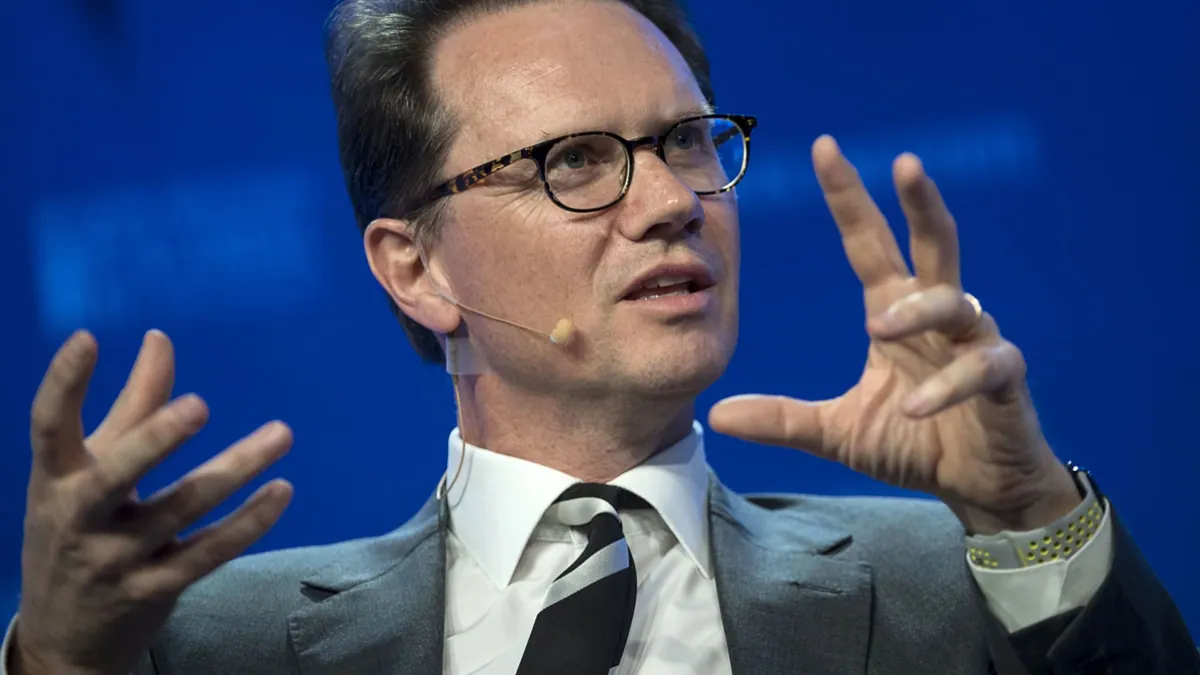
Netflix just handed the keys to its content operation to someone who spent years running a rival studio.
The streamer announced Thursday that Peter Rice, a former Disney and 21st Century Fox executive, will become its new chief content officer, taking charge of scripted and unscripted series, film and live events worldwide. He's replacing Bela Bajaria, a 10-year Netflix veteran who built much of the company's current content machine and, more recently, steered its push into live sports.
The timing is not subtle. The move comes just days after Netflix laid off roughly 1,000 employees, about 6% of its workforce, and arrives less than a week before the company reports third-quarter earnings on Tuesday. It's the kind of executive change that reads less like routine reshuffling and more like a company trying to answer a question Wall Street has been asking with increasing urgency: where are the hits?
Why Bajaria is out
Bajaria joined Netflix in 2016 to help launch its unscripted division and build out licensing and co-production deals. She eventually rose to run the company's entire creative operation, overseeing a content budget north of $20 billion. Her track record includes some of Netflix's biggest cultural moments: "Stranger Things," "Wednesday," "Bridgerton," "Squid Game," "Adolescence," "Beef," and films like "Frankenstein" and "KPop Demon Hunters." She also pushed Netflix into live sports and events, brokering deals with the WWE and NFL and producing one-off spectacles like "The Roast of Tom Brady."
But the last year or two have been rougher. Netflix reported in July that viewership grew just 2% in the first half of the year, a sign the company is struggling to produce the kind of water-cooler programming that once defined it. Co-CEO Ted Sarandos acknowledged as much last month at the Bloomberg Screentime conference, saying Netflix is "not growing as fast as I want us to."
Analysts are reading Bajaria's exit as confirmation that those engagement problems haven't let up. Brian Pitz, head of internet and interactive entertainment equity research at BMO Capital Markets, wrote in a note that "the sudden departure of Bajaria likely signals to us that user engagement may have remained soft throughout [the third quarter]." He also framed the broader layoffs as something more permanent than a short-term fix, calling them "more structural changes to the cost base than a reaction to near-term subscriber dynamics."
The numbers back up the concern. Nielsen data from July showed Netflix accounted for 7.8% of total TV viewership, while YouTube pulled in nearly double that at 14.2%. YouTube has become Netflix's most serious competitor for viewer attention, which is part of why Netflix has spent recent years branching into live sports, documentaries and video games, trying to turn itself into something closer to a general-purpose content hub rather than just a prestige-drama destination.
That strategy carries its own risk, one that Wells Fargo analyst Steven Cahall flagged last month: "If the opportunity is to recast [Netflix] into a broader content hub, the risk is missing the watercooler originals," he wrote. "We see breakout hits as a must for the stock to work again."
What Rice brings to the table
Rice's résumé is built almost entirely around the kind of hit-making Netflix is now chasing. Before this, he was chairman of Walt Disney Television and chairman of general entertainment at Disney, overseeing ABC, Disney Channel, Hulu and FX Networks. During his time there, Disney's TV operation produced more than 300 shows, including "American Idol," "Modern Family," "Abbott Elementary," "The Bear," "Only Murders in the Building" and "Shogun." He also ran coverage of marquee sporting events like the Super Bowl, NBA Finals and FIFA World Cup.
The Emmy numbers from that era are striking. Under Rice, Disney picked up roughly 300 Primetime Emmy nominations between 2021 and 2022 and won close to 60 awards. Netflix, by contrast, has seen its own Emmy haul shrink. It tied the all-time single-year record with 44 wins in 2021 but took home just 16 this year, its smallest total in a decade.
Rice's background goes beyond television. Earlier in his career, he was president of 21st Century Fox, CEO of Fox Networks Group, Fox's representative on the Hulu board, and president of Fox Searchlight Pictures, where he helped bring films like "Slumdog Millionaire," "Juno," "Little Miss Sunshine" and "Sideways" to screen. After being pushed out of Disney by then-CEO Bob Chapek in mid-2022, Rice spent time as an independent producer, working on films including "Saturday Night" and "28 Years Later." He's currently developing a film adaptation of the video game "Elden Ring."
Why his specific history matters
Rice's time at Fox and then Disney wasn't just about running networks, it was also about living through a major studio merger, since Disney absorbed Fox's assets during his tenure there. That's relevant given where Netflix has been pointing its ambitions. Late last year, Netflix struck a deal to acquire Warner Bros. Discovery's film studio and streaming assets, only to get outbid months later when Paramount Skydance completed its own acquisition of WBD earlier this month. Some analysts have floated the idea that Netflix could still pursue acquisitions, potentially including assets from NBCUniversal once it separates from parent company Comcast.
Alicia Reese, senior vice president of equity research at Wedbush, connected those dots directly in a note published Thursday: "[Rice's] long tenure at Fox, and then Disney after its acquisition of Fox, gives him unique insight into the consolidation of two major studios, relevant if Netflix chooses to go after another studio," she wrote. "Even if it doesn't, Rice's experience fits well as Netflix pushes deeper into theatrical and builds a broader platform with varied content across the entertainment ecosystem."
That last point, theatrical experience, is one area where Rice clearly outpaces his predecessor. His Fox Searchlight background and recent producing credits give Netflix a content chief who's actually shepherded films through theatrical release, at a moment when Netflix has been expanding its own big-screen ambitions.
None of this guarantees Netflix solves its engagement problem. Hiring a new content chief doesn't automatically produce the next "Stranger Things," and Rice is inheriting a company mid-restructuring, fresh off mass layoffs, with investors already bracing for a rough earnings report. But the hire makes clear what Netflix thinks the fix requires: someone who's run hit-driven networks, navigated studio consolidation, and knows his way around a theatrical release. Tuesday's earnings call will be the first real test of whether the market buys it.


