Google's AI Overviews Now Appear in 43% of Searches, Up From 15% a Year Ago
New data from Similarweb shows AI-generated answers have moved from a search-page add-on to the main event, reshaping how people find information online and squeezing the publishers who used to supply it.
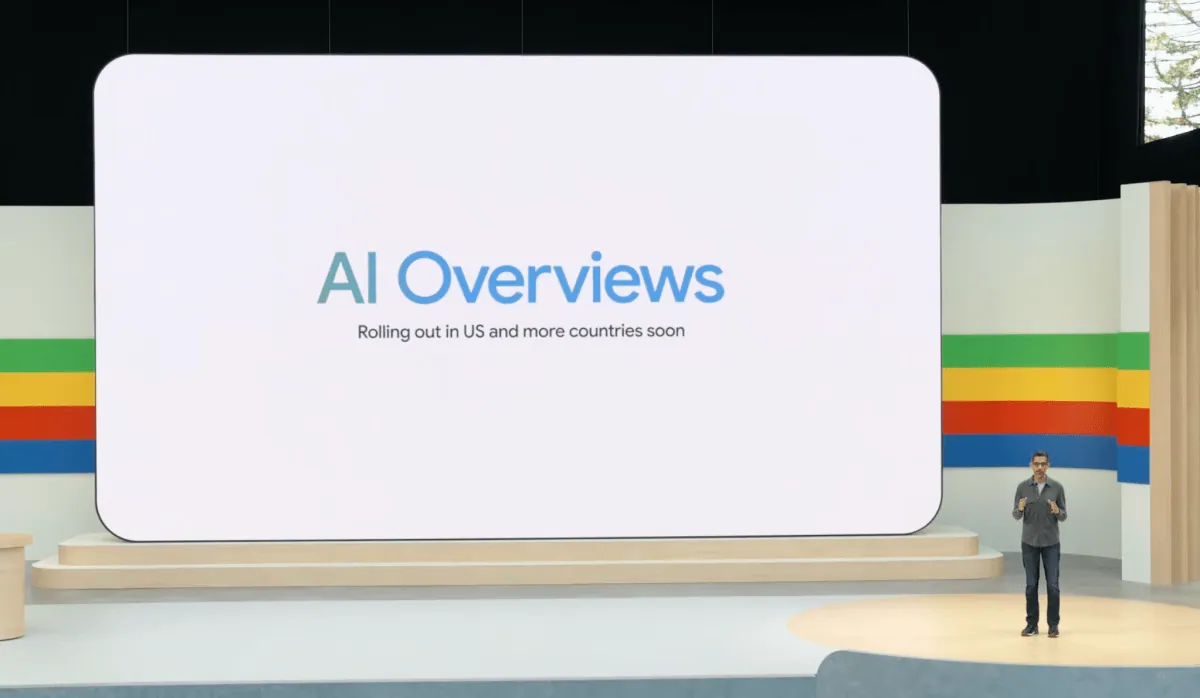
Google's AI Overviews have nearly tripled their reach in a single year, showing up in 43% of searches as of the latest data, up from just 15% a year earlier. That's according to a new report from market intelligence firm Similarweb, which tracks a broader pattern: AI-generated answers aren't a side feature anymore. They're becoming the main way people interact with Google.
The numbers behind that shift are striking. AI Mode, Google's more conversational search experience that lets users continue researching after an initial AI Overview, saw visits climb from 126 million in June 2025 to 279 million by May 2026. Similarweb describes this as evidence that what started as a layer bolted onto traditional search has become woven into the entire search journey, from the first query to the follow-up questions users ask afterward.
The practical effect is a redefinition of what Google actually is. For two decades, the company's search engine worked as a directory: type a query, get a list of blue links, click through to someone else's website. Similarweb's data suggests that model is eroding in real time. Google increasingly answers the question itself, pulling information from the sites it indexes but keeping the user on Google's own pages rather than sending them elsewhere.
Longer Queries, Longer Visits
One telling detail in the report: the average length of Google searches has been rising over the past year. That points to a behavioral shift alongside the technical one. Instead of typing clipped, keyword-heavy queries the way search-engine users have for years, people are increasingly phrasing searches as full, conversational questions, the kind of input that's built for an AI system to parse and answer directly rather than a traditional index to match against.
The upshot is that users are spending more time on Google's own platform. Where search once functioned as a launching pad to the rest of the web, it's increasingly functioning as a destination in itself.
The Publisher Problem
That shift comes at a direct cost to the websites Google's answers are built on. AI Overviews and similar tools frequently summarize information without generating a click to the original source, a trend Similarweb first flagged last year as particularly damaging to news publishers, who rely heavily on referral traffic for revenue.
The industry hasn't taken it quietly. Cloudflare, the web infrastructure company, has rolled out tools letting publishers block AI crawlers outright unless AI companies pay for access through a Cloudflare-run marketplace, an attempt to give publishers leverage they've largely lacked as AI-generated summaries have proliferated.
There is a nuance worth flagging in the new data: citations themselves are becoming more common, even if clicks aren't necessarily following. The number of AI responses that include a citation has grown more than fivefold over the past year, per Similarweb. But citations don't automatically translate into traffic. As of May 2026, only 6.8% of U.S. desktop queries on ChatGPT included a citation at all, and that share varies significantly by category. Travel, retail, and sports queries are cited more often than others, according to the report, suggesting AI systems lean on external sources more heavily for topics where up-to-date, specific information matters most.
A Rare Bright Spot for Publishers
If there's a silver lining in the report, it's tied to ChatGPT rather than Google. Following a search update on May 7, the share of ChatGPT desktop visits in the U.S. that led users to an actual webpage more than doubled, jumping from 25% in March 2026 to nearly 60% by May 30. Similarweb attributes this to users engaging more with the visible blue links that now appear within ChatGPT's AI-driven results, when those links are present.
It's a meaningful uptick for an industry that's spent the past year absorbing traffic losses, but Similarweb is careful to frame it as a narrow exception rather than a reversal of the broader trend. Google, still the dominant force in web search by a wide margin, continues moving in the opposite direction: away from being a simple gateway to other websites and toward becoming the endpoint of the search experience itself.
That's the tension defining this moment in search. AI answers are getting better, faster, and more central to how people find information, while the publishers supplying the raw material for those answers are left negotiating for scraps of the traffic they used to take for granted. Cloudflare's pay-for-access marketplace and ChatGPT's improved referral rates suggest the industry is starting to build countermeasures. Whether those countermeasures can keep pace with a search giant now answering nearly half its queries without ever sending users anywhere else is the open question hanging over the next year of this shift.


