Google Wants Your Car to Know You Better — Whether That's Comforting or Creepy
The search giant is piping Gmail, Calendar, and search history into Gemini's in-car assistant, starting today in Android Auto.
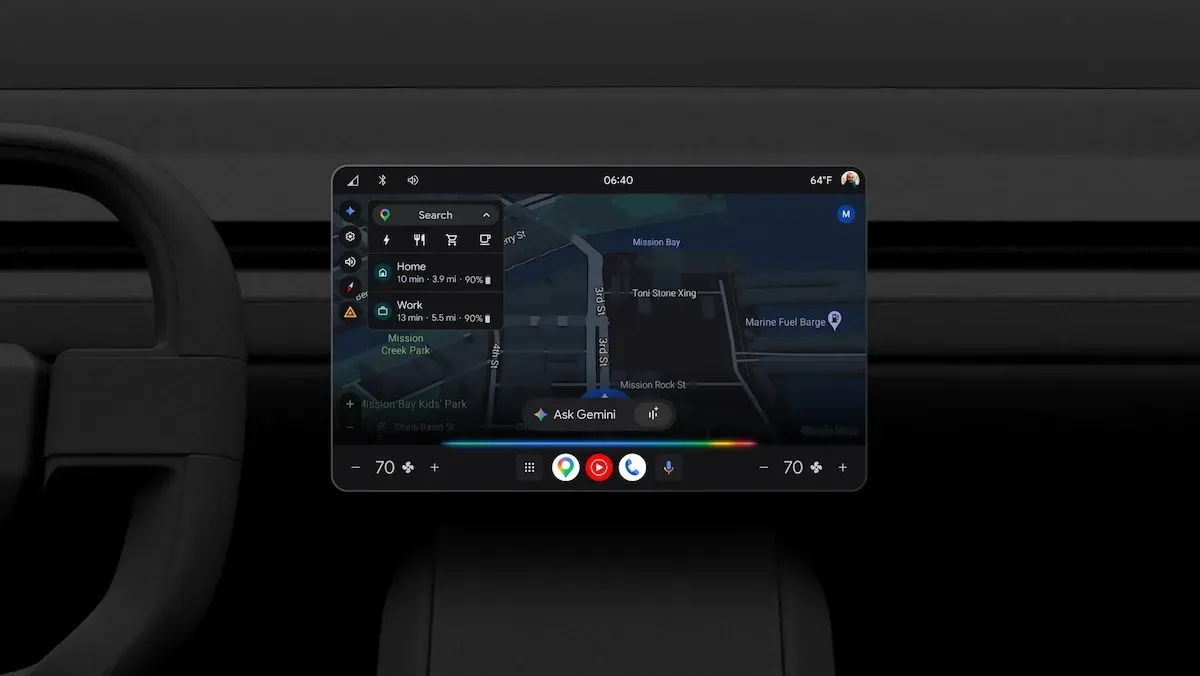
Google announced Tuesday that it's giving the Gemini AI assistant already running in millions of vehicles access to a much deeper slice of your digital life. The new feature, called "Personal Intelligence with Gemini," pulls context from Gmail, Google Calendar, YouTube, Maps, and Google Search history so the assistant can respond with your actual plans and habits in mind, not just generic answers.
The rollout starts today in Android Auto, the app that mirrors navigation, media, and messaging from a driver's phone onto the car's dashboard screen. Google says the feature will expand to vehicles running Google Built-in — the version of Google's software baked directly into a car's infotainment system — in the coming months.
This builds on groundwork Google laid over the past year. Gemini first arrived in Android Auto last November, and the broader Personal Intelligence feature rolled out across the U.S. back in March before expanding into beta in international markets. What's new now is the connective tissue: Google says this version "connects the dots" across a user's various Google apps while they're behind the wheel.
The practical upshot, according to Google, is an assistant that anticipates rather than just answers. The company's own example: a driver heading to the airport could get a heads-up that their flight, pulled from their calendar, is delayed — without ever asking. Gemini is also designed to handle layered, conversational questions. Still using the airport scenario, a driver might ask for their gate number, then immediately follow up asking if the flight's still on time, and Google says Gemini will answer both in one response rather than treating them as separate queries.
The trade-off is data access
Letting an AI assistant cross-reference your email, calendar, search history, and YouTube activity while you're driving is a meaningful step up in how much Google software knows about you at any given moment. Google says the feature is opt-in, meaning nothing changes until a driver actively turns it on. Once enabled, users can pick which specific apps to connect rather than granting blanket access, and the whole feature can be switched off at any time.
Whether that's enough reassurance is a fair question. Stitching together email, location history, and search behavior into a single assistant that talks to you in the car is exactly the kind of integration that makes some people uneasy, even with granular controls in place. Google's framing leans heavily on convenience — fewer taps, fewer follow-up questions, an assistant that already knows the context — but that convenience is built entirely on the assistant having visibility into more of your personal data than before.
Why Google is pushing this now
The move fits a broader pattern of Google trying to make Gemini the connective layer across its entire product lineup, rather than a standalone chatbot people visit separately. Cars are a particularly sticky environment for that strategy: drivers use navigation, messaging, and media constantly, and an assistant that handles all three fluidly — informed by a user's own calendar and inbox — gives Google another reason for people to stay inside its ecosystem instead of reaching for a third-party app or a different voice assistant.
For now, the feature is limited to Android Auto, which means it's riding on phones rather than deeper vehicle integration. The real test comes once Google Built-in support arrives, putting Personal Intelligence directly into a car's native system rather than something layered on top of a phone connection. How automakers and drivers respond to an assistant that knows this much — and how comfortable people get with opting in — will likely shape how aggressively Google expands this kind of personalization into other products down the line.


