Google Cloud Customers Are Blowing Past Their Own Spending Commitments
CEO Thomas Kurian says clients are spending roughly 50% more than they originally signed up for, a trend that helped fuel 82% year-over-year growth in the cloud unit last quarter.
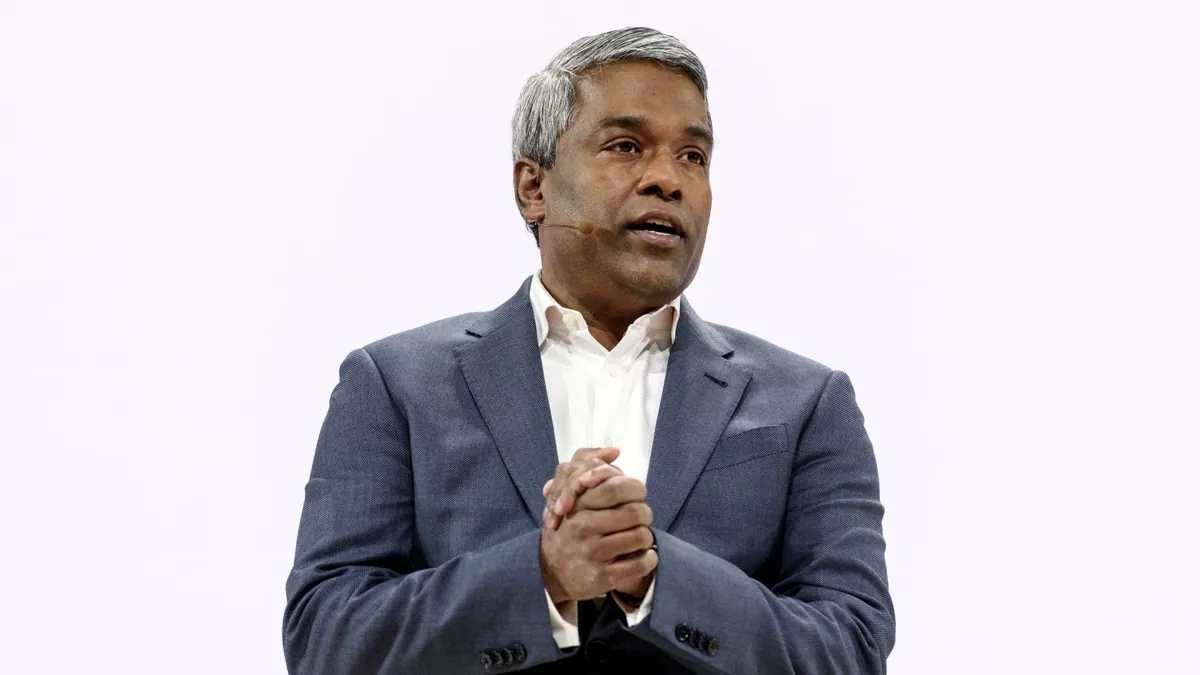
Google Cloud's customers aren't just sticking to their contracts. They're tearing right through them.
That's according to Thomas Kurian, the executive who runs Google's cloud division, who told CNBC's Jim Cramer on Thursday that existing customers are spending "roughly 50% more" than what they originally committed to. In other words, a company that signs up for a certain level of cloud usage tends to end up paying half again as much once it actually starts using Google's products.
"Our existing customers have increased their spend when they make a commitment to us," Kurian said. "They're spending roughly 50% more than the commitment, and so it comes down to the differentiation in our product portfolio, the strength we have in our go-to-market execution, and you see that in both top line and operating income growth."
The comments landed a day after Alphabet, Google's parent company, reported second-quarter revenue that beat Wall Street's expectations. The standout number inside that report was cloud: Google Cloud revenue grew 82% year-over-year, a pace that puts it well ahead of where analysts had penciled the business in.
Why commitments matter in cloud
Big cloud contracts rarely work like a simple subscription. Companies typically negotiate a baseline commitment with a provider like Google, Amazon, or Microsoft, agreeing to spend a certain amount over a set period, often in exchange for better pricing. That number is supposed to be a floor, not a ceiling. But providers have long wrestled with the opposite problem too: customers who commit big and then don't use what they paid for.
Kurian's 50% figure flips that script. It suggests Google's customers are consistently blowing past their negotiated baselines, which points to actual usage growth rather than just contract renewals or price increases. For a cloud provider, that's the healthiest kind of growth there is, because it means customers are finding enough value in the product to keep expanding their use of it organically.
Kurian tied that expansion directly to three things: the breadth of Google's product lineup, the strength of its sales execution, and the resulting lift to both revenue and profitability. Notably, he framed this as showing up in operating income growth too, not just the top line, which matters given that Google Cloud spent years as a money-losing bet inside Alphabet before turning consistently profitable.
The AI factor
Google hasn't broken out exactly how much of this spending surge is tied to artificial intelligence workloads, but the timing lines up with a broader industry story. Cloud providers across the board have been riding demand from companies that need computing power to train and run AI models, and Google has positioned its cloud arm as a place where customers can access its Gemini models, custom AI chips, and related infrastructure.
An 82% year-over-year growth rate is a significant acceleration for a business the size of Google Cloud, which has grown into one of Alphabet's most closely watched segments precisely because it had lagged behind Amazon Web Services and Microsoft Azure for years. Investors have watched Google Cloud's growth trajectory as a signal of whether Google can convert its AI investments into durable revenue, rather than just research headlines.
What to watch
Alphabet's stronger-than-expected quarter, paired with Kurian's remarks, will likely sharpen questions about how sustainable this pace of customer spending growth actually is. Commitments overshooting by 50% is a strong signal in a single quarter, but the real test is whether that trend holds as more of the AI infrastructure buildout matures and customers get a clearer sense of what they actually need to spend. For now, Google's cloud business enters the back half of the year with real momentum, and Kurian's comments give a rare specific data point on just how much of that momentum is coming from customers already in the door rather than new ones walking through it.


