Foxconn Is Betting It Can Build Half the World's AI Servers Within Two Years
Chairman Young Liu says the iPhone assembler's AI server share could jump from 40% to 50% as it pushes further into U.S. manufacturing and higher-margin equipment.
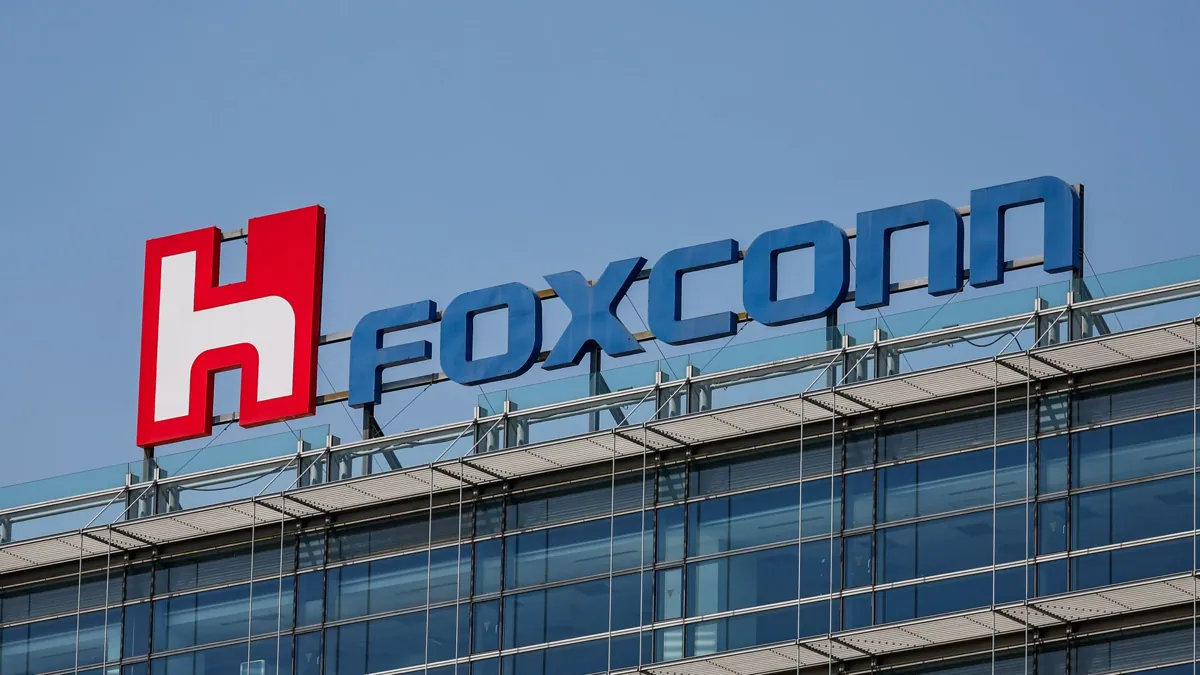
Foxconn wants to build half of the world's AI servers, and it thinks it can get there fast.
Chairman Young Liu told CNBC's Christine Tan that the company's share of the global AI server market, currently around 40%, could climb to roughly 45% next year and as high as 50% within a couple of years. "I think we can grow up to 50 percent," Liu said.
That's a striking ambition for a company most people associate with iPhones. Formally known as Hon Hai Precision Industry, Foxconn built its reputation — and its scale — as the world's largest contract assembler of Apple devices. But AI infrastructure has become the company's new growth engine, and Liu is now talking about it in terms that sound less like a side business and more like the future core of the company. He expects AI infrastructure, excluding edge AI devices that run algorithms directly on local hardware, to make up 60% to 65% of Foxconn's revenue within the next three to five years.
The demand backing that forecast is already showing up on the factory floor. Liu said Foxconn's production capacity is fully booked for at least the next year and a half. That demand, he noted, is coming mostly from AI model developers and cloud service providers racing to build out the data center capacity needed to train and run increasingly large models. Governments and enterprises, by contrast, haven't fully jumped in yet, which suggests there's a second wave of demand still waiting to materialize if and when those customers catch up. For now, Liu described overall AI demand as "quite strong."
Moving up the supply chain in the U.S.
Part of Foxconn's growth plan involves deepening its manufacturing presence in the United States. Liu said the company intends to "move up the supply chain" domestically, which would let it react faster to rising demand instead of relying as heavily on production elsewhere.
The catch is cost. Manufacturing in the U.S. is more expensive than in Foxconn's traditional bases, so the company plans to start with products that carry stronger margins — AI server racks and data center equipment, specifically — rather than lower-margin hardware. Liu said that as U.S. production scales up, costs should come down over time, which would make a broader domestic footprint more viable.
The strategic logic here extends beyond any single product line. Foxconn is trying to position itself across the entire AI infrastructure stack: not just servers, but racks, data centers, and computing services. Owning more of that chain, in theory, makes the company harder to route around as AI infrastructure spending continues to grow.
The discipline behind the ambition
For all the bullishness, Liu was clear that Foxconn isn't treating AI as a blank check. "Overinvestment will kill the company," he said, and he indicated Foxconn intends to keep tight control over spending even as it expands. The company has planned to spend $3 billion to $5 billion a year on AI, though Liu said that figure could rise depending on how aggressively Foxconn pursues vertical integration across the supply chain.
That caution extends to how Foxconn thinks about customer concentration risk. Asked what would happen if a major customer pulled back on AI spending, Liu said the company could likely absorb it, with growth from other customers offsetting the loss. A broader, industry-wide slowdown in AI spending would be a different story entirely, posing a much bigger threat to Foxconn and to the AI supply chain as a whole.
That distinction matters. Foxconn's 50% target assumes the current AI buildout keeps running at or near its current pace. The company seems confident that individual customers slowing down is a manageable risk it can diversify around. A broader pullback across the AI industry is the scenario it can't easily plan its way out of — and it's the one that would turn today's "fully booked" production lines into tomorrow's overcapacity.


