NHTSA Wants Robotaxis to Glow Cyan When No One's Driving
The agency's proposed rule would standardize a blue-green marker light for autonomous vehicles while scrapping cockpit controls that make no sense in a car without a driver.
Driverless cars have been signaling their autonomy in all sorts of ways — flashing text on a screen, a chime, a custom light pattern unique to whichever company built the thing. The federal government just proposed cutting through that mess with one specific answer: a cyan-colored light.
The National Highway Traffic Safety Administration has released proposed changes to Federal Motor Vehicle Safety Standard No. 108, the rule that governs vehicle lighting. The rewrite is aimed squarely at autonomous vehicles, and it does two things at once: it establishes a national standard for signaling when a car is driving itself, and it strips out a bunch of lighting requirements that only make sense if there's a human behind the wheel.
The headline piece is the color. NHTSA is proposing cyan marker lamps specifically to "clearly and consistently signal to law enforcement and other road users when an automated driving system is operating the vehicle," according to the agency. The logic is straightforward: red, amber, white, and flashing blue or red lights are already spoken for, covering things like brake lights, turn signals, headlights, and emergency vehicles. Cyan is one of the few colors left that wouldn't risk getting confused with an existing signal.
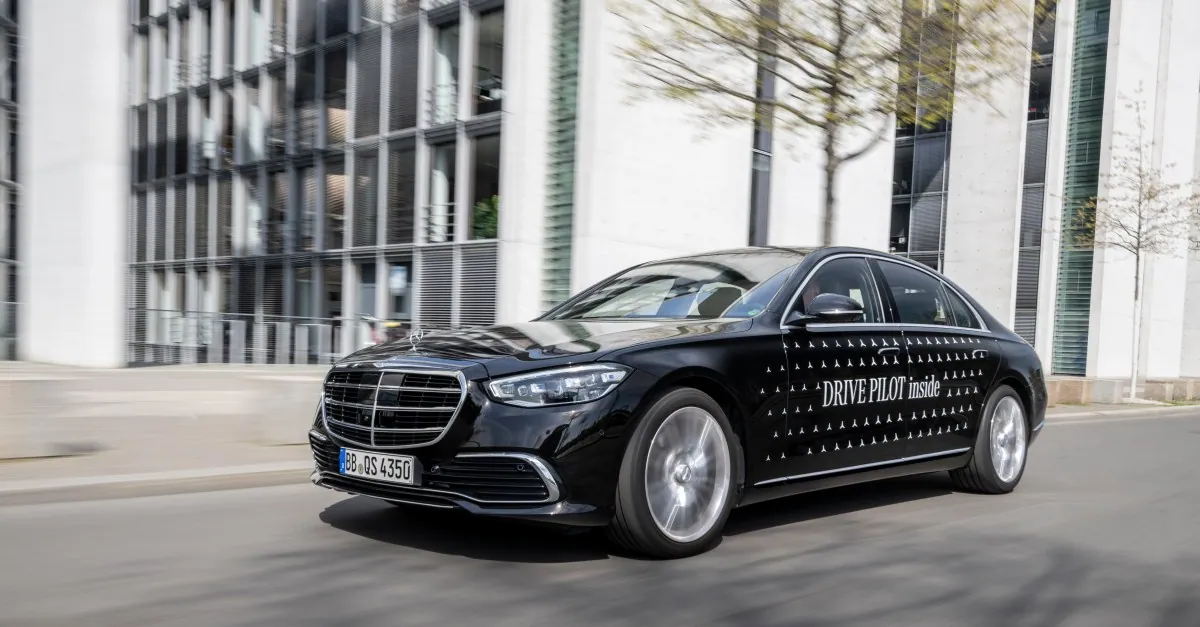
It's not a totally new idea. Mercedes-Benz previously won state-level approval to use turquoise lighting on its Level 3 Drive Pilot system, a signal meant to convey that the car — not the person inside it — was in control. Mercedes has since moved away from that approach, shifting toward a Level 2++ system instead. But the precedent is there, and NHTSA is now trying to turn a one-off state approval into a uniform federal standard that any robotaxi operator or automaker could adopt.
That list of potential adopters is notable: companies like Waymo, Nuro, and Zoox running autonomous ride-hailing fleets, plus traditional automakers like GM and Mercedes building their own self-driving systems. Right now, each would be free to invent its own visual language for "nobody's driving this car." NHTSA's proposal wouldn't force anyone to use cyan lights — they'd remain optional under the rule — but it would lock down the color, brightness, and placement for any company that chooses to add them, so a cyan glow means the same thing no matter whose car is wearing it.
Clearing out rules built for human drivers
The second half of the proposal is less flashy but arguably more consequential for how these vehicles actually get built. Current federal lighting rules assume a human is sitting in the driver's seat, which means they mandate things like physical hazard-light switches, manual high-beam/low-beam shifters, and turn signal levers. None of that holds up in a vehicle with no steering wheel or pedals. NHTSA is proposing to remove those requirements altogether.
The agency is also updating an old testing standard built around 12.8-volt electrical systems, letting automakers design around modern LED lighting setups without needing special administrative exemptions first. And it's weighing whether to drop the long-standing rule dictating that high-beam lights must sit above low-beam lights — another holdover from a design era that doesn't necessarily apply to vehicles engineered from scratch for autonomy.
Taken together, the proposal reflects a broader push from the Department of Transportation to make it easier for automakers to legally build and deploy vehicles without traditional human controls. Right now, a car without a steering wheel and pedals has to navigate a thicket of rules written decades before anyone seriously planned to build one.
Regulators are still watching closely
None of this means NHTSA is loosening its grip on enforcement. Just last month, the agency opened an audit query into Tesla's Cybercab, a robotaxi concept that ditches sideview mirrors, pedals, and a steering wheel entirely. The query is examining the process and technical data Tesla used to certify the vehicle, since those missing features are currently required under FMVSS as written, according to NHTSA.
That contrast is the point. The agency is actively rewriting the rulebook to accommodate cars with no driver, while simultaneously holding companies to the rulebook as it exists today. Cyan lights might end up being the most visible outcome of this process for ordinary drivers, a new signal to learn on the road. But the quieter changes, stripping out switches and levers designed for a driver who no longer exists, are the ones that will shape how fast companies can actually get autonomous vehicles built and on the street.


